CONNECTICUT COLLEGE
CONNECTICUT COLLEGE
  • Current Issue
  • Past Issues
    • 2026 Issues
    • 2025 Issues
    • 2024 Issues
    • 2023 Issues
    • 2022 Issues
    • 2021 Issues
    • 2020 Issues
    • 2019 Issues
    • 2018 Issues
    • 2017 Issues
    • 2016 Issues
    • 2015 Issues
    • 2014 Issues
  • Older Issues
  • Letters to the Editor
  • Update Your Address
  • Alumni Association
  • News & Media Hub
  • Make a Gift
  • College Home Page

Contact Us

Connecticut College
Office of Communications
270 Mohegan Avenue
New London, CT 06320

Amy Martin
Editor, CC Magazine
asulliva@conncoll.edu
860-439-2526

CC Magazine welcomes your Class Notes submissions. Please include your name, class year, email, and physical address for verification purposes. Please note that CC Magazine reserves the right to edit for space and clarity. Thank you.

Submit Class Notes

Art Rebel

Adam and Eve, Charles Garabedian, 1977, from "Bad" Painting, an exhibit curated by Marcia Silverman Tucker ’61 at the New Museum in 1978. All images courtesy of the New Museum.

Adam and Eve, Charles Garabedian, 1977, from “Bad” Painting, an exhibit curated by Marcia Silverman Tucker ’61 at the New Museum in 1978.
  • Fall 2026 
  • Art Rebel

Art Rebel

Curator Marcia Silverman Tucker ’61 held radical ideas about a conventional subject. Two decades after her death, the definition of art is still up for debate. 

By Melissa Babcock Johnson

S

ome 73,000 years ago, in what is now South Africa, a human held a red ochre crayon to the stone wall of a cave and sketched nine lines—some straight and some curved. It is the world’s earliest known drawing. But what does it mean? Is it art? 

“I’m convinced they are more than just random marks,” archaeologist Christopher Henshilwood told The New York Times in an article announcing the discovery in 2018. “I think it’s definitely a symbol and there’s a message there.”

Although the ancient artist’s intention is lost to time, those lines underscore a fundamental tenet of communication: People make art to express an idea or evoke a response. Try to refute or expand upon that, though, and you’ll find a million different definitions. 

The late Marcia Silverman Tucker ’61 had her own ideas. The art establishment disagreed. She didn’t care. 

The Brooklyn native who founded the New Museum of Contemporary Art in Manhattan’s Bowery neighborhood nearly 50 years ago would—eventually—be recognized as one of the world’s most influential curators of modern art. She wasn’t interested in centuries-old paintings by long-dead European men; instead, she traveled the U.S. looking for unknown living artists creating work outside of the art world’s traditional boundaries. Many of the artists she featured had never been shown in New York before; some hadn’t even been to New York. She liked that. 

“It takes many generations to find out which artists of today made it through. By that time, all of us will be dead,” Tucker told Art Papers reporter Julia A. Fenton in 1982. “The point is to try to grapple with the larger issues—that is, to try to understand the world we live in and what our position is in it, to try to understand who we are, how we see ourselves and how we see others. I’m not interested in the rest.”

Art sometimes appears in unexpected places. In 1890, an unknown French artist named Vincent van Gogh sold his painting The Red Vineyard for 400 francs or $77, which would be about $2,800 today. But in 2024, Italian artist Maurizio Cattelan’s piece Comedian sold for more than $6 million at a Sotheby’s auction. It was a banana duct-taped to a wall. The sale sparked countless questions, discussions and arguments. The buyer, cryptocurrency entrepreneur Justin Sun, compared it to digital money. “The real value is the concept itself,” he said at a press conference days later. Then, he ate the banana.
Marcia wanted to expose museums and collectors as these tastemakers that needed to be challenged.

— Christopher Steiner, Lucy C. McDannel ’22 Professor of Art History and Anthropology

‘Other Criteria Than Quality’

The young Marcia Silverman, who later acquired and kept the married name Tucker, spent her years at Connecticut College studying art history and theater. She wasn’t a painter or sculptor—her own artistic expression included performing stand-up comedy and writing plays and her memoir, A Short Life of Trouble: Forty Years in the New York Art World.

She also sang. Tucker was one of the first curators in the United States to bring performance art into a museum environment. When she was almost 40, she started the Art Mob, her own a cappella singing group, which still exists, because she wanted to sing with a group “that couldn’t throw her out.” 

“The Art Mob was a big part of her life,” Tucker’s daughter, Ruby Truong, said from her home in California during a recent video interview with CC Magazine. “They practiced at my house every week, which I found annoying at the time, but I joined as an adult.”

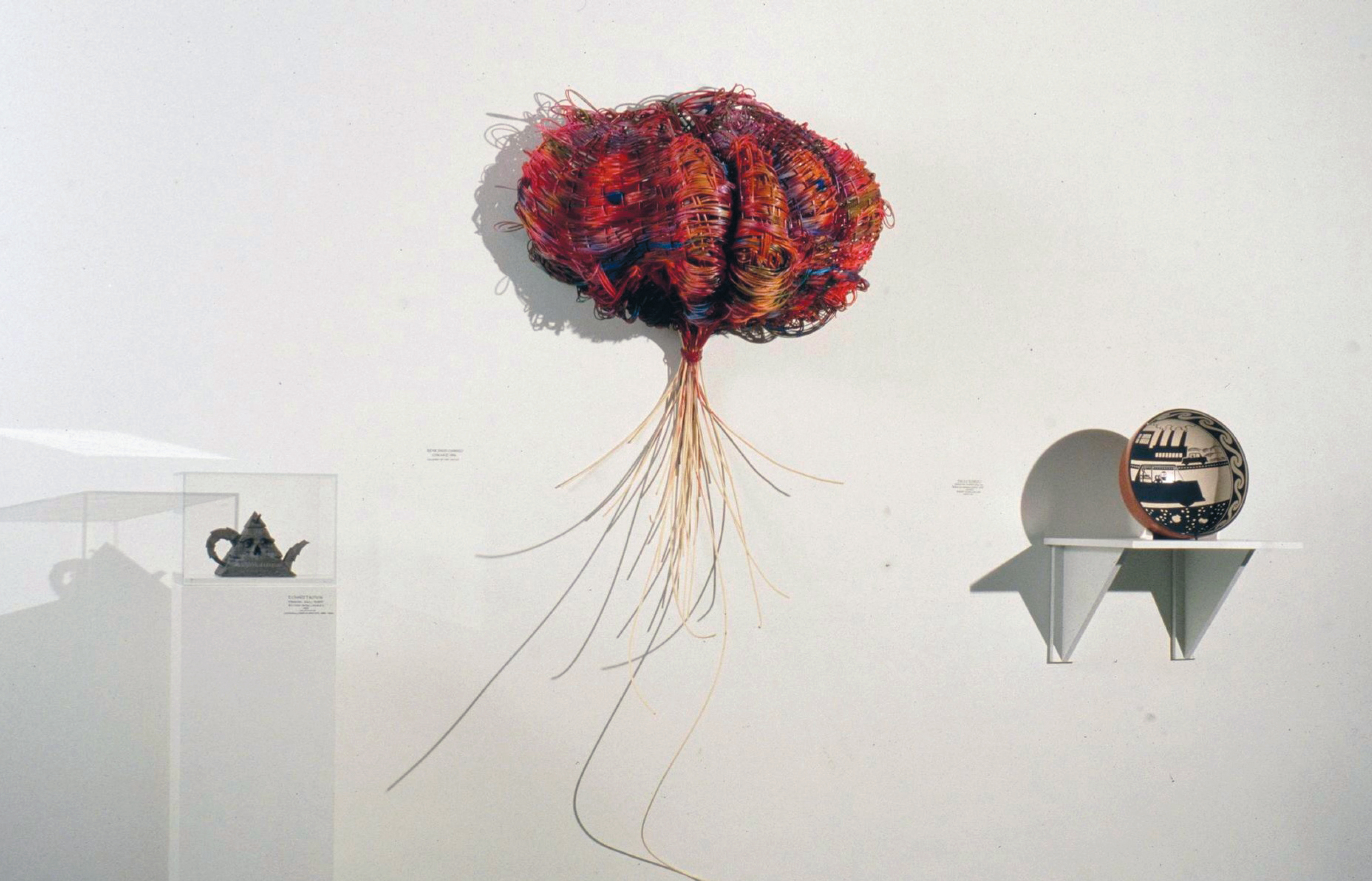
Truong is a textile artist who creates mandala-based compositions exploring structure, time, decoration and escape. Her media are embroidery, beads and sequins, and she shows her work on her website, Ruby Dora Design. She says the New Museum’s 1996 exhibit A Labor of Love especially resonated with her. “It was a whole show focused on the idea that craft can be art, too, which is right up my alley. I love seeing artists obsessed with their unique materials,” she says. “My mom taught me how the things that were intriguing were worthy of attention.” 

Artist Elizabeth Enders ’62 remembers Tucker well. Enders is a painter whose work has been featured in many galleries and establishments over the past six decades, including the New Museum, which was about half a mile from a studio Enders rented on Mercer Street. “She was creative in an extraordinary way that really is unusual,” Enders says. “To Marcia, art was about behavior and creating lots of different things other than just paintings on the wall or just something to look at.” 

To supplement her education, Tucker left New London for Paris her junior year to study art history at the prestigious École du Louvre. After returning to Conn for her final undergraduate year, she completed her degree in 1961 and found work as a secretary at the Museum of Modern Art in New York—a job she abruptly quit when her boss told her to sharpen pencils one too many times. She earned a master’s degree in art history from the Institute of Fine Arts at New York University in 1969, and the nearby Whitney Museum of American Art soon hired her as its first female curator. She was put in charge of paintings and sculptures.

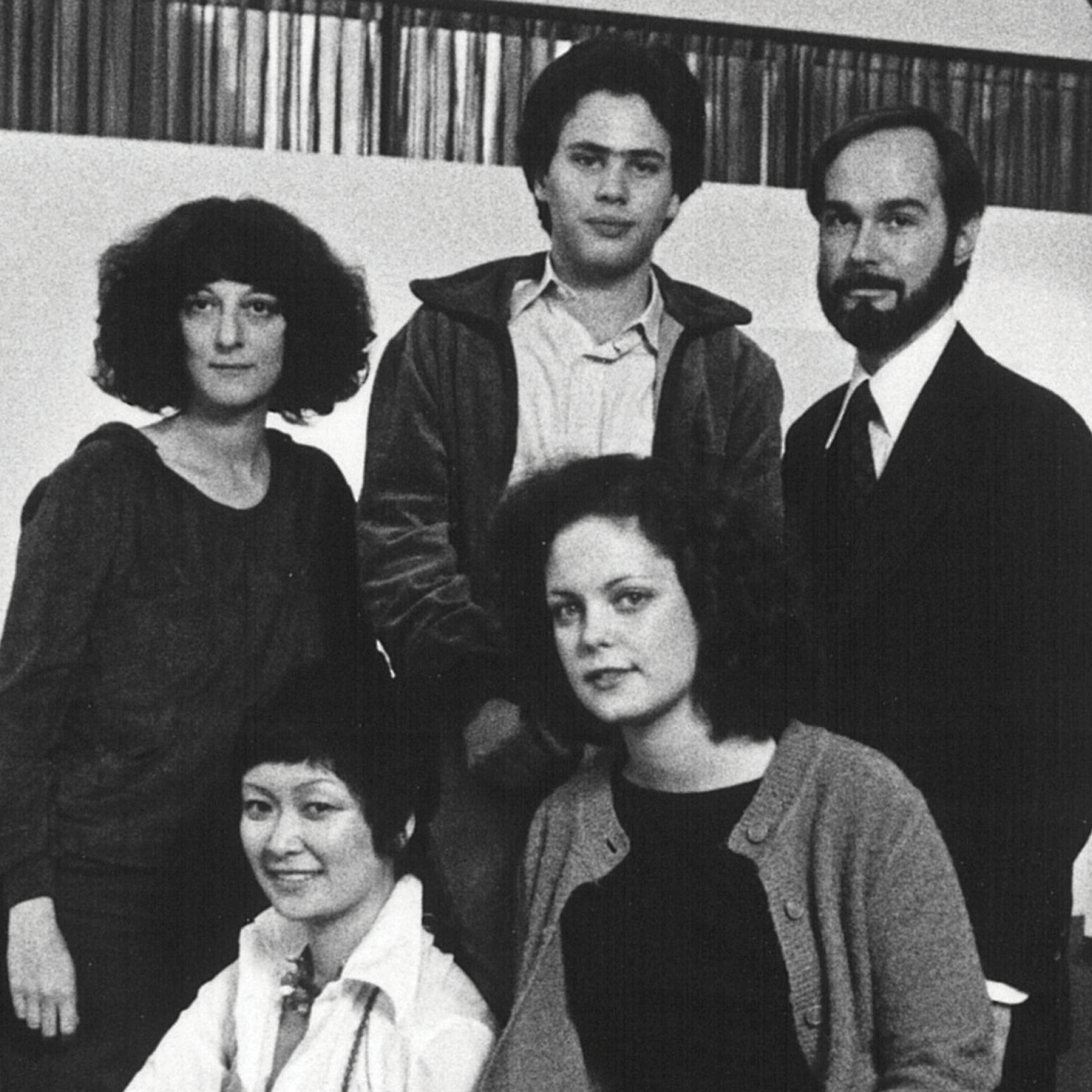
Staff of the New Museum on the day of its opening, 1977:  Marcia Silverman Tucker ’61 (upper left)  with (clockwise from top): A.C. Bryson, Allan Schwartzman, Susan Logan and Michiko Miyamoto.
Staff of the New Museum on the day of its opening, 1977: Marcia Silverman Tucker ’61 (upper left) with (clockwise from top): A.C. Bryson, Allan Schwartzman, Susan Logan and Michiko Miyamoto. Photo by Warren Silverman, courtesy of the New Museum.

In the October 2003 issue of Artforum, Tucker reflected on her evolving view of art during the Whitney era. “I was going to as many artists’ studios as possible. I could tell that something unusual was in the air, an eccentric view of what art might be,” she wrote. “It’s important to remember that there was a huge amount of interest in phenomenology in the art world at that time. Everyone was reading Merleau-Ponty’s Signs, and people were very excited by the idea that art didn’t have to be about what you perceived but about the very act of perception.”

The Whitney helped Tucker’s career take flight—but not without some turbulence. Shortly after arriving, she co-curated the first large post-minimalist show ever held in an American museum. The ensuing years saw several successful, if sometimes controversial, exhibits. But her trajectory changed in autumn 1975 when she organized a survey of works by the then-up-and-coming American post-minimalist artist Richard Tuttle.

Tucker and Tuttle may have believed his six dainty pieces made with basic materials like paper, wire and wood were art, but Hilton Kramer, who was then the chief art critic for The New York Times, sure didn’t. “To Mies van der Rohe’s famous dictum that less is more, the art of Richard Tuttle offers definitive refutation,” he wrote. “For in Mr. Tuttle’s work, less is unmistakably less. It is, indeed, remorselessly and irredeemably less. It establishes new standards of lessness, and fairly basks in the void of lessness. One is tempted to say that, so far as art is concerned, less has never been as less as this.”

It takes many generations to find out which artists of today made it through. By that time, all of us will be dead.

— Marcia Silverman Tucker ’61
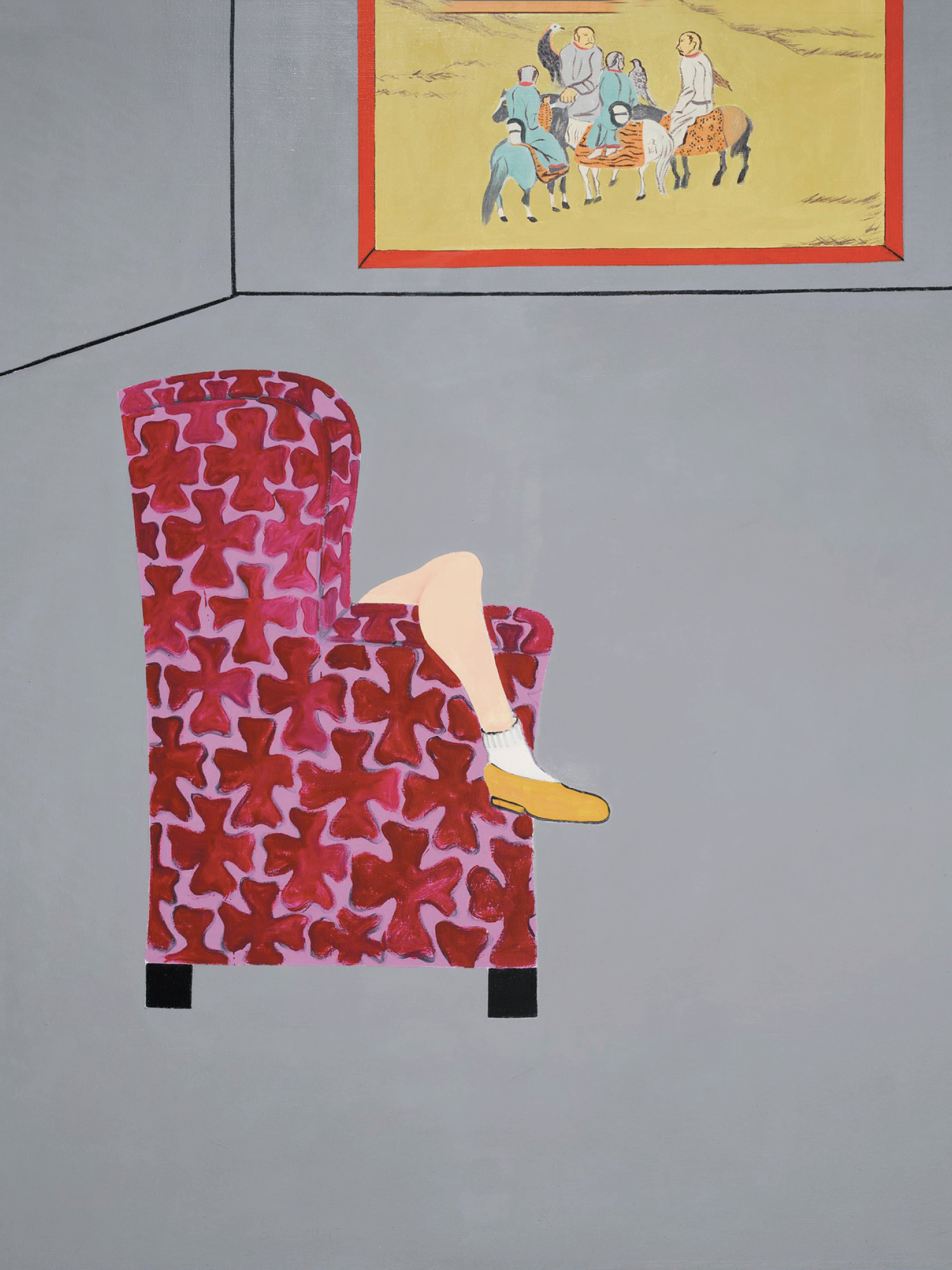
The Ghostly Lover, Judith Linhares, 1978, from the exhibit “Bad” Painting, 1978.

The full extent of the backlash took a little time, but it hit hard. The museum’s director, Tom Armstrong, fired Tucker the following year, but it’s unclear how much, or even if, her dismissal was based on the highly criticized show. The cover story of the April 11, 1999, issue of The New York Times Magazine, “The Curse of the Whitney,” includes the incident. 

In the article, author Arthur Lubow reports that Armstrong, who became director in 1974, claimed he loved the exhibition but fired Tucker because he “didn’t believe in what she believed in, and she was the guiding force of the museum.” He wanted the Whitney to feature work by “important” artists, wrote Lubow, and had said, “Marcia had other criteria than quality.” 

Indeed, she did. Armstrong may have prioritized prestige, but Tucker sought thought. In the 1982 interview with Art Papers, she said, “The most important and interesting art work, for me, is work that generates ideas.”

Whatever art is, Tucker needed the freedom to decide for herself—so, she started her own contemporary museum. The New Museum opened on New Year’s Day in 1977. Half a century later, more than 400,000 annual visitors experience art as Tucker intended.

Lisa Phillips, who succeeded Tucker as director of the New Museum in 1999 and retired earlier this year, was a young intern at the Whitney in 1975. In an Artforum column she wrote shortly after Tucker died from cancer at age 66 in 2006, Phillips recalled the chaos of the Tuttle exhibit and her unwavering admiration for the woman who curated it: “‘Where is the art?’ angry visitors demanded of me ... But to me and to many others, Marcia … was a hero—someone who stuck to her guns, had great integrity, was full of conviction, and feared no one.”

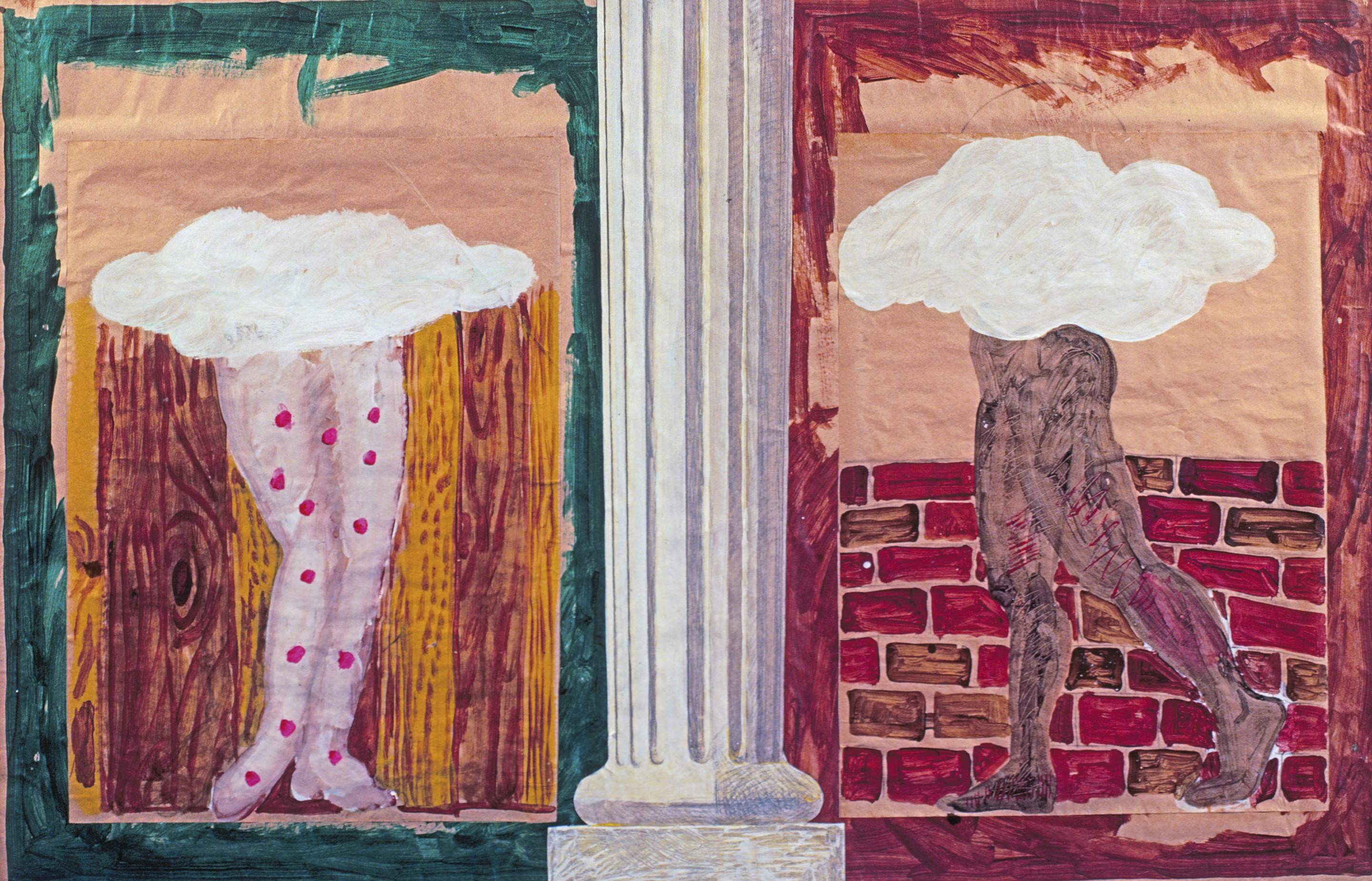
The Room Part 1 (The Leg), Joan Brown, 1975, from the exhibit “Bad” Painting, 1978.
The Room Part 1 (The Leg), Joan Brown, 1975, from the exhibit “Bad” Painting, 1978. © Joan Brown, courtesy Matthew Marks Gallery

‘Bad’ Art, ‘Bad’ Painting

Christopher Steiner, Conn’s Lucy C. McDannel ’22 Professor of Art History and Anthropology and director of the Museum Studies Certificate Program, knows a thing or two about “bad art.” He offers a class on it, and Tucker is part of his curriculum.

“Hilton Kramer’s review of the Tuttle exhibit was just savage,” he marvels during a recent interview. “In the past I’ve assigned it as reading because it’s so nasty. Students immediately understand the legacy of conservatism in art history, and the obstacles Marcia Tucker faced.”

Art history majors who enroll in Steiner’s AHI/ANT 450 course, “Bad Art: The Social Construction of Taste” spend a semester exploring the arbitrary boundaries between “good” and “bad” art, the course catalog promises. “Art forms to be examined include kitsch, souvenirs, visionary and self-taught art, fakes, velvet paintings, lawn ornaments and food art.” 

The duct-taped banana, perhaps? It seems to qualify. “One of the reasons that I teach this course is because I approach art history from an anthropology background, so I see the social construction of value and meaning in art,” Steiner says.

The professor met Tucker shortly after he joined Conn’s faculty in 1997. The director of the Lyman Allyn Art Museum at the time, Charles Shepard, was looking to elevate the museum’s reputation and had invited her to visit. Steiner recalls, “There were benches in the gallery, and Marcia was joking about how, at the New Museum, some of the artists that she exhibited asked her to remove the benches because ‘people should not be comfortable while looking at art,’ which she thought was absurd.”

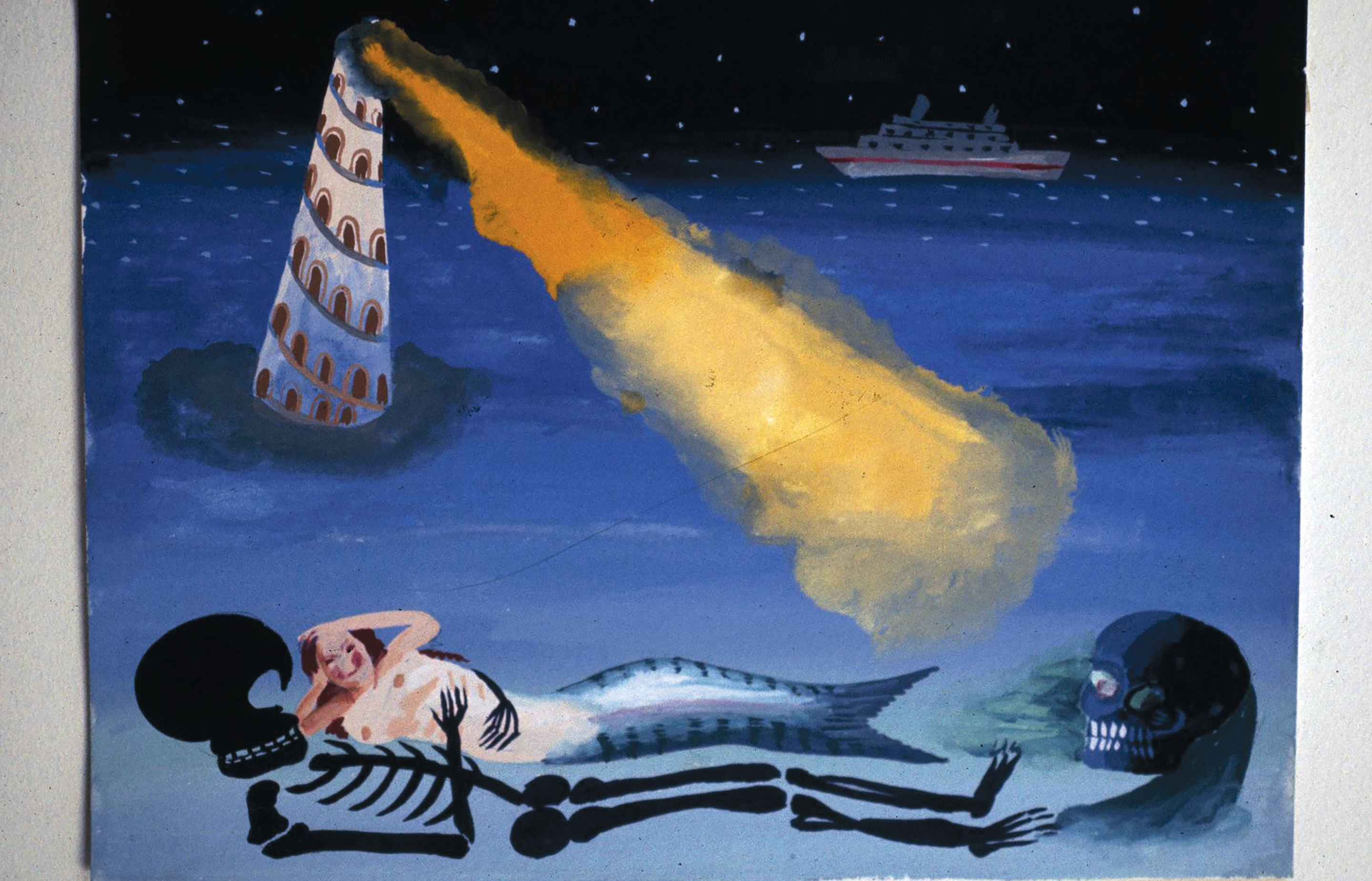
Naturally, Steiner brings up “Bad” Painting, one of the New Museum’s first and most influential exhibitions. The 1978 show featured “so-called ‘bad’ paintings and drawings by 14 artists who consciously reject traditional concepts of draftsmanship in favor of personal styles of figuration,” according to a museum press release. 

“What she meant by ‘bad’ painting and what I mean by ‘bad’ art in my class are pretty different,” Steiner explains. “But she was trying to get at the same thing, to say that, even though it was the 1970s, and we had avant-garde art, minimalism, abstract expressionism and all that, there were still constraints about what is considered to be ‘good.’”

To Marcia, art was about behavior and creating lots of different things other than just paintings on the wall or just something to look at.

— Artist Elizabeth Enders ’62

Who gets to decide, anyway? “I mean, that’s sort of the million-dollar question,” Steiner muses. “My students are always asking, ‘Is this good?’ ‘Is this bad?’ That’s not the point. The point is that what is good and what is bad is totally arbitrary, and values shift over time.” 

Steiner, who holds a Ph.D. from Harvard, has been a curator for more than 20 years, served as interim director of the Lyman Allyn Art Museum, and even rescued the entire contents of the Nut Museum—a quirky collection of all things nuts amassed by Old Lyme resident Elizabeth Tashjian—knows that even his expert views on art are subjective. That’s the point Tucker wanted to shout from the rooftops.

“In a way, ‘Bad’ Painting was a response to people like Hilton Kramer, to say, ‘Museums should not bow down to the art critics, and we’re going to do what we want,’” Steiner offers. “Marcia allowed incompetent draftsmanship, she allowed kitsch to be part of paintings, and she challenged the art world’s standards of beauty. She wanted to expose museums and collectors as these tastemakers that needed to be challenged.”

By dedicating an entire Manhattan building to showing the world creations that smash stale standards and insist that anything goes, Tucker gave artists permission to defy everything they had been taught. “Even though contemporary art at the time appeared to be without rules, it was in fact governed by strict rules. Namely, you couldn’t exhibit purposely bad painting,” Steiner says. “So I think intentionally ‘bad’ paintings were exactly what she was looking for. Her point was that artists who are trained formally can break free from the weight of conventions, to be more authentic and more expressive.”

Tucker wasn’t here to see the New Museum’s recent exhibition New Humans: Memories of the Future, which opened in March and ran until Aug. 30. But Truong believes the show, which the museum said “proposes art as a collective form of creative prognostication,” reflected her mother’s values in a special way. “It looks at the history of thinking about what humans can be. She valued people and their experiences, and she always tried to find artistic inspiration in the most wild of places.”

Objects from A Labor of Love, curated by Marcia Silverman Tucker ’61 at the New Museum, 1996.


  • Make a Gift
  • Contact Us
  • Alumni Association
  • News & Media Hub
  • Update Your Address