Down the Rabbit Hole
Patty Reilly ’75 rehabilitates orphaned and injured bunnies and teaches others how to help wildlife.
It’s a sunny afternoon in early May and Patty Reilly ’75 is in her living room in Marshfield, Massachusetts, when her cell phone rings. It’s the town animal control officer.
“Hi, how are you doing?” Reilly says by way of casual greeting, already fairly certain of the reason for the call. Sure enough, the officer sounds urgent on the other end of the line. “Eyes open or eyes closed?” Reilly asks. “That sounds good,” she says after a beat, before hanging up.
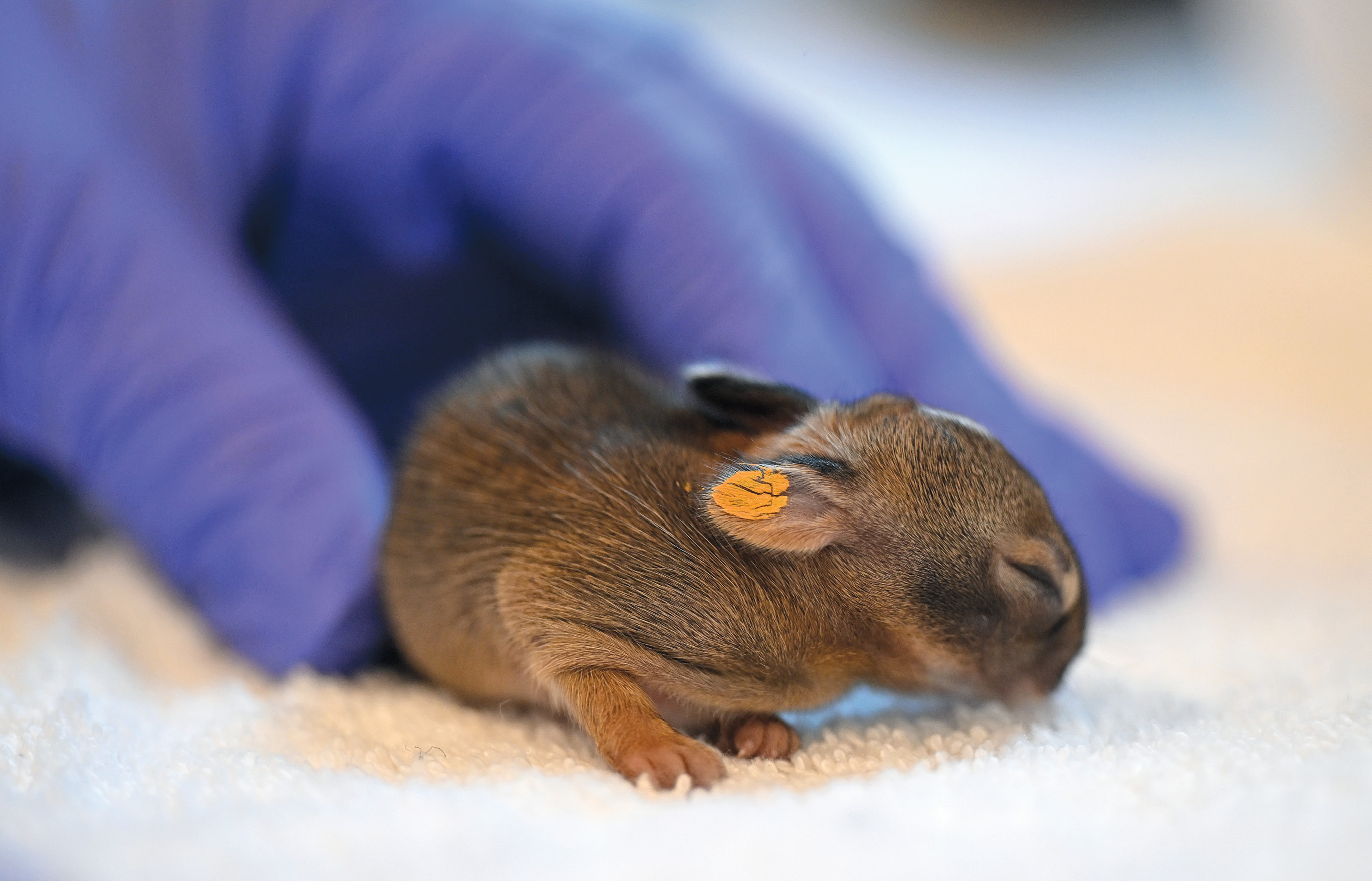
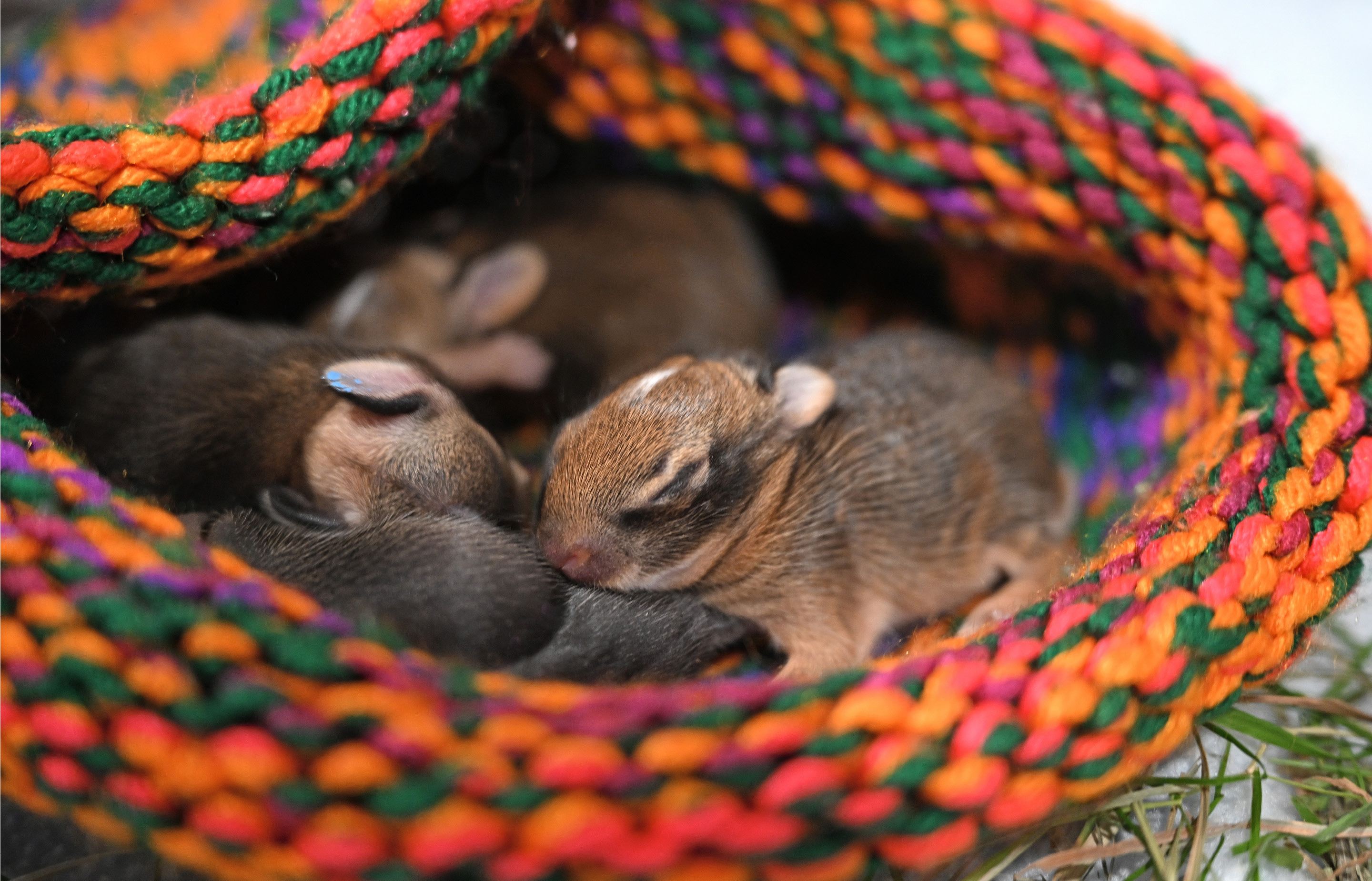
“Four more bunnies are coming, and they’re healthy,” Reilly explains. “Their mother just got killed right next to the nest.”
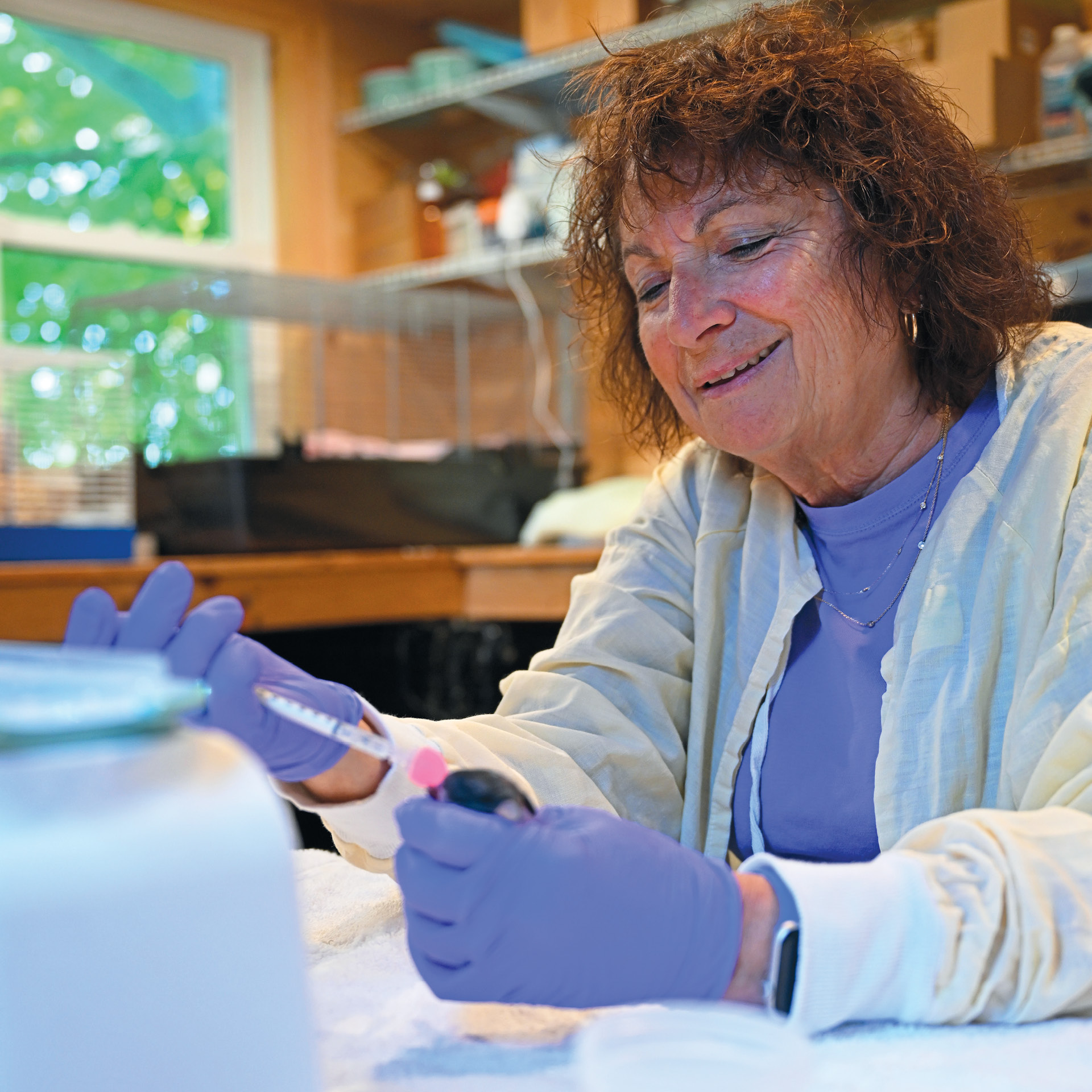
The bunnies are a week old and will join the five already being cared for in Reilly’s nonprofit wildlife rescue, North River Wildlife Rehabilitation, Inc. Before the ACO arrives about 20 minutes later, Reilly will have a fresh cage and an intake form ready for her tiny new guests. A remodeled and insulated shed next to her house is fully equipped with cages, food, water bowls and other supplies, including a microscope Reilly uses to check rabbit droppings for diseases. The setup amounts to an impressive rehab center for wounded and orphaned cottontail rabbits.
She even stocks medicine, including antibiotics and pain medications, for injured rabbits that enter her care. “Amazingly, raw honey, especially Manuka honey native to New Zealand, is often used on wounds since it has both antibacterial and anti-inflammation properties,” Reilly notes. She also has her own experts at the ready. “For more serious injuries, I consult with my veterinarian of record for X-rays and decisions about possible outcomes.”
It took a lot for Reilly to get here. While living in Connecticut, she earned her state license after working at Wildlife Umbrella, a private wildlife station where she completed the required animal-care training. “I learned a lot about how to deal with a whole bunch of different animals, and started to take in squirrels and raccoons and rabbits. I did that for about 20 years.”
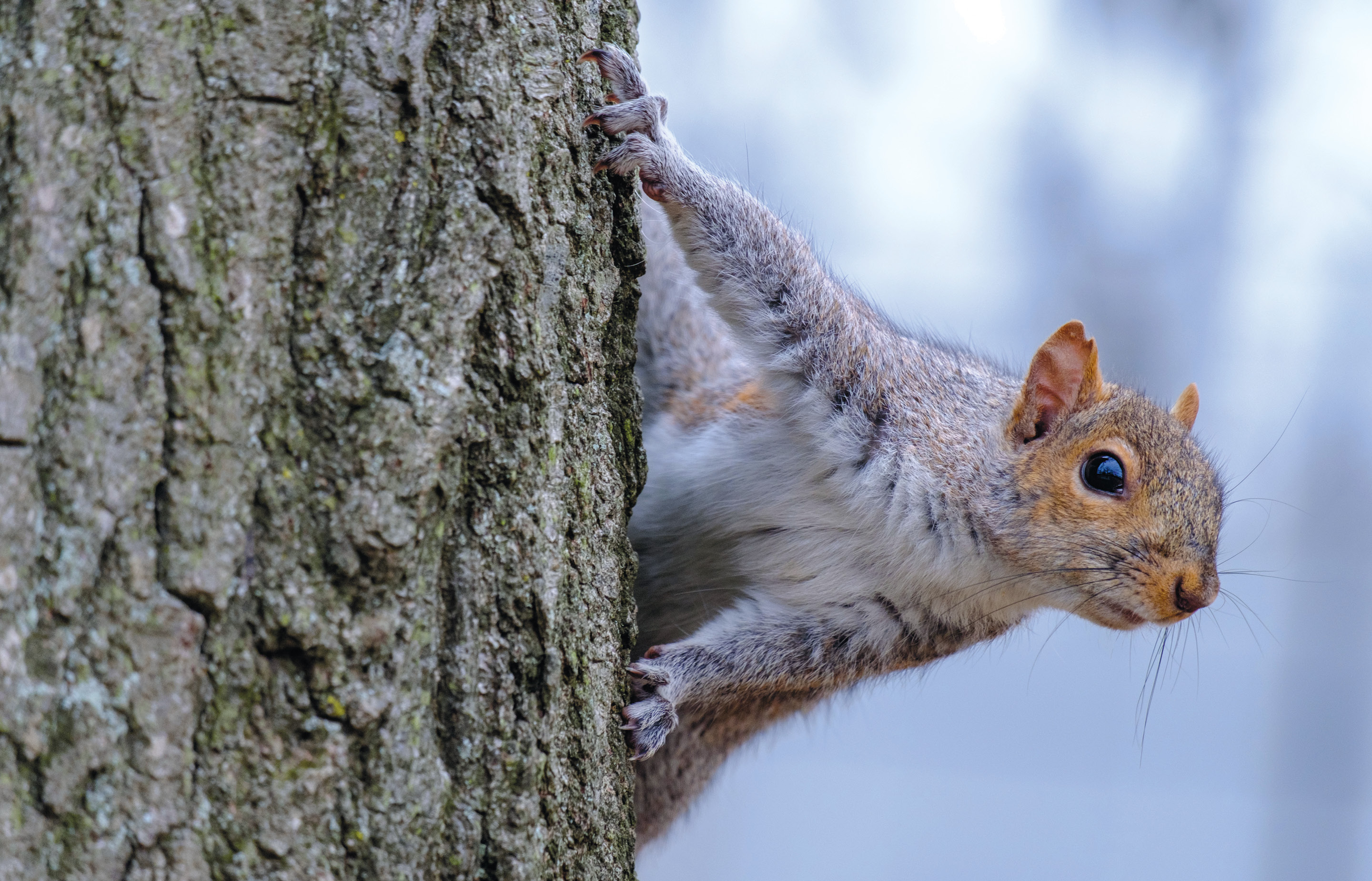
Then she moved to Massachusetts, where she studied at New England Wildlife Hospital, earned that state license, passed her inspection and had to pick a favorite. “At first, I was taking in squirrels and rabbits here out in the shed. The squirrels were a lot of fun, but they were so noisy that they drove the rabbits crazy,” Reilly recalls. “I really only had room for one type of animal, and I decided on bunnies. I’ve been rehabbing them here for about seven years.”
In 2025, Reilly was elected president of the 475-member nonprofit Wildlife Rehabilitators Association of Massachusetts after serving as vice president of the organization for four years. “I originally joined the group years ago just to help out with the newsletter, and then realized I loved their whole goal,” she said of her initially unexpected rise through the ranks. WRAM educates its members and the public about how to help wild animals in need and works to advocate for their well-being. Members who are licensed in wildlife rehab take in a variety of creatures, including birds, turtles, possums, deer—just about any animal in need.