CONNECTICUT COLLEGE
CONNECTICUT COLLEGE
  • Current Issue
  • Past Issues
    • 2026 Issues
    • 2025 Issues
    • 2024 Issues
    • 2023 Issues
    • 2022 Issues
    • 2021 Issues
    • 2020 Issues
    • 2019 Issues
    • 2018 Issues
    • 2017 Issues
    • 2016 Issues
    • 2015 Issues
    • 2014 Issues
  • Older Issues
  • Letters to the Editor
  • Update Your Address
  • Alumni Association
  • News & Media Hub
  • Make a Gift
  • College Home Page

Contact Us

Connecticut College
Office of Communications
270 Mohegan Avenue
New London, CT 06320

Amy Martin
Editor, CC Magazine
asulliva@conncoll.edu
860-439-2526

CC Magazine welcomes your Class Notes submissions. Please include your name, class year, email, and physical address for verification purposes. Please note that CC Magazine reserves the right to edit for space and clarity. Thank you.

Submit Class Notes

Fresh Pours

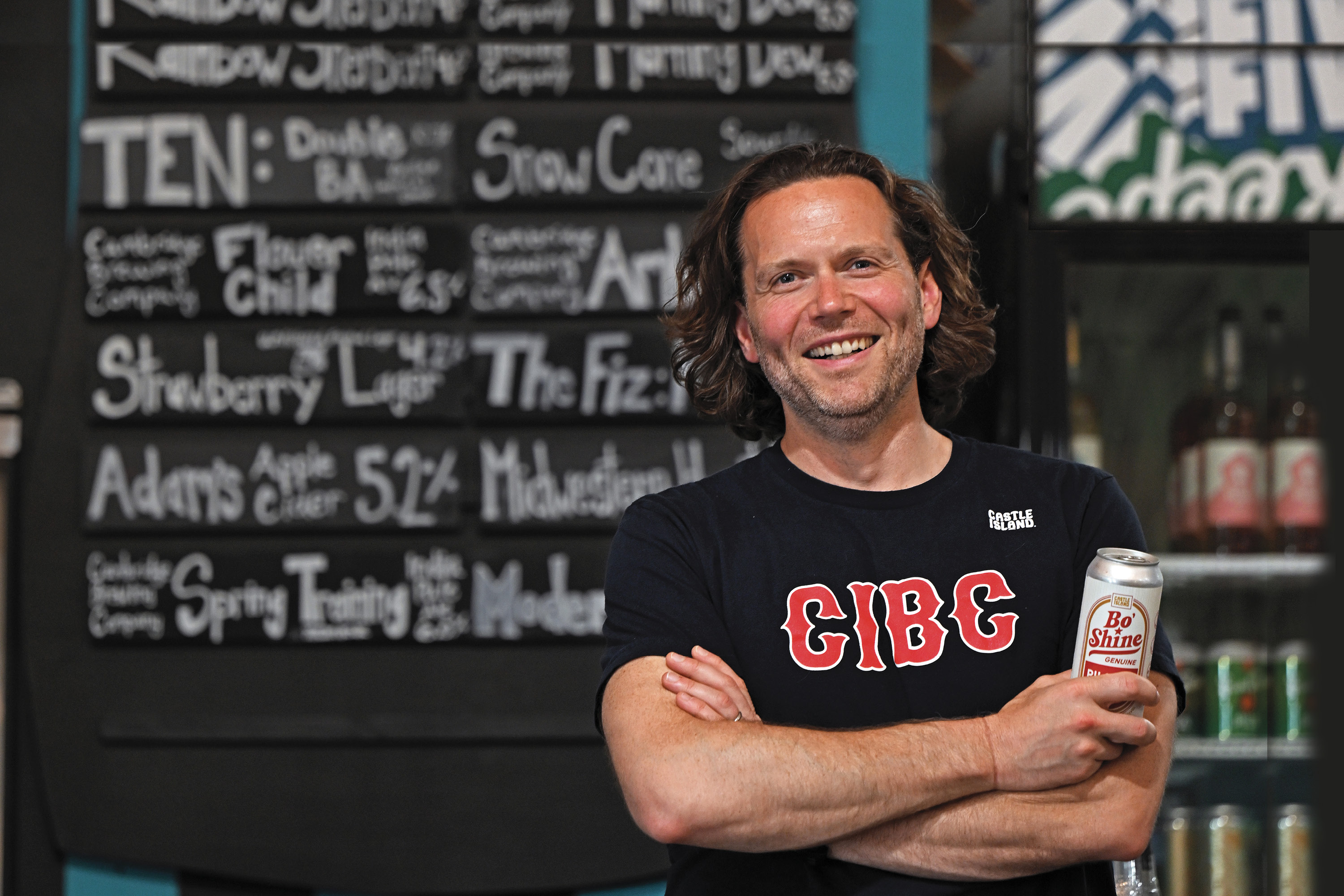
Image of Adam Romanow ’07 Founder and CEO of Castle Island Brewing Company
  • Spring 2026 
  • Fresh Pours

Fresh Pours

Meet four alumni innovators who are shaking up the beverage industry.

By AMY MARTIN

Adam Romanow ’07 ‘brings people joy’ with award-winning brews

It was 2010, and Adam Romanow ’07 was three and a half years into his career at an executive compensation consulting firm. He didn’t love it. 

“We were in the middle of the financial and housing crisis, and we were writing $50+ million pay packages for C-suite executives at Fortune 500 firms, while a whole generation was losing their retirement, losing their homes. And I just didn’t want to be part of that system anymore,” he says. 

So he quit. An avid home brewer, he decided to take a six-month unpaid apprenticeship at a brewery while he figured out his next move, which the economics and philosophy major assumed would still be something in business or finance. 

“Day one I was scrubbing and sweeping floors. But by month six, I had created my own recipe under their label, but with my name on it. We had an event at the brewery, and I was handing samples to people and watching them drink this product, and watching these smiles light up on their faces, and I just felt this amazing, visceral, emotional experience of watching my product bring joy into people’s lives. And I said, ‘That’s the feeling I want for the rest of my life.’” 

So, in 2013, Romanow set out to open his own brewery. “I had a vision of what I wanted the brand to be,” he says. “There were a lot of breweries opening around that time that were super focused on hype and exclusivity, and that, to me, was very antithetical to beer. Beer is supposed to be the great unifier, an affordable luxury. It’s not supposed to drive people apart. It’s supposed to bring people together.”

Castle Island Brewing Co. officially opened two years later, and Romanow and his team have been “cranking out award-winning beers for the Boston area and beyond” ever since. Fan favorites like Keeper IPA and Bo’ Shine pilsner can be found in package stores, restaurants and bars throughout New England, and the brewery has two busy taprooms—one in South Boston and one in Norwood, Massachusetts—where guests can sample creative limited offerings like Rainbow Sherbet sour and 10: SNICKERS Russian imperial stout. 

Recipe development is one of Romanow’s favorite parts of the job. “I always say, ‘You’ve got to make a lot of bad beer to make a good beer. And anyone can make a good beer once—the skill is in making it every single time,” he says. 

“When we think about recipe development, we always start at the end. We start at, ‘What’s the style we’re looking for, what’s the strength? What should it look like? What should it feel like?’ But also, ‘What’s the occasion? Where do we see ourselves drinking this beer?’ And from there, we use our knowledge and a little bit of science to work backward to develop the recipe.”

Romanow and his team aren’t afraid to get creative, and inspiration can come from anywhere. “Within the four walls of our taproom, we can kind of do whatever we want, and at any given time we have some oddball styles on the map. We just kicked the keg of our orange cranberry clove sour, but we have a new one—a strawberry mango sour that was actually inspired by the yogurt that our kids like to eat,” he explains. “It’s such a unique flavor combination that you don’t see in the world at the adult level. We thought, ‘Let’s put it in a beer and see what happens.’ We have fun with it.” 
Anyone can make a good beer once—the skill is in making it every single time.

­— Adam Romanow ’07, Founder and CEO of Castle Island Brewing Company

And while beer is his business, Romanow says he was originally a “wine guy”—and that has made him a better brewer.  

“I did a semester abroad in Barcelona when I was at Conn, and I got super into wine, especially Spanish wines, which I still maintain are the best wines on the planet,” he says. “I’ll frequently draw inspiration from wine and spirits. There’s a lot that they can do in terms of process and technique and ingredients that we can, if not copy, at least take inspiration from on the
beer side.”

Running a brewing company is about a lot more than just making good beer, though, and it isn’t for the faint of heart. Romanow advises anyone who is interested to spend lots of time working in the industry to learn not just about production, but also sales, marketing, operations and regulation compliance. 

“We’re in the manufacturing business. We’re in the distribution and wholesale business. We’re also in the retail game. There are a lot of moving parts,” he says.  

But while the work is challenging, Romanow finds it extremely rewarding. 

“There are very few people in this business who couldn’t make more money and take on less stress in a totally different field, and yet we’re all still here. We’re very motivated by passion, and we all love what we do. We’re there for celebrations. We’re there to lift people’s spirits. We exist to bring people joy,” he says. 

“As a philosophy major, I spent a lot of time just thinking about life and what’s important,” he adds. “Conn prepared me, most importantly, for a life where I love what I do.” 

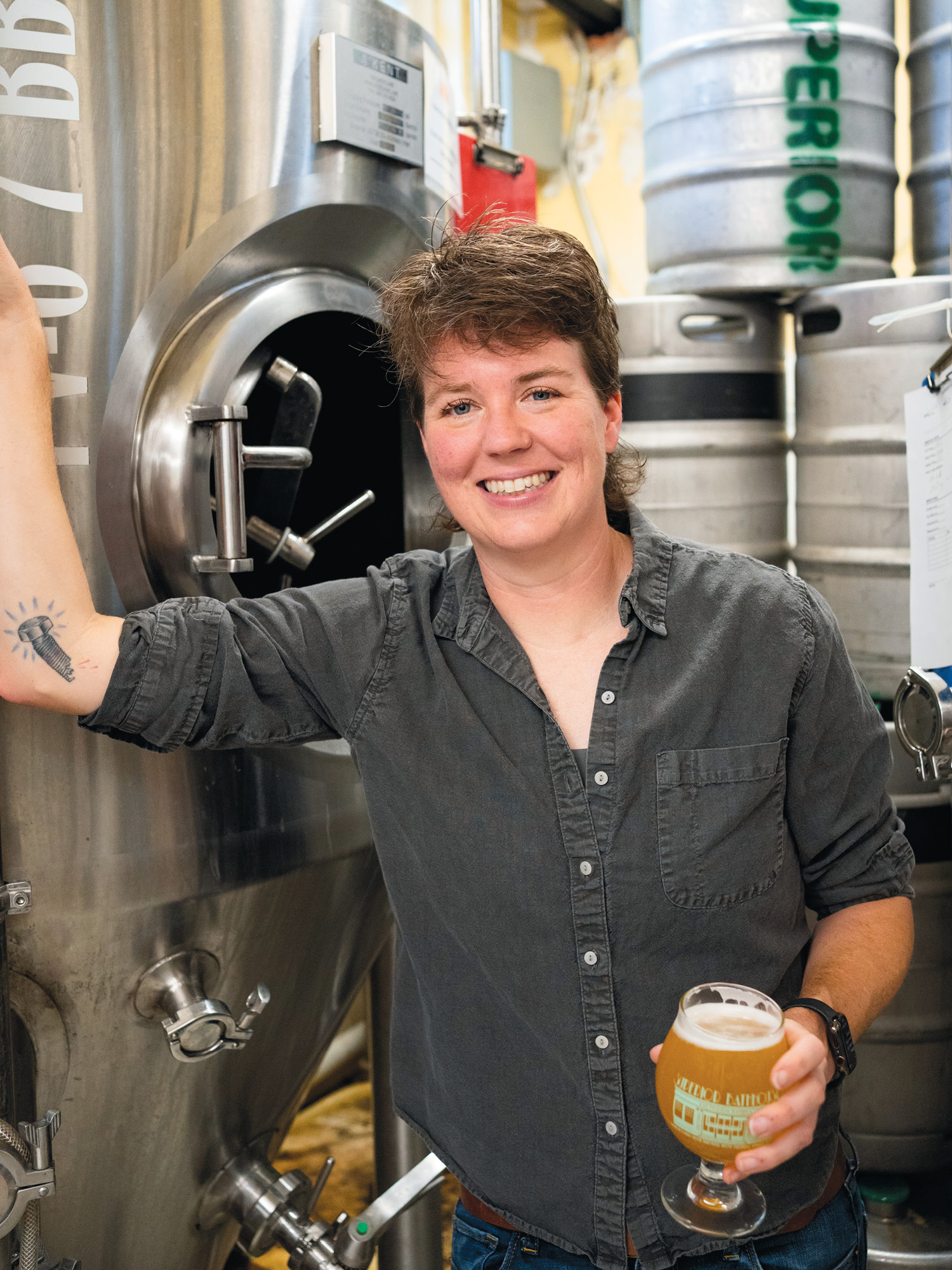
Image of Rose Schweikhart ’04, owner of Superior Bathhouse Brewery Hot Springs, Arkansas
Rose Schweikhart ’04, owner of Superior Bathhouse Brewery Hot Springs, Arkansas

Rose Schweikhart ’04 runs the only brewery in a national park

The natural thermal spring water of Hot Springs, Arkansas, has been attracting visitors—including the likes of Al Capone, Babe Ruth and President Harry Truman—for hundreds of years. People would come from all over to taste the 143-degree water or soak away their ailments in one of eight bathhouses. The springs were so valued that in 1921, the area was declared a national park.

Rose Schweikhart ’04, then a professional tuba player and homebrew hobbyist, first visited when she moved to the area in 2011. And while millions had come before her, Schweikhart was the first to try the famous water and ask: Could I make this into beer?

“I thought, ‘What are the chances I could open a brewery here?’ So I reached out to the National Park Service and just sent this insane email that said, ‘Hi, my name is Rose, and I’m wondering if it’s possible to make beer with your water.’ And a couple hours later, I got a response, ‘Yes, it is possible.’” 

After two years of negotiations and careful planning—“I am manufacturing alcohol on federal property,” Schweikhart points out—she signed a 55-year lease on a historic 1916 bathhouse and began renovations before officially opening Superior Bathhouse Brewery, the first and only brewery in a U.S. national park and the first and only brewery in the world to use thermal spring water.

“Beer is 95% water, so it is the main ingredient,” Schweikhart explains. “If you try different spring waters from around the world, you get a different flavor profile, a different mouthfeel. Chemical-wise, our spring water is very similar to the water in the Düsseldorf region of Germany, which is famous for beer-making.”

The spring water is hot enough to kill harmful bacteria—making it naturally potable—and Hot Springs National Park has an enclosed system to collect it from 47 springs, test it for safety and pipe it directly into the bathhouse-turned-brewery. “We turn a valve and 143-degree spring water comes out and we send it right into our brewing vessels,” Schweikhart says. “We have to heat it just a little bit further to 168 degrees for brewing, and the pH is slightly higher than ideal, so we drop the pH by adding a small amount of food-grade acid to each batch. If we are making a very hoppy beer, like a double IPA, we will add some minerals to the water, like sodium, calcium, magnesium and potassium, to get more of that hop character, but for most of our beers, we make very few adjustments to the water. We just pump it in and start making beer.” 

At any given time, visitors will find 18 different beers on tap. Because of its unique location, the brewery attracts guests from all over the world, including, as Schweikhart points out, “people who aren’t familiar with craft beer but just want to try the water in a new way.” The broad selection includes golden ales and lighter pilsners for those who are used to “domestic fizzy yellow beers.” But the more adventurous can sample season selections like Spicy Ride, a medium-bodied jalapeño ale, or Foul Play, a rich oatmeal stout featuring chocolate and toffee flavors. Space Force, a hazy IPA made with hints of blood orange and tropical fruits, is a staple favorite. Schweikhart also recommends Superior’s Belgian beers. “We make a Belgian golden ale, a Belgian strong quad, which is about 10% ABV. It’s dark in color with really delicious flavors from the Belgian yeast.” The brewery also offers a full food menu, so guests can pair their selections with delicious fare like a bacon smashburger, a steak sandwich or a sweet potato salad. 

Brewing beer is like making music, and your brewery and your equipment are your instruments.

­— Rose Schweikhart ’04, owner of Superior Bathhouse Brewery

Schweikhart says she has learned much over the last 13 years. “I’ve become quite the plumber and electrician and fixer of equipment. Something is always breaking when you have a busy business in a historic building,” she says. Superior now has more than 50 employees, and it continues to grow. “Being a business owner is really cool because you have this long-term vision, and then you take these incremental steps toward your goals. Now, I look back at what my dreams were 10 years ago, and I’ve been able to check off almost every single one. It’s really satisfying.”

Making beer her business wasn’t always the plan. Schweikhart studied the tuba as a music major at Conn, and she went to graduate school at the Royal Northern College of Music in Manchester, England. “Tuba players like to drink beer, naturally,” she says with a laugh. “I fell in love with the beers around Europe and England, and beer became a hobby of mine.” 

She started her career at a university in Illinois, but changed course after moving to Arkansas with her then-husband and launching the brewery. And while she’s now retired from the tuba, Schweikhart draws strong parallels between music and beer-making. 

“Studying music and playing in ensembles really teaches you teamwork. It teaches you how to respond and pay attention in real time to what other people are doing. Music is really a collaborative mathematical process to get to the sounds you want and the way you want the music to end up,” she explains. “Brewing beer is like making music, and your brewery and your equipment are your instruments. The music you create is the beer you are making. There’s an infinite number of ingredients and combinations. It’s an artistic process for sure.” 

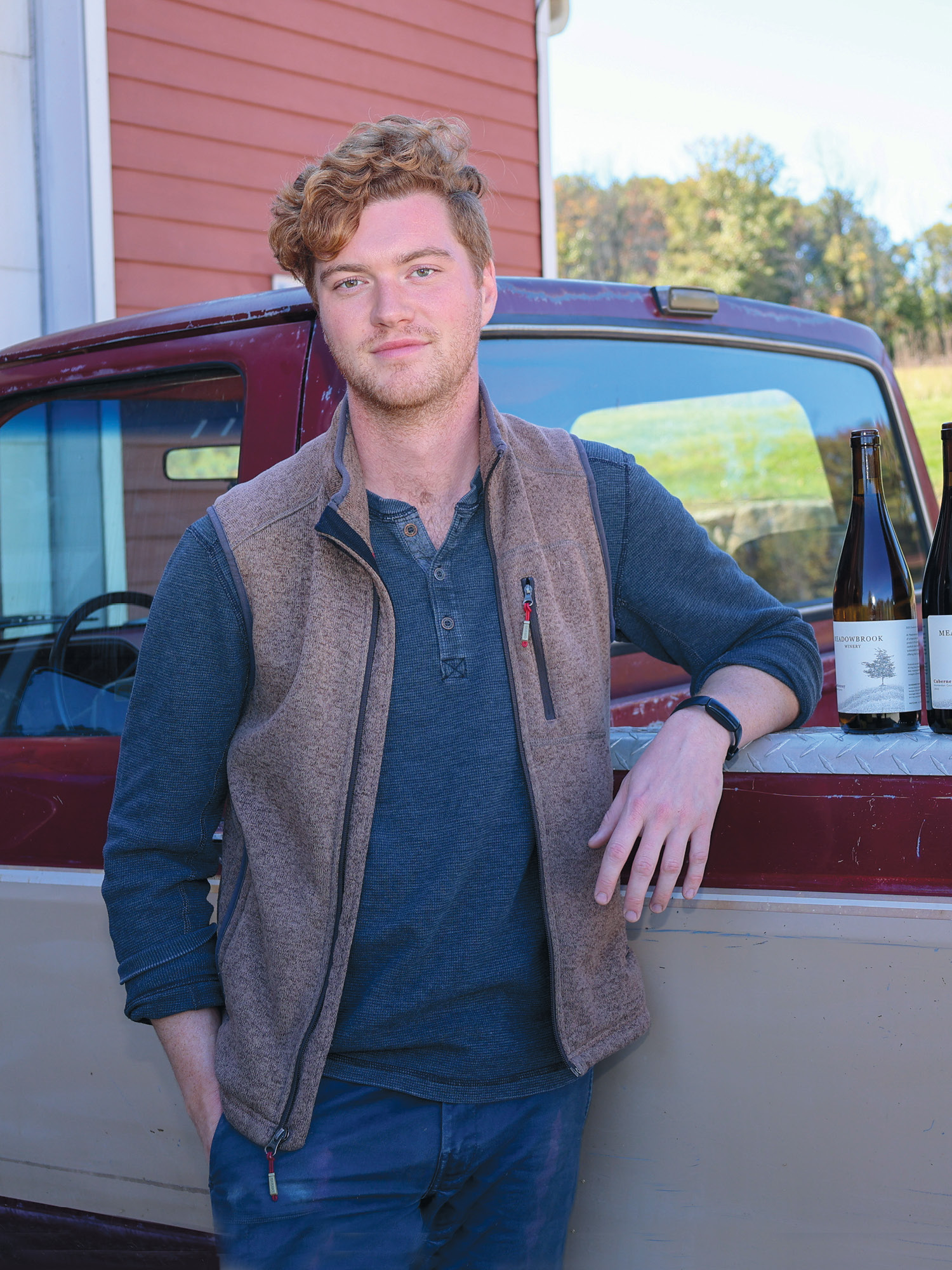
Image of Conor Quilty ’15 General Manager and Winemaker at Meadowbrook Winery Oldwick, New Jersey
Conor Quilty ’15 General Manager and Winemaker at Meadowbrook Winery Oldwick, New Jersey

Conor Quilty ’15 is putting New Jersey on the viticultural map

Winemaker Conor Quilty ’15 couldn’t have asked for a better start to his career. After graduating from Conn with a degree in botany, he spent two years learning his trade in California and Australia. Then he got a full-time position under the outgoing winemaker at well-established Unionville Vineyards in Ringoes, New Jersey. Very shortly, he was promoted to lead winemaker, making him “almost certainly” the youngest head winemaker at any vineyard in the country.

He quickly made a name for himself in the burgeoning New Jersey wine scene. “Unionville had a great portfolio, and it was fun to be able to experiment and to learn the region,” Quilty says. “I always say that if you can make good wine on the East Coast, you could make good wine anywhere, because it’s a lot harder here than in the Mediterranean desert-like climates.” 

Quilty could have coasted in the job he says he essentially lucked into, but more serendipity was on the way. At a Unionville tasting in early 2020, he met Frank Schwab, who had a large swath of land in northern New Jersey and was hoping to start his own winery. The two got to talking, and Schwab invited Quilty to visit his 170-acre property and serve as a boots-on-the-ground consultant. 

“He had this concept where he wanted his winery to be high touch and experience based, and he wanted it to be about a real appreciation for the land. We met when the vines were about a year old, so he was just getting started. We had a really nice rapport and a similar mindset, and he offered to have me come in and take over as general manager and basically start everything from scratch,” Quilty says. 

It was certainly a risk, and while Quilty was clearly a talented winemaker, there was so much more to building an entire winery from the ground up that he didn’t know. But with the encouragement of his wife, Amanda Quilty ’18—and the bravado of youth—he took the leap in March of 2021. 

“I was young enough that I was still cocky, like, ‘I got this. What’s there to learn?’ It’s so funny to look back on now. I had no idea how much I didn’t know about the business side or even how much more I could learn about growing and winemaking,” he says.  

Quilty proved a quick study, and Schwab had laid a great foundation based on meticulous research into which grapes and wine styles would be the best fit for his land. 

“We came into the project knowing we wanted to be very focused, to grow five varieties and make 10 wines we can make every single year. Our vineyard is designed so if we have a hurricane in September, I can still put out a production for the year. It’s about growing the right things and understanding how you’re growing them to make the styles of wine you are trying to make,” Quilty explains. “A lot of the work is done in the vineyard, and I try not to do too much in the cellar besides some stylistic techniques and working with the vessels that lend themselves well to the styles we are making.”

By 2023, Quilty had begun building Meadowbrook’s portfolio, and the winery got quite the introduction to the Garden State wine scene when his 2022 Reserve Cabernet Franc won the 2024 Governor’s Cup for the Best Red Vinifera Wine. “It was great to get some recognition right off the bat,” Quilty says. 

If I were to have gone to a major university, I definitely wouldn’t be in the same position I’m in right now.

­— Conor Quilty ’15, General Manager and Winemaker at Meadowbrook Winery

Now, wine enthusiasts can visit the winery—the closest farm winery to New York City—and sample Quilty’s creations in the newly constructed tasting room, which boasts sweeping views of the vines and rolling hills of Hunterdon County and offers guests a premium tasting experience. The wines, all served by certified sommeliers, are paired with local fares like cheese and sourdough.

Among Meadowbrook’s portfolio is an Albariño, a white variety with notes of peach, apricot and passionfruit coupled with bright acidity. “Albariño is typically grown in the Rías Baixas region of Spain. It’s a really cool variety and people really respond to it. It’s our bestselling wine in the tasting room because it’s not something you usually see, especially in New Jersey.” 

One of the newest offerings is their Blanc de Blancs, a traditional method sparkling wine. “Frank is a big champagne guy, and he thought that because it gets so cool here, we could probably grow champagne grapes, so those were some of our first plantings,” Quilty says. “I didn’t have a lot of experience in the traditional method of sparkling winemaking, so it’s been awesome learning about different blends and different techniques and what we can do.” 

Quilty, who initially came to Conn planning to pursue a pre-med track, credits the Botany Department with helping him find his true passion, and says it was his broad liberal arts education set him up for success at a very young age. 

“I was so excited to learn what I was learning—I thought every single botany class was just the greatest thing ever. I also had an English literature minor and I studied environmental science and anthropology. In my line of work, I use my writing and critical thinking skills almost as often as I use the botany part of my education,” he says. “I know if I were to have gone to a major university and gotten a Bachelor of Science in plant biology, I definitely wouldn’t be in the same position I’m in right now.” 

And Quilty is exactly where he wants to be. “It’s been so rewarding to see what we’ve been able to build at Meadowbrook. It’s a great time to be in the wine industry, and I’m excited to see how much more we can do.” 

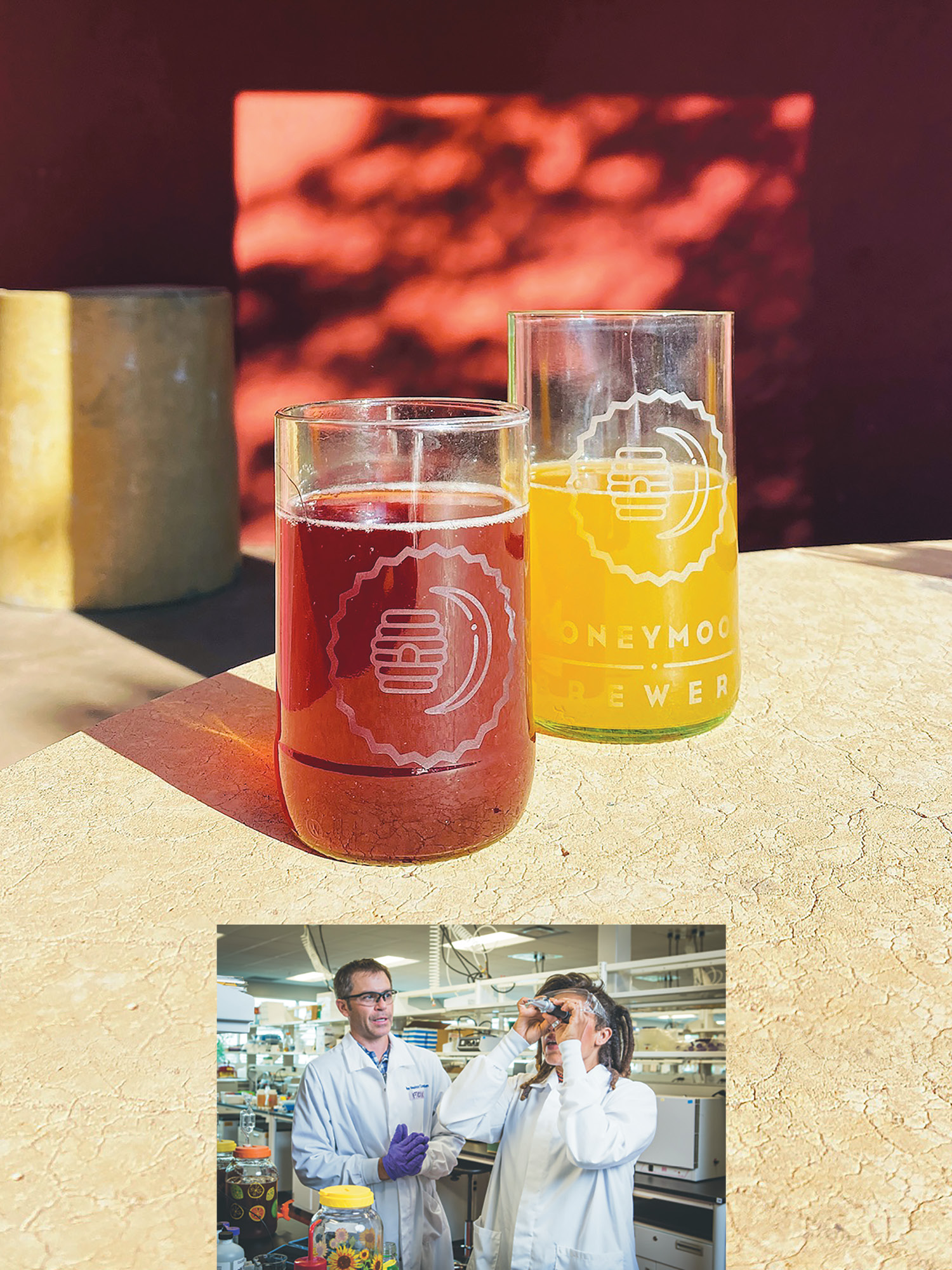
Glass of red and yellow kambuchas, inset image of Ayla Bystrom-Williams ’07 Founder and CEO of Honeymoon Beverage Company in a lab with a partner.
Large image: specialty alcoholic kombuchas, produced by Honeymoon Beverage Company. Inset image: Ayla Bystrom-Williams ’07, founder and CEO of Honeymoon Beverage Company, works in a lab with a partner.

Ayla Bystrom-Williams ’07 positions hard kombucha to be the next big thing 

Ayla Bystrom-Williams ’07 had a bold idea. A craft beer lover from her days in New England, she had moved west, gotten into yoga and was looking for a drink that would better fit her new lifestyle. A friend introduced her to kombucha, a fermented, fizzy, tea-based drink that traditionally contains trace amounts of alcohol. 

It was the mid-2010s, and the beverage market was shifting. Younger drinkers especially were looking for lower-alcohol options and functional beverages, which provide some benefit to the imbiber. A hard kombucha would be perfect, Bystrom-Williams thought, and she launched Honeymoon Brewing Co. in 2014.

But producing alcoholic kombucha at a commercial level would be tricky—no one had been able to bring such a product to the market before. So Bystrom-Williams, who was now living in her native New Mexico, turned to the Los Alamos National Laboratory for help. 

“We have access to world-class scientists with this rare technical resource that happens to be in New Mexico. The labs are mostly known for weapons defense work, but they also have a technical assistance program,” Bystrom-Williams says. “I reached out and got partnered with a bioorganic chemist who happens to love beer brewing.”

Over the next several years, Bystrom-Williams and her partner, James Hill, worked together to develop a two-part, tea-based fermentation process to brew gluten-free kombucha with 4.8-5.5% ABV.

“Kombucha is really fascinating, because it’s an aerobic fermentation,” a process that uses oxygen, usually in an open-air environment, Bystrom-Williams explains. “So you have this unique environment where you get all of these organic acids and probiotic profiles that make it more of a functional beverage. But then to do the alcohol component was the trick for us. Figuring out a way to execute it took a lot of trial and error.” 

In 2016, Honeymoon Brewing won a $220,000 prize from Miller Lite’s Tap The Future competition to scale up production, and the team opened a taproom in Santa Fe in 2018. The seven different flavors included bestseller Cereza Negra, a dark cherry with a juicy tannic backbone that would go on to win the silver medal at the 2023 World Kombucha Awards in Barcelona; La Moneda, featuring grapefruit, Himalayan salt and lime; and Flor, which has tart hibiscus made with an extra steeping process. Soon, the products were flying off the shelves at New Mexico Whole Foods and other local retailers. 

In the meantime, Bystrom-Williams and Hill applied for a patent for their unique brewing system.

“Patents are pretty unusual in the beverage industry, because the processes, even for kombucha, are often thousands of years old, so they’re well known and not proprietary,” Bystrom-Williams says. “We thought what we were working on was unique enough, but we didn’t really expect to get a patent.” 

By 2023, Honeymoon was maxed out on production. “We were selling every drop we could make, and our next move was to either expand manufacturing in a small market like New Mexico or partner with a much larger company to co-manufacture.” 

Patents are pretty unusual in the beverage industry, because the processes, even for kombucha, are often thousands of years old.

­— Ayla Bystrom-Williams ’07, founder and CEO of Honeymoon Beverage Company

As Bystrom-Williams explored those options, she made the difficult decision to close the taproom. And then, on July 15, 2025, she got the news that would change everything: The United States Patent and Trademark Office had officially awarded her patent number US 12,359,149 B2 for the system-level brewing method to produce kombucha-based alcohol with consistency, integrity and flavor. 

With the patent in hand, the newly renamed Honeymoon Beverage Co. is working with companies both large and small to license the proprietary technology and bring its award-winning brews to new shelves and audiences. 

“It’s quite exciting, because it changes our whole business model,” says Bystrom-Williams, who earned an MBA from American University last year and is also serving as a consultant for other beverage startups. 

“I just love this field and I love talking to other entrepreneurs in the beverage space,” she says. “I studied sociology, and Connecticut College gave me this exceptional education and way of deeply thinking about the world, and one of the things I’ve realized is that fermentation and alcohol have a such a long history with humans. There’s this inherent relationship stemming perhaps originally from our need for access to easy calories, and then there’s the concept of almost needing a psychological state change just to survive being human. Alcohol is really a fundamental lens through which you can look at humanity.”


  • Make a Gift
  • Contact Us
  • Alumni Association
  • News & Media Hub
  • Update Your Address