CONNECTICUT COLLEGE
CONNECTICUT COLLEGE
  • Current Issue
  • Past Issues
    • 2026 Issues
    • 2025 Issues
    • 2024 Issues
    • 2023 Issues
    • 2022 Issues
    • 2021 Issues
    • 2020 Issues
    • 2019 Issues
    • 2018 Issues
    • 2017 Issues
    • 2016 Issues
    • 2015 Issues
    • 2014 Issues
  • Older Issues
  • Letters to the Editor
  • Update Your Address
  • Alumni Association
  • News & Media Hub
  • Make a Gift
  • College Home Page

Contact Us

Connecticut College
Office of Communications
270 Mohegan Avenue
New London, CT 06320

Amy Martin
Editor, CC Magazine
asulliva@conncoll.edu
860-439-2526

CC Magazine welcomes your Class Notes submissions. Please include your name, class year, email, and physical address for verification purposes. Please note that CC Magazine reserves the right to edit for space and clarity. Thank you.

Submit Class Notes

Transformative Trips

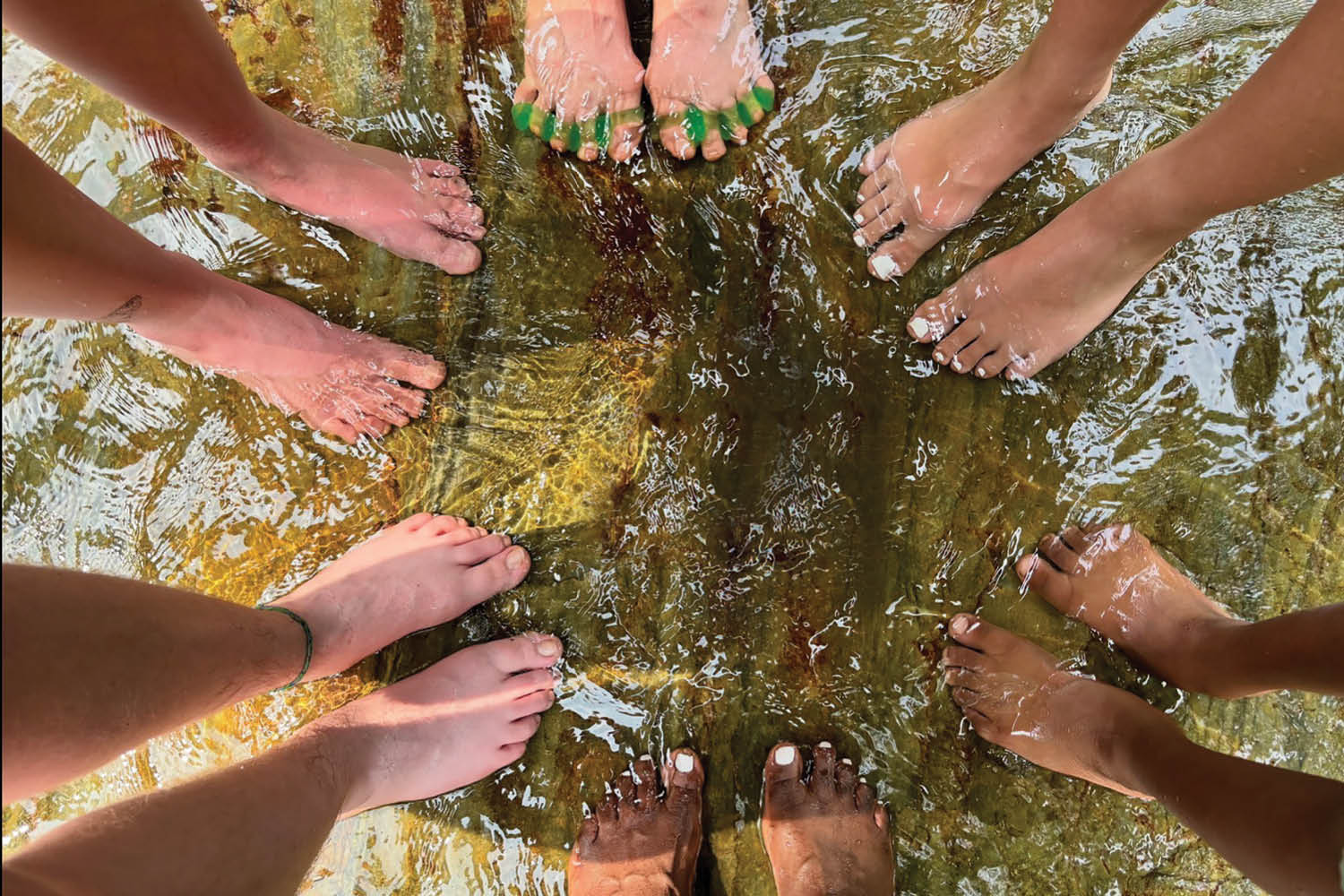
Top-down shot of a bunch of pairs of feet wading in the water

Transformative Trips

Short-term international experiences pack a powerful educational punch.

By Melissa Babcock Johnson

I

nstead of heading to their respective homes to spend the Thanksgiving 2025 holiday with family and friends, Dixie Dayton ’26, Sabrina Malec ’26 and five of their Connecticut College classmates boarded a plane to Taitung, Taiwan, with their Chinese language professor, Tek-wah King. The group spent a week with the people of the Puyuma tribe, an Indigenous Austronesian community renowned for its musical heritage and resilience through both Japanese and Chinese colonization since the 17th century.

In their fall semester class, the students were learning about the Puyuma’s language and cultural revitalization. In Taitung, they were able to witness it firsthand. They observed classes at the Puyuma Nanwang Experimental Elementary Tribal School, visited with and interviewed writers and artists, toured prehistoric sites and mingled with the locals in Taiwan’s “black mountain” province, which has the highest Indigenous population. 

At the school, they watched as children practiced the Puyuma language. “It wasn’t a typical sit-down class with a textbook and a PowerPoint slide,” explains Malec, an anthropology and East Asian studies double major and scholar in the Toor Cummings Center for International Studies and the Liberal Arts (CISLA) from Bedford Hills, New York. “They were playing games and singing songs, and I think that was really impactful, because we had learned about their efforts to revitalize their language, and here we were seeing it in action.”

Dayton, an East Asian studies and Slavic studies double major and CISLA scholar from Camphill, Pennsylvania, said a local guide led the group on a Mandarin-language tour through Dulan, a town in the territory of the Amis people, introducing mountains by their Indigenous names, showing the students ceremonial places, and stopping along the way to name and describe the importance of the native plants. “It was really interesting to see his relationship with nature, and how the land itself reflects on the culture,” Dayton says.
We partner with faculty and students to move beyond travel and toward experiential learning integrated into Conn’s global curriculum.

­— Melissa Ryan, Director of the Walter Commons for Global Study and Engagement

The trip was made possible through Conn’s Travel, Research and Immersion Program—often referred to by its very fitting acronym, TRIP—which allows faculty to apply to the Office of Study Away for funding and approval to include a short-term travel component within a course. The program, supported with gifts from Sandra Shahinian ’74, Tamah Nachtman Wiegand ’68 and the Joukowsky Family Foundation, is one of several short-term travel options that allow Conn students to learn about real-world issues, conduct research and engage in cultural exchange, usually during breaks in the academic schedule.  

“At Conn, the value of international programming lies in the intentionality of its design,” says Melissa Ryan, Director of the Otto and Fran Walter Commons for Global Study and Engagement and International Fellowships. “We partner with faculty and students to move beyond travel and toward experiential learning integrated into Conn’s global curriculum and students’ academic paths. 

“Grounded in scholarship—through intentional preparation and a structured cycle of reflection—our programs create opportunities to apply learning, navigate cultural nuances and cultivate diverse perspectives on critical issues, advancing our mission to ‘educate students to put the liberal arts into action as citizens in a global society.’”

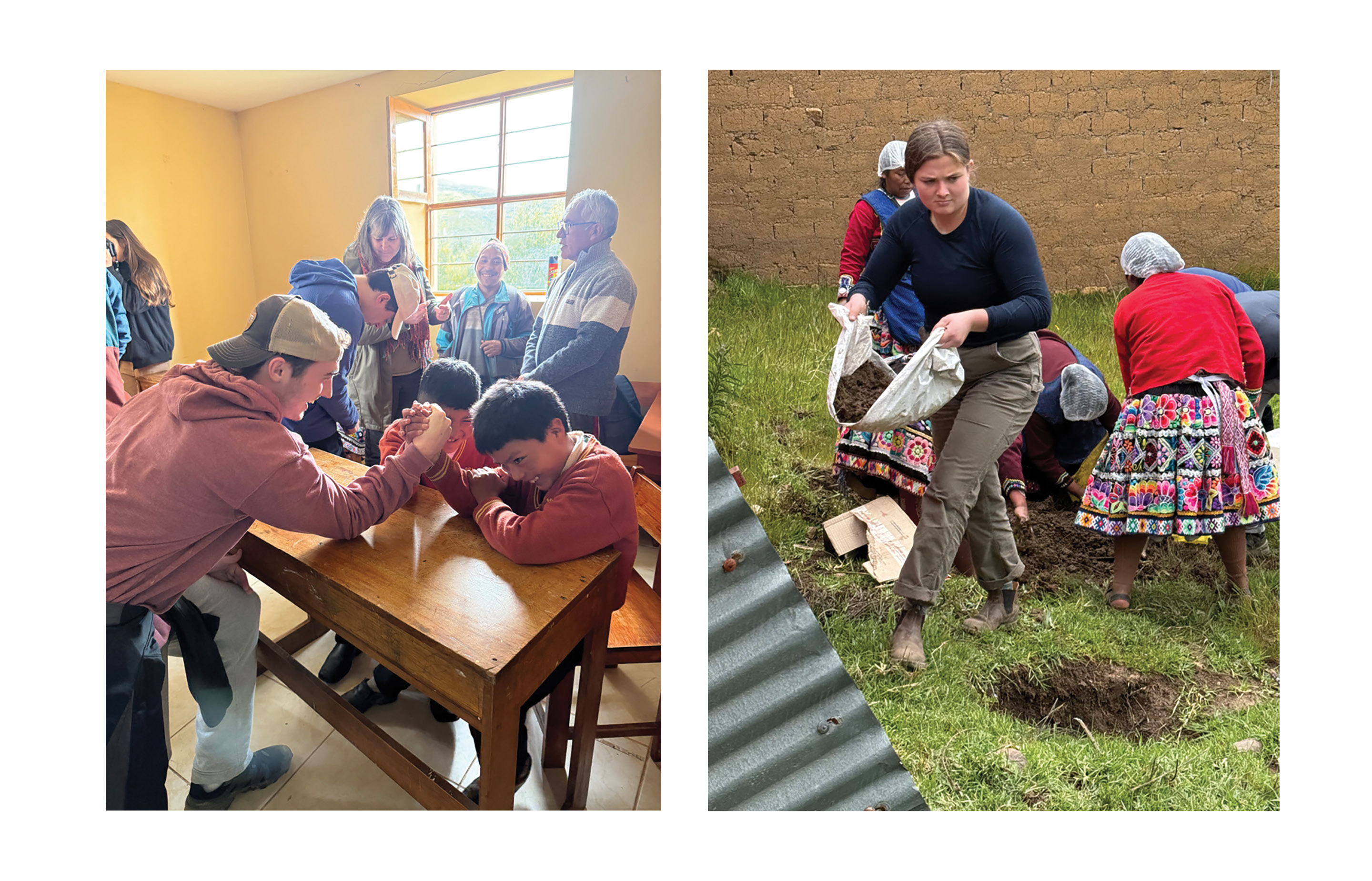
Images of students abroad in Peru, one in a classroom, one working in a garden
Left: Conn students visit a local school in Amaru, one of the communities in Parque de la Papa. Right: Sophia Stevens ’26 assists in the preparation of the Pachamanca, the traditional open-pit, underground cooking method in Cusco, Peru.

13.5°S, 71.9°W – Cusco, Peru

Over spring break last March, Will Johnstone ’26 and Gideon Bernstein ’26 traveled to the highlands of the Sacred Valley in Cuzco, Peru, with Associate Professor of Hispanic Studies Emily Kuder, Assistant Professor of Economics Noel Garrett and a group of fellow Conn students pursuing an Integrative Pathway—a set of courses and experiences organized around a central theme and an integral part of Conn’s innovative Connections curriculum. The journey to South America was made possible through the Community-Based Global Learning Program, a multi-year pilot run by the Walter Commons with funding support from Susan Eckert Lynch ’62.

Although the trip lasted just over a week, Johnstone, a government and psychology double major and scholar in the Entrepreneurship, Social Innovation, Value and Change Pathway from Beverly, Massachusetts, says he made “a million amazing memories,” especially during his time at a homestay in Parque de la Papa, also known as the Potato Park. 

“We sang, danced, played games and told stories with the Indigenous Peruvian people, a memory I will carry with me for the rest of my life,” he says. “I was able to gain new perspectives on my coursework and projects. I’m extremely grateful for the creativity and perspective that the Peru trip gave me.”

Garrett, who serves as the Entrepreneurship Pathway co-coordinator, says the trip was structured to give each student an experience related to their specific pathway. “The Entrepreneurship scholars explored how these communities sustain themselves with their own economy. The Public Health students learned that their food and medicine are all plant based, so their health is self-sustaining, and only when the situation is dire do they go off the mountain for a doctor,” he explained. 

“Creativity scholars learned about the textiles and goods made right there in these remote mountains. The Food Pathway students learned about how, in Parque de la Papa, the potato is used for everything. Students in the Social Justice and Sustainability Pathway lived, along with the rest of us, among these five communities that sustain themselves together in the Andes. 

“It was amazing for them to see that this isn’t just stuff we’re learning in the classroom—this is real. They really put their education into action.”

Bernstein, a psychology and education double major and scholar in the Creativity Pathway from Skokie, Illinois, says the experience inspired his summer 2025 internship at the American Enterprise Institute. “It opened my eyes to the wide range of policies that nations adopt to structure their education systems.”

Professor of History Leo Garofalo, who coordinates the Social Justice and Sustainability Pathway, will bring a new group of students to the Potato Park this spring as part of a TRIP course, “Modern Latin American History.” 

“This is innovative integrated learning at its best,” he says. “Students prepare ahead of time in Pathway classes, reflect during the trip, and bring their learning and unanswered questions back into class. Then the whole campus benefits from presentations by groups and individual members at the All-College Symposium each November.”

It’s beautiful to break down assumptions, to debunk stereotypes, and to witness the connections.

­— Professor of Dance Shani Collins
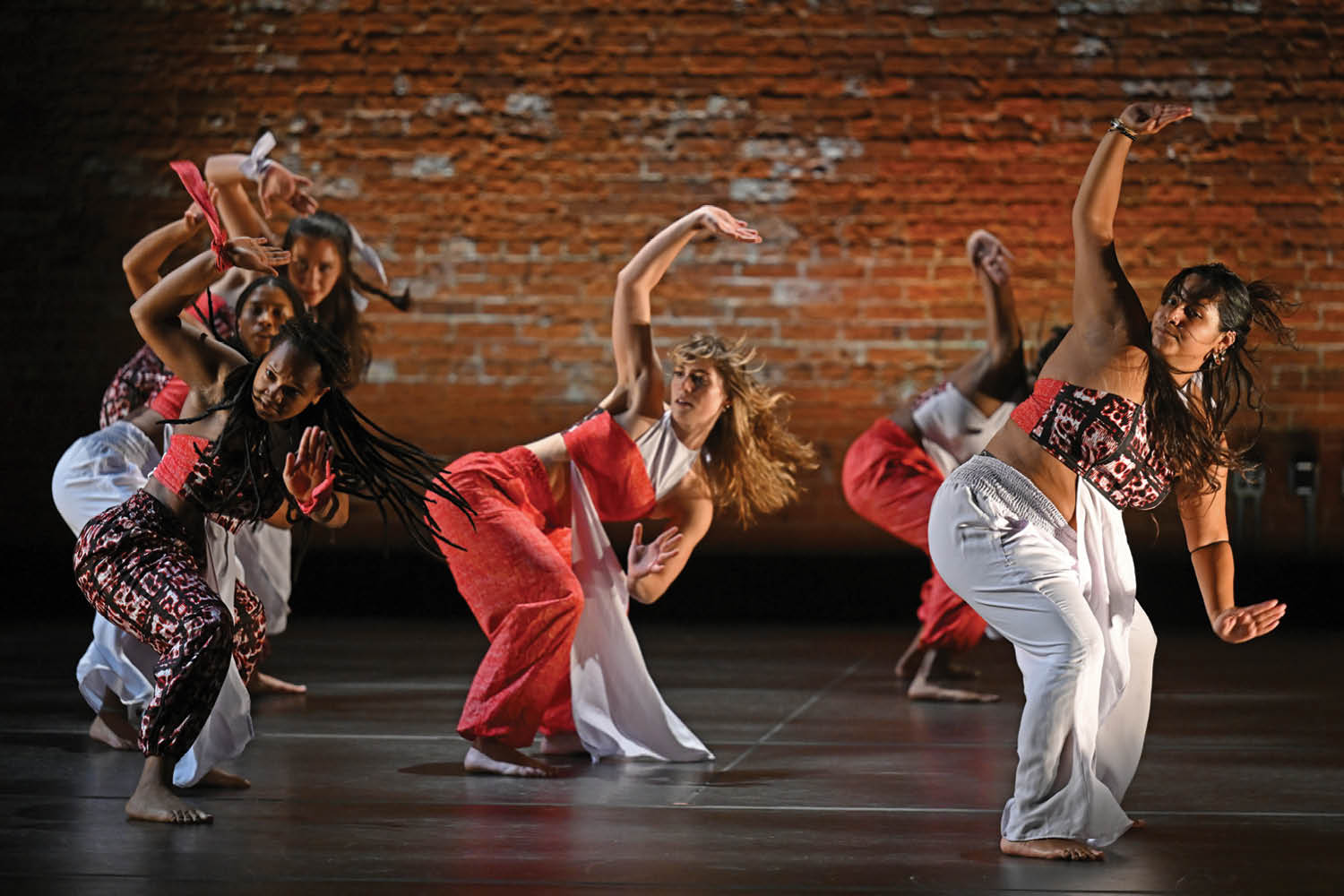
Dance students showcase their 2024 Spring Break TRIPS course performance in the Department of Dance’s spring Capstone show at Conn.
Dance students showcase their 2024 Spring Break TRIPS course performance in the Department of Dance’s spring Capstone show at Conn. The students chose the fabric prints for their costumes, which were made in Ghana by Dede Sartorial, a fashion design company in Accra.

5.6°N, 0.2°W – Accra, Ghana

In 2023, Professor of Dance and Director of Africana Studies Shani Collins brought students to practice West African dance with national companies in Accra and Kumasi, Ghana, for the two weeks of Conn’s spring break through another TRIP course.

The experience proved transformational for Catja Christensen ’23, inspiring her to pursue a Fulbright Research grant for graduate study in dance choreography performance at the University of London, where she completed a dissertation analyzing soccer as a performance of national identity in global competition. 

“We were immersed in Ghanaian history and culture, visiting Cape Coast and Elmina slave castles, the Assin Manso last bath ancestral grounds, the Kakum National Park, and several villages and schools along the way. We practiced Twi, the Akan language, and made incredible connections with people who guided us in our research. We learned two whole dances in two days through movement and built this rapport without speaking, without having a common language, and that was an incredible thing to witness,” says Christensen, who is now a marketing and communications executive at the Royal Ballet School in London. 

“It genuinely changed my life and my worldview. It shaped my dissertation, because it really showed me that movement is a form of communication that is so important.” 

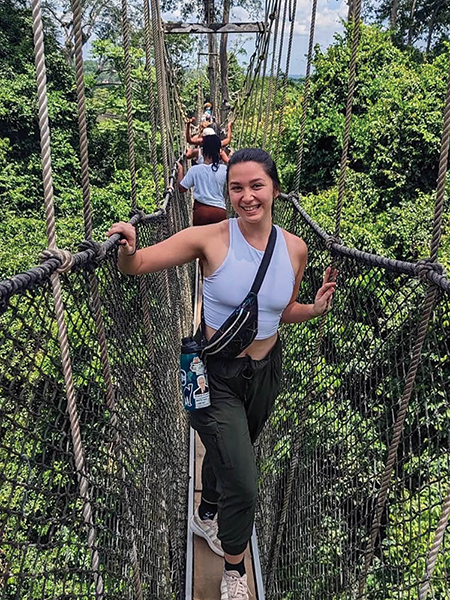
Catja Christensen ’23 crosses a rope bridge in Kakum National Park in the coastal area of the Central Region of southern Ghana. During the canopy and rainforest walk, students learned about the area’s native plants and animals.
Catja Christensen ’23 crosses a bridge in Kakum National Park.

Collins agrees that dancing transcends movement—it’s about fully inhabiting one’s body and using it as a tool to connect and communicate with confidence and power. “Taking leadership and having agency starts with being embodied. It’s part of the West African philosophy: You participate, not spectate. If you can talk, you can sing. If you can walk, you can dance,” she says, adding that while they are in Ghana, Conn students build relationships with and study alongside local students and professors and actively engage with the community. “It’s beautiful to break down assumptions, to debunk stereotypes, and to witness the connections that they have with the children, with the people, with the food.”

Students also bond with their professors and each other. Nell Hamilton ’26, a theater major with a double minor in dance and government from Eastham, Massachusetts, says she connected with Collins and the other students “for life” on her first full day in Ghana in July 2024 as part of a summer pilot program through the Office of Study Away, for which she earned a travel scholarship from the Walter Commons. “We pushed through travel exhaustion to trek to Boti Falls and swam through the waterfalls. It was a perfect way to start our trip, feeling the waterfalls’ power and swimming together as a group. The trip enriched me so deeply as a human being and strengthened my dance and global studies.”

Upon return to Conn, the students offer community performances, conveying important messages through movement. “Dance on the stage is such a powerful platform to shift social consciousness,” Collins says. “We look at African enslavement, and ask ourselves, ‘How do we embody that, and how can we retell some of the stories with integrity, but also be responsible as a community for it to never happen again?’ The experience of the intensive is around self-discovery and different identity explorations for students in terms of their own position. I love students to see the experimental part of storytelling.”

6.8°S, 39.3°E – Dar es Salaam, Tanzania

Funded internships provide other opportunities for short-term travel, particularly over the summer. The Walter Commons supports the Bessell Global SDG Internship Program, funded through the Diane Miller Bessell ’59 Endowment for International Cooperation & Sustainable Development. The program supports internships related to the 17 United Nations Sustainable Development Goals, including quality education, gender equality and climate action. Delaney Brenner ’26, a biochemistry, cellular and molecular biology and French double major from Virginia Beach, Virginia, jumped at the chance to participate. 

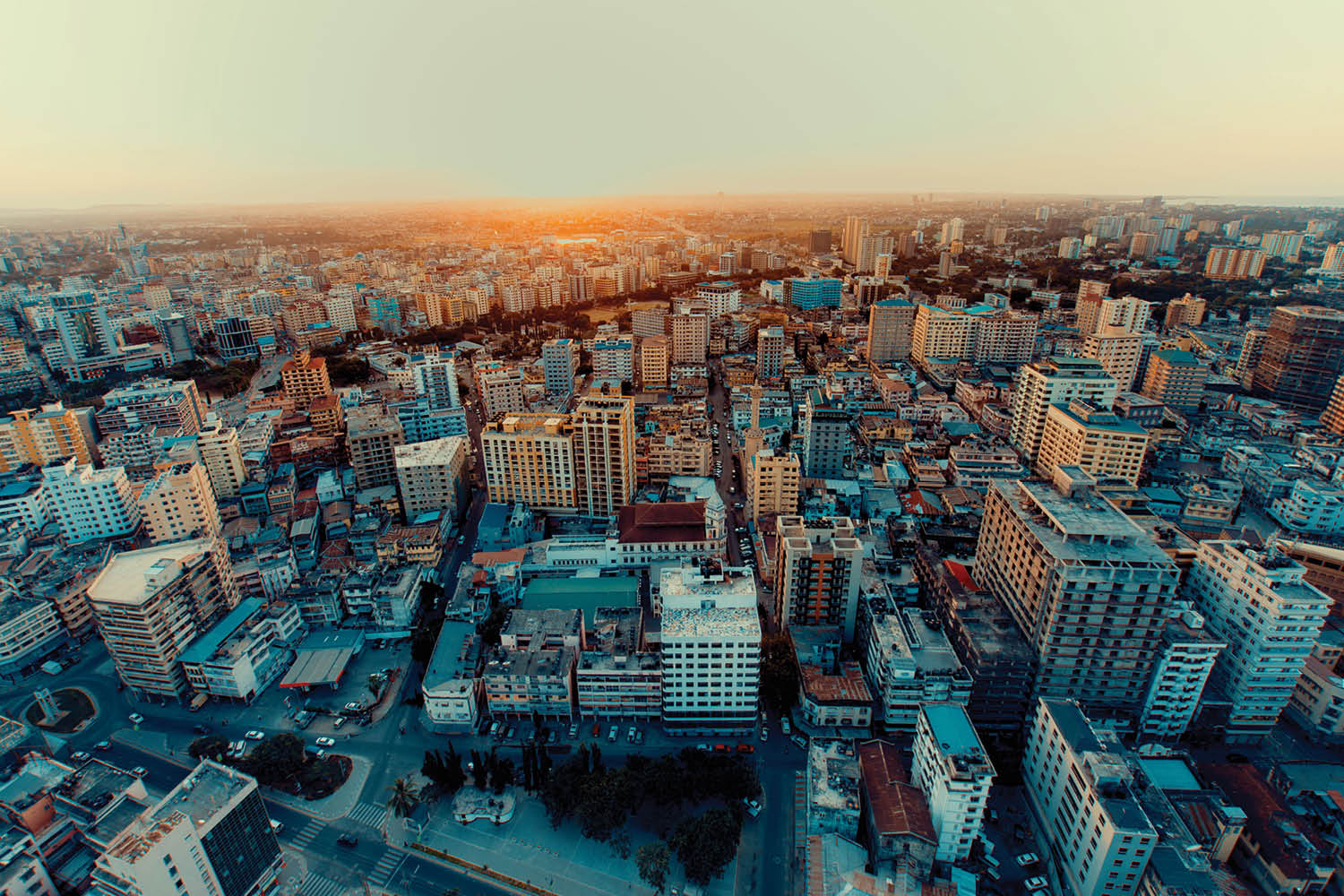
Aerial view of Dar es Salaam, Tanzania at sunrise
Dar es Salaam, Tanzania

Brenner, who plans to combat global health inequity as a doctor, supported the work of the Sasamani Foundation for two months in Bagamoyo and Dar es Salaam in the East African coastal country of Tanzania during the summer of 2024. She taught computer literacy, chemistry and biology, and worked in a microbiology lab at the University of Dar es Salaam. She also participated in three other short-term international programs while at Conn: a month in South Africa in summer 2023 through the Office of Study Away, 10 days in Ghana over spring break 2024 through the CBGL Program, and 12 weeks in Madagascar in summer 2025 for an internship with Conn’s Toor Cummings Center for International Studies and the Liberal Arts.

Brenner is a member of the Women’s Swimming and Diving team and says the shorter duration of the SDG Internship and the fact that it took place over summer break allowed her to take part without impacting her commitment to athletics. “As a winter-sport athlete, studying abroad in either semester will always impact my season,” she says, adding that the course requirements for her major and her decision to apply to med school in her senior year would have added additional complications. 

I was able to pursue my global interests without having to sacrifice my athletic or academic pursuits.

­— Delaney Brenner ’26

“Thanks to the incredible programs and opportunities at Conn, never once have I felt like I missed out. I stepped far outside my comfort zone and was able to pursue my global interests without having to sacrifice my athletic or academic pursuits,” she says.

“One of my biggest recommendations to any younger Conn students in science or athletics looking to have international experiences is to get on the Walter Commons mailing list, explore their summer opportunities—especially those that come with funding, which can be a big barrier to travel—and be confident in the knowledge that they can do it all with a little work and flexibility.


  • Make a Gift
  • Contact Us
  • Alumni Association
  • News & Media Hub
  • Update Your Address