Connecticut College
  • About Connecticut College
  • Academics
  • Admission & Financial Aid
  • Alumni & Life After Conn
  • Athletics
  • Campus & Community
  • Career Preparation
  • Human Resources
  • Student Experience
  • Calendar
  • News
  • Directory
  • Libraries & Technology
  • CC Magazine
  • Site Map
CamelWeb

Creativity

Mathematics-Department

Creativity

Connections

View All Pathways

Pathway Requirements

Majors and Minors

  • Home 
  • Home 
  • Slides 
  • Creativity Pathway mockup

Explore creativity in every aspect of human achievement.

Creativity is the ability to make connections between seemingly unrelated phenomena, to realize something fresh and inventive. Creativity gives one a sense of being alive and valuable. There is creativity in everything, from scientific discoveries to a new business model to a plan to make the world just and sustainable.

Students in this Pathway will experience creativity within a variety of disciplines. Students will learn to analyze the similarities and differences between creation and innovation, explore how their personal identities connect to creativity, understand how knowledge is socially constructed with creativity, consider the moral and ethical implications of creativity and develop skills and practices for cultivating creativity.

Sunshine Pugh '24

Creativity Pathway

While students construct their own animating questions, some recent examples include:

  • What is creativity and where does it come from?
  • Can one become more creative by changing mindset or finding a passion, or is creativity something you either have or do not have?
  • Are creativity and innovation interconnected? If so how?
  • What role does creativity play in science?
  • What pros and cons are there to creativity?
  • What are the greater implications to creativity?
  • Do other animals have creativity and how do they express it?


Pathway Requirements


Global/Local Engagement

Each Pathway requires students to pursue purposeful engagement in a local or international context, such as study away, an internship or community-based learning. Ideally the opportunity would allow for exploration in an engaging way that allows students to design their coursework to meaningfully connect to their animating question.

Internship experiences that students develop and create themselves are ideal for this Pathway (as opposed to established, pre-existing, posted internships that are created by employers). By creating and developing their own internship experience, and proposing it to a potential sponsor, the student can have a proactive role in their participation and direct firsthand learning. The opportunity for students to create their own internships is strongly supported by the College’s 3-year Career Action Program. Students can take full advantage of this opportunity by determining what kind of internship experience they want and proactively finding where they want to pursue it. Through networking, possibly with Conn alumni and parents, they can determine companies and organizations of interest, create and propose their own internship terms to align with their animating question, and gain approval to secure funding. Some examples include:

  • Artist collaborative work with local school kids
  • Volunteering for activist movement
  • Research in a psychology lab
  • Organic and/or sustainable farming
  • Interning at a film or music festival
  • Assisting an artist or team of artists (dance, theater, visual, musical, etc.)

Students will also be encouraged to have a part in developing or creating activities and programs related to their focus area of creativity within their communities. By having a role in developing programming within a community-based connection, students will be better prepared to directly inform or relate to their animating question and Pathway focus. Students will be able to explore options through Community Partnerships. Some examples include:

  • Developing a Creative Expression Dance Program for students at the Connecticut College Children’s Center
  • Organizing and designing a collaborative art project at a local school or community center
  • Reviewing, proposing and implementing resource-saving measures at a local business
  • Volunteering with the sustainability office on campus
Thematic Inquiry

The Thematic Inquiry course will expose students to different applications of creativity in a broad range of disciplines, and teach them to recognize and understand the manifestation of creativity in the faculty, guests and their communities. Students will apply their creativity in the form of questions posed to their classmates, to visiting speakers, and, ultimately, to themselves.

Topics include modern vs. postmodern theory; creative thinking, problem solving and innovation; The Human Spark; the imagination; personal vision; skills and techniques for increasing creativity, benefits of personal creativity and negative effects of creativity. Students will be required to keep physical journals; create a website that has all of their questions, source information and applied creative work; complete a final project; answer questions on readings that will lead to small and large group discussions and write papers on the course content applied to their processes.


All-College Symposium


This major student conference highlighted students’ integrative learning in Connections, the College’s reinvention of the liberal arts. 

Through talks, panels and poster sessions, students who participated in the College’s Centers for interdisciplinary scholarship or the Integrative Pathways showcased how their coursework and experiences informed their studies and learning over four years.

All-College Symposium

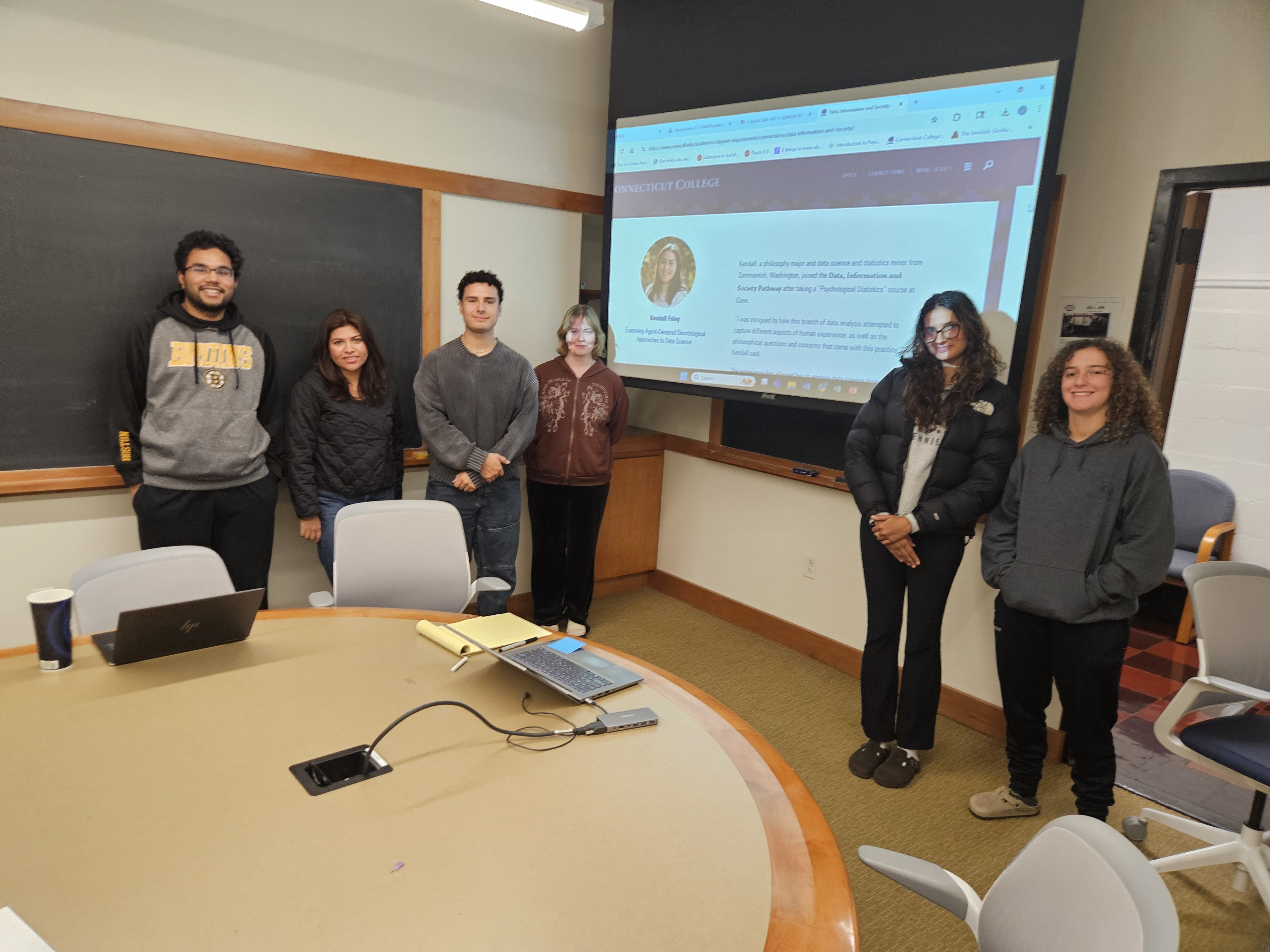
Data Pathway Seniors 2026 Group Photo


Pathway Coordinator


Gregory Bailey, Associate Professor of Art

Gregory A. Bailey

Associate Professor of Art

As an artist, Greg Bailey makes work that functions for him as his most direct and honest response possible to the world around him. Bailey’s use of metaphor relates his work both personally and universally. He uses a range of technical, conceptual, and expressive aspects in his work. His work combines narratives and contemporary theory; it engages in political, social and cultural awareness and commentary, utilizing elements of wit, humor, irony, and visual aesthetic.

Core Faculty & Staff

Connections

P: 860-439-2899 E: eofri@conncoll.edu

Mailing Address

Connecticut College
Fanning 206
270 Mohegan Ave.
New London, CT 06320

Contact

Libby Friedman ’80
Assistant Dean of the College for Connections

Office

Fanning Hall 206


Connecticut College
270 Mohegan Avenue
New London, CT 06320
admission@conncoll.edu
1 (860) 447-1911
Web Privacy Policy Web Accessibility Notice
  • Facebook
  • Twitter
  • Instagram
  • YouTube
  • LinkedIn
  • TikTok
  • CC Mobile CC Mobile

NOTICE OF NONDISCRIMINATORY POLICY AS TO STUDENTS

Connecticut College admits students of any race, color, national and ethnic origin to all the rights, privileges, programs, and activities generally accorded or made available to all students at the college. It does not discriminate on the basis of race, color, national and ethnic origin in administration of its educational policies, admission policies, scholarship and loan programs, and athletic and other college administered programs.