
Entrepreneurship, Social Innovation, Value and Change
Problems need innovative and creative solutions. Learn to apply entrepreneurial theory to a wide range of issues for valuable results.
At its core, entrepreneurship is about creating value by inventing things to address necessities. In this way, it is about designing something for a target group (market). But entrepreneurial intervention is fundamentally about people—who’s doing the entrepreneurship and to whom it is being done. Entrepreneurship offers students intangible growth in learning how to empathize with others, including those from very different backgrounds, to address a social issue in a flexible, adaptable and context-relevant way.
Students in this Pathway will gain an understanding of entrepreneurial theory as it applies across multiple fields of inquiry, emphasizing connections to creativity and innovation. They will gain a familiarity with past and present applications of entrepreneurial theory and develop entrepreneurial problem-solving skills that enable them to identify a problem or need, articulate a model for addressing this concern, and generate an ongoing sustainable solution. Students will also locate their problem-solving skills in the context of the communities in which they live and weigh the value of their efforts with regard to ethics and sustainability.
Alex Mitchell '25
Entrepreneurship, Social Innovation, Value and Change
While students construct their own animating questions, some recent examples include:
- How do entrepreneurial paths differ for women across various racial, socioeconomic and ethnic backgrounds, and how do these experiences compare to men’s?
- Can innovations in sourcing, production and recycling of retail clothing minimize the impact of a “throwaway” clothing culture in the U.S.?
- How can the achievement gap in education be reduced through the use of technology in the U.S.?
- How can movement practices be used to help students with learning disabilities?
- What effect can financial literacy programs have on students in the United States across socioeconomic classes?
Pathway Requirements
Pathway Courses
All students in the Pathway will complete at least three Pathway courses, based on their specific interests and animating questions.
All-College Symposium
This major student conference highlighted students’ integrative learning in Connections, the College’s reinvention of the liberal arts.
Through talks, panels and poster sessions, students who participated in the College’s Centers for interdisciplinary scholarship or the Integrative Pathways showcased how their coursework and experiences informed their studies and learning over four years.
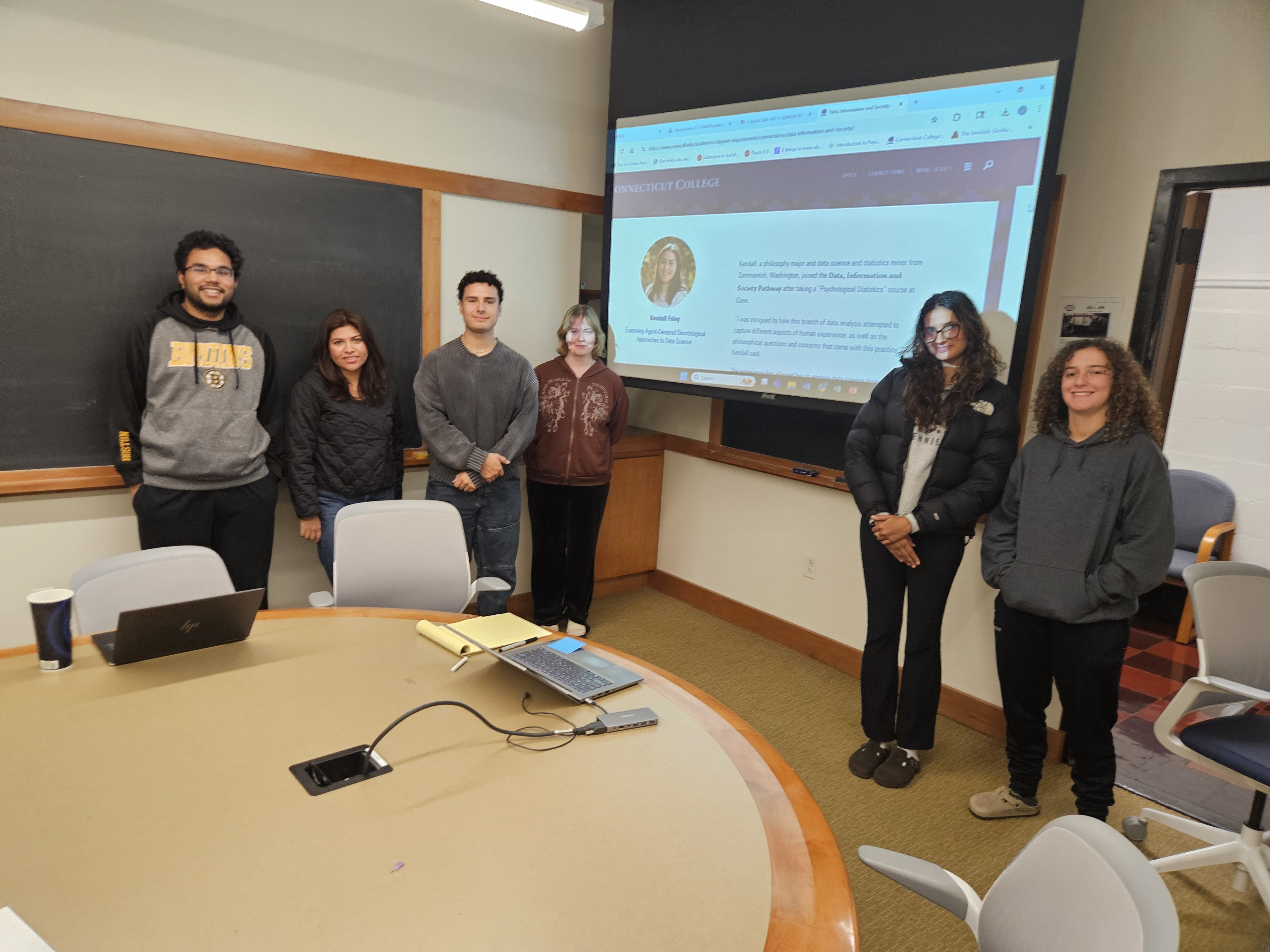
Pathway Coordinator

Noel Garrett
Entrepreneurship Pathway Coordinator, Dean of Academic Support, Executive Director of the Academic Resource Center, Adjunct Assistant Professor of Economics
Joining Connecticut College in 2013, Noel serves as both the Dean of Academic Support and the Director of the Academic Resource Center. As dean, he oversees the Academic Resource Center and the writing center. Noel serves as a liaison between the Dean of the College and faculty regarding areas that have to do with student academic success.
Connections
Mailing Address
Connecticut College
Fanning 206
270 Mohegan Ave.
New London, CT 06320
Contact
Libby Friedman ’80
Assistant Dean of Connections