
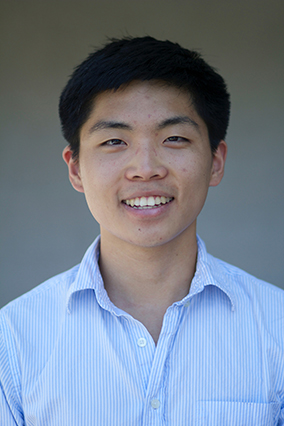
Junhee Lee ’14, software engineer for Microsoft, readies Excel for Arabic-speaking customers
To program software, one needs to understand the unique language of computers. But, as Junhee Lee ’14 has learned, it sure helps to have a firm grasp of other languages, too.
Lee, now a software engineer for Microsoft, took Arabic courses while majoring in computer science at Connecticut College. He relished adding another language to the ones he already knew — Korean, English and some Spanish — even if it didn’t obviously relate to computer programming.
“When you change the language in a program, lots of things have to change, like the formatting for how numbers are shown,” he says.
One of the languages he is working with? Arabic.
“No one expected this Korean-born computer science major to know Arabic,” he says. “Turns out, I’m the only one on the team who does.”
Lee, whose family moved to Texas when he was 7, began his collegiate career at an engineering school. But he found the curriculum too rigid and longed for opportunities to study other things that interested him. So he transferred to Connecticut College and never looked back.
“In this industry, teamwork is so important, and that is overlooked in a lot of discipline-specific curriculums,” Lee says. “And the writing courses I took at Connecticut College that many people would guess wouldn’t be applicable are actually the most helpful in a lot of cases.”
Lee interned in the summer after his sophomore year at Blackberry and after his junior year at Amazon. He worked closely with advisers in the College’s career program and even helped develop a new track within the program specifically for computer science majors. During his senior year, he worked with a team at UCLA’s medical center on a clinical psychology application to help gamblers overcome addiction. The app was recently demoed to California state legislators and is currently being tested in a clinical trial.
Lee says he relies daily on the skills he learned at Connecticut College, including being able to communicate technical concepts, organize thoughts and ideas, and make sense of a project for people who don’t understand the technical specifics. He may use them in the future to start his own company.
“You can be technically brilliant, but if you can’t show the beauty in what you are doing, it is lost on everyone,” he says.