Discarded
Discarded: Unmasking & Understanding the Waste Stream
2021 Lear-Conant Symposium
Presented by the Goodwin-Niering Center for the Environment at Connecticut College
Our full day, virtual symposium hosted experts from across the country as they explored the diverse and often unanticipated ways that human-generated wastes impacts local and global ecosystems, as well as human communities. It probed the scale and forms of capitalism’s indelible contributions to the stratigraphic markers of a still-to-be-defined Anthropocene. Drawing from recent research in the natural and social sciences as well as the arts and humanities, it examined the structures, human impacts, ecological outcomes, and long-term implications of waste and discard in the twenty-first century.
A full day of talks, interactive online engagement, and the live streamed waste interactive, Purged Possessions was live streamed around the world.
This symposium was FREE and open to all, thanks to our generous sponsors: The Lear-Conant Symposium, Beaver Brook Endowed Fund, Jean Thomas Lambert Endowed Lecture Fund, Co-sponsored by the Connecticut College Office of Sustainability, the Environmental Studies Program, the Ammerman Center for Arts and Technology, and the Anthropology Department.
Schedule of Events
9:00 - 9:20 A.M.
WELCOME & REMEMBRANCES
Honoring Elizabeth Babbott (“Babs”) Conant ‘51 & Helen Fricke Mathieson ‘52
Derek Turner, Karla Heurich Harrison ‘28 Director of the Goodwin-Niering Center
With President Katherine Bergeron
9:20 – 10:20 A.M.
The Collective Unseen & the Potential of Visibility
Linda Lear Environmental Lecture
Robin Nagle, NYU School for Liberal Studies, and New York City Department of Sanitation
Introduction by Morgan Maccione, GNCE scholar Class of ‘21
10:20 – 10:30 A.M.
BREAK
10:30 - 11:30 A.M.
Waste, Reuse, and Industrial Symbiosis: Closing Material Loops
Jean Thomas Lambert Environmental Lecture
Marian Chertow, Yale School of the Environment, and Yale School of Management
Introduction by Caty Fortin, GNCE scholar Class of ‘21
11:30 – 12:30 P.M.
Waste Dreams: Building Creative Engagement at the Dump
Linda Lear Environmental Lecture
Billy Dufala, Recycled Artist in Residency (RAIR)
Introduction by Milo Becker, GNCE Scholar Class of '22
12:30 – 1:20 P.M
LUNCH
1:20 - 2:15 P.M.
On-Site Interactive with the Purged Possessions Project @Conn
Billy Dufala, Recycled Artist in Residency (RAIR)
Anthony Graesch, GNCE Senior Faculty Fellow and Associate Professor of Anthropology
2:15 - 2:30 P.M.
BREAK
2:30 - 3:30 P.M.
Waste Colonialism
Beaver Brook Lecture
Max Liboiron, Memorial University, Canada, and the Civic Laboratory for Environmental Action Research (CLEAR)
Introduction by Tess Beardell, GNCE Scholar Class of '21
3:30 - 4:30 P.M.
The Fungibility of Carbon Waste: Plastics, Organics & Thermal/Biological Treatments
Jean thomas Lambert Environmental Lecture
Samantha MacBride, New York City Department of Environmental Protection, and Baruch College
Introduction by Ella Rumpf, GNCE Scholar, Class of '21
4:30 - 4:45 P.M.
BREAK
4:45 - 5:45 P.M.
CLOSING PANEL DISCUSSION WITH Q & A
Moderated by Anthony Graesch, GNCE Senior Faculty Fellow and Associate Professor of Anthropology
Speaker Bios
Billy Blaise Dufala
Director of Residencies and Cofounder of RAIR (Recycled Artist in Residency)
Marian Chertow
Associate Professor of Industrial Environmental Management and Director of the Industrial Environmental Management Program, Yale School of Forestry & Environmental Studies
Marian Chertow’s research and teaching focus on industrial ecology, waste management, business/environment issues, circular economy, and urban sustainability. Her research has championed the study of industrial symbiosis involving geographically based exchanges of materials, energy, water and wastes within networks of businesses globally. She has conducted many studies of industrial ecology in China and India, as a means of assessing environmental benefits alongside economic ones. In 2019 she received the highest recognition of the International Society for Industrial Ecology, its Society Prize, for her “outstanding contributions to the field.”
Prior to Yale, Professor Chertow spent ten years in environmental business and state and local government including service as president of a bonding authority that built a billion dollars worth of waste infrastructure. She is a frequent international lecturer, serves as an Advisor to the Center for Energy Efficiency and Sustainability at Trane Technologies, Inc.
Max Liboiron
Associate Professor of Geography and Director of Civic Laboratory for Environmental Action Research (CLEAR), Memorial University of Newfoundland
Robin Nagle
Clinical Professor of Anthropology, NYU School for Liberal Studies, and Anthropologist-In-Residence, New York City Department of Sanitation
Robin Nagle, anthropologist-in-residence for New York City’s Department of Sanitation, teaches anthropology and environmental studies at NYU, where she is a clinical professor in Liberal Studies.
Samantha MacBride
Section Chief, Research and Optimization, Bureau of Wastewater Treatment, New York City Department of Environmental Protection, and Assistant Professor of Public Affairs, Baruch College
-279x311.jpg)
 Andras Forgacs, co-founder and CEO of
 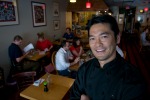 Bun Lai, is a James Beard Nominated Chef, a former director of a non-for-profit that serves low income diabetics, an author who has been published in Scientific American Magazine, and a speaker who has spoken at Harvard School of Public Health, Culinary Institute of America and World Wildlife Fund at National Geographic Society. His restaurant,
 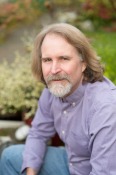 David Montgomery
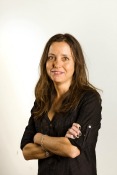 Danielle Nierenberg
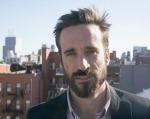 Augustine Sedgewick was born in Portland, Maine, in 1979 and earned his doctorate at Harvard University in 2011. His research and writing explores the interdependence of ways of life and systems of knowledge in the global history of American capitalism, and has won support from the American Council of Learned Societies, the Andrew W. Mellon Foundation, and Harvard University’s Charles Warren Center for Studies in American History. His essays have been published in International Labor and Working-Class History and History of the Present, and he is now writing a book on coffee, energy, work and capitalism that will be published by the Penguin Press.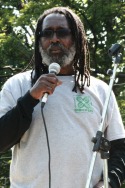
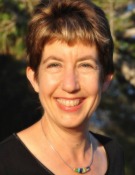 Marlene Zuk
 CitySeed
  CT FoodCorps
 CT NOFA
  Fishers Island Oyster Farm
  Four Root Farm
 Full Heart Farm
 Huntsbrook Farm
 Iskashitaa Refugee Network
 WEB-150x86.jpg) Land For Good
Land For Good Massaro Community Farm
 THE New CT Farmer Alliance
  Provider Farm
 Share Our Strength's Cooking Matters
 Wholesome Wave
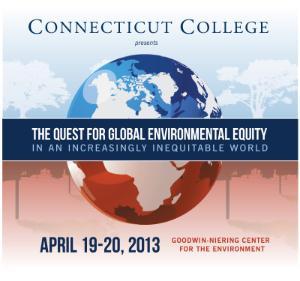 April 18, 19, 20, 2013

 "Acid in the Environment: Lessons Learned and Future Prospects presents a broad approach to the study of acid deposition, exposing readers with a scientific background to significant policy issues and those with a policy orientation to important ecological impacts. The book raises important questions that will serve as a springboard for discussion between diverse groups of teachers and students, concerned citizens and legislators, and scientists and policy makers." The book is available from the
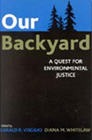 Our Backyard: A Quest for Environmental Justice. A collection of essays by local activists and nationally recognized scholars, Our Backyard deals with the history, status, and dilemmas of environmental justice. These essays provide a comprehensive overview of social and political aspects associated with environmental injustices in minority and poor communities. In addition to focusing on the actions taken by communities and politicians in response to an actual or perceived environmental risk, the contributors also deal with the methodological challenges confronting environmental justice research. Published in 2003.Published by: