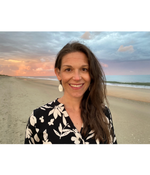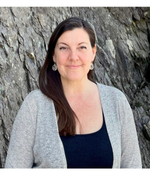
Alisa Bokulich Headshot

Alisa Bokulich

Professor, Boston University

Alisa Bokulich is a Professor in the Philosophy Department at Boston University and an Associate Member of the History of Science Department at Harvard University. She serves on the Steering Committee of the American Association for the Advancement of Science (AAAS) Section-L. From 2010-2023 she served as Director of BU’s Center for Philosophy & History of Science. She co-founded & directs the Philosophy of Science Association's Underrepresented Philosophy of Science Scholars (UPSS) Initiative & Mentoring Program. Bokulich leads a research group in the philosophy of the geosciences called Phi-Geo. She is author of the book Reexamining the Quantum-Classical Relation: Beyond Reductionism and Pluralism and is currently working on a new book on the philosophy of the geosciences, titled Measuring the Earth and Reconstructing Deep Time: Philosophical Issues in Data, Modeling, & Uncertainty.

Bluesky
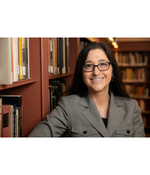
Kelsey Leonard

University of Waterloo

Coming soon!

Tammy Lewis

Director of Urban Sustainability Program and Professor of Sociology, Brooklyn College and Professor of Sociology and Earth & Environmental Sciences, CUNY Graduate Center

Tammy L. Lewis is a professor of environmental sociology at the City University of New York (Brooklyn College and the CUNY Graduate Center). Her research focuses on urban sustainability, climate change adaptation, and alternatives to development. She is the author of Green Gentrification: Urban Sustainability and the Struggle for Environmental Justice (Routledge), Ecuador’s Environmental Revolutions (MIT Press), and Twenty Lessons in Environmental Sociology (Oxford). Her work has appeared in a range of publications including PNAS and The Chronicle of Higher Education. A Fulbright Scholar and National Science Foundation grant recipient, she has received multiple awards for research and mentoring, including the Distinguished Contribution Award from the American Sociological Association’s Environmental Sociology Section. She has chaired the Environmental Sociology Section and served as a Trustee at Vassar College.

Christopher Piecuch

Associate Scientist, Woods Hole Oceanographic Institution

Christopher Piecuch is a scientist, educator, and communicator at the Woods Hole Oceanographic Institution (WHOI), where he runs a research group, mentors young scientists, and teaches in the Massachusetts Institute of Technology (MIT)/WHOI Joint Program in Oceanography and Applied Ocean Science and Engineering. He uses observations, models, and proxies to study the magnitudes, scales, and causes of sea-level changes across the ocean and through time. He has collaborated widely as a member of state, national, and international teams on a range of topics in sea-level science, resulting in dozens of publications in leading peer-reviewed journals, and is currently associate editor at the American Geophysical Union's journal Earth’s Future. Piecuch has also engaged heavily in outreach to nonscientific audiences, having appeared in major media outlets including The New York Times, The Washington Post, and National Public Radio; briefed the Office of the U.S. Special Presidential Envoy for Climate and Office of Global Change; and convened panel discussions on coastal risk and sea-level rise geared towards policy makers at the United Nations Climate Change Conferences in Sharm el-Sheikh, Egypt and Dubai, UAE. In these ways, he works to advance knowledge of physical processes that affect sea-level change in support of more resilient, prepared, and secure coastal communities and economies.

Visit Christopher's Website
Katy Serafin on beach

Katherine Serafin CC & GNCE ‘08

Assistant professor of Geography at the University of Florida (UF) and affiliate faculty with the Florida Climate Institute, UF Water Institute, Center for Coastal Solutions, and Florida Sea Grant

Katy Serafin is an assistant professor of Geography at the University of Florida (UF) and affiliate faculty with the Florida Climate Institute, UF Water Institute, Center for Coastal Solutions, and Florida Sea Grant. Her research focuses on understanding how waves, tides, storm surge, sea level change, and river flow interact to produce coastal flooding and erosion, and how these hazards affect people and places. Because coastal science spans many disciplines, she works closely with collaborators across fields, institutions, and government agencies to enhance community resilience to coastal hazards. Before joining UF, she was a postdoctoral researcher in the Department of Geophysics at Stanford University. She holds an M.S. and Ph.D. in Ocean, Earth, and Atmospheric Sciences from Oregon State University and a B.A. in Environmental Studies from Connecticut College. Earlier in her career, she worked at the U.S. Geological Survey’s St. Petersburg Coastal and Marine Science Center assessing storm-driven coastal change. Her contributions to interdisciplinary climate and water research and education have been recognized with the UF Early Career Florida Climate Institute Faculty Fellowship (2021) and the UF Early Career Water Institute Faculty Fellowship (2024). At UF, she teaches courses on sea level science, water risk, and extreme event analysis to prepare students for complex environmental challenges.