Conn’s vibrant intellectual community shines at seventh annual All-College Symposium
More than 180 seniors presented the results of their transformative academic experiences during the ‘campus-wide celebration of curiosity and connection.’
It was high in the Andes mountains, in the rural, agricultural region of Guaranda, Ecuador, where Hope Kisakye ’26 got to put everything she’d learned about vernacular architecture—a style of building based on local needs, available materials and cultural traditions—into practice.
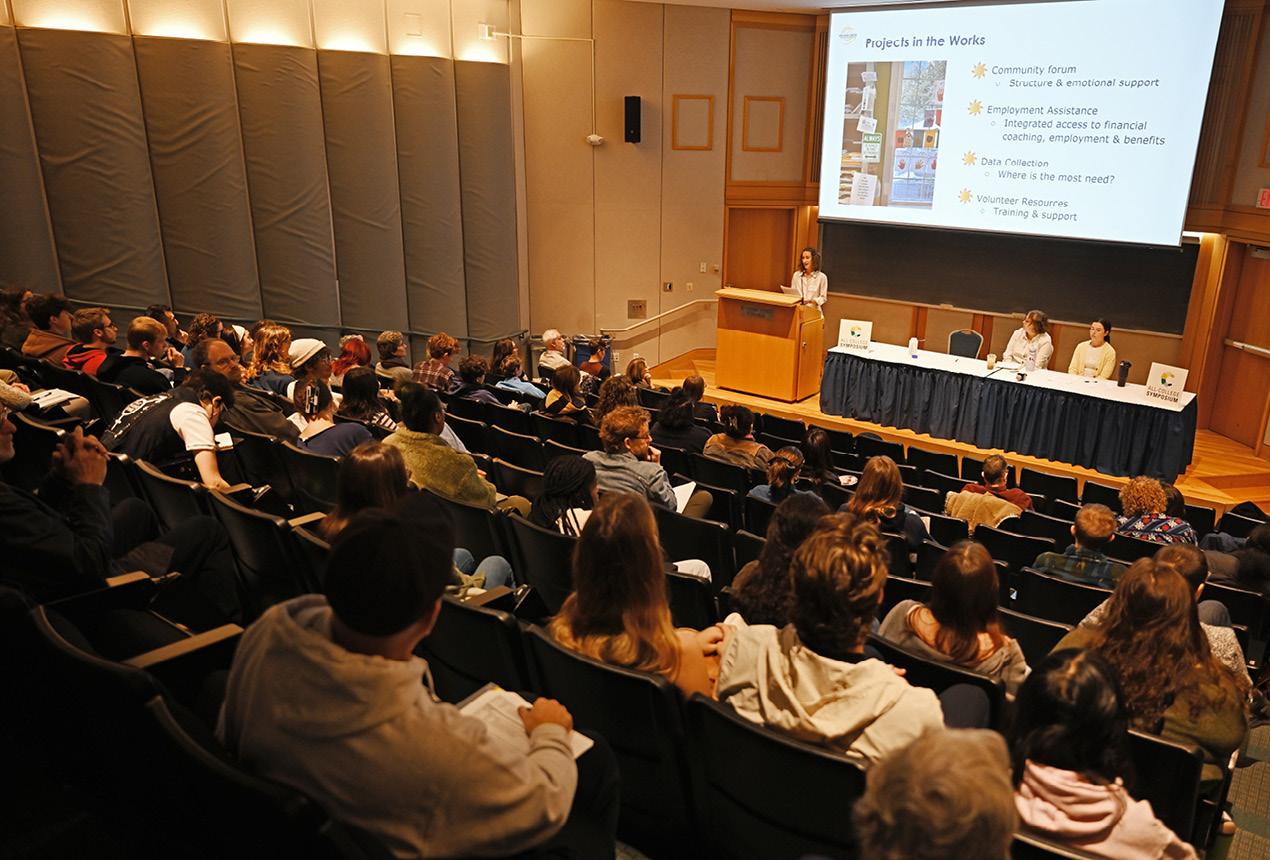
“We were renovating a 100-year-old adobe house into a tourist cabin. Every morning, I was on site, mixing adobe in the traditional way, painting, polishing, cleaning, doing whatever I could to get this house ready,” Kisakye told a packed audience of students, faculty and staff in the Susan E. Lynch 1962 Room. “I came away very confident that vernacular has a real place in contemporary design.”
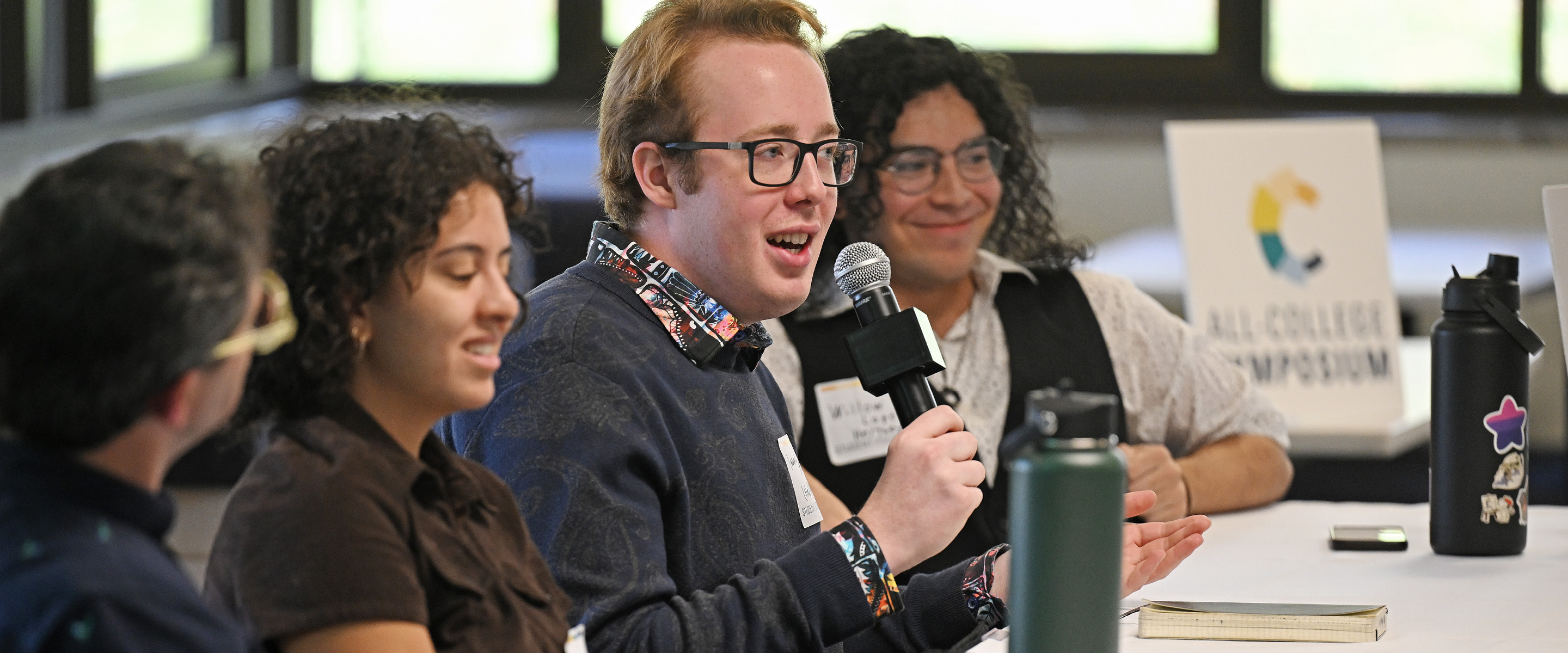
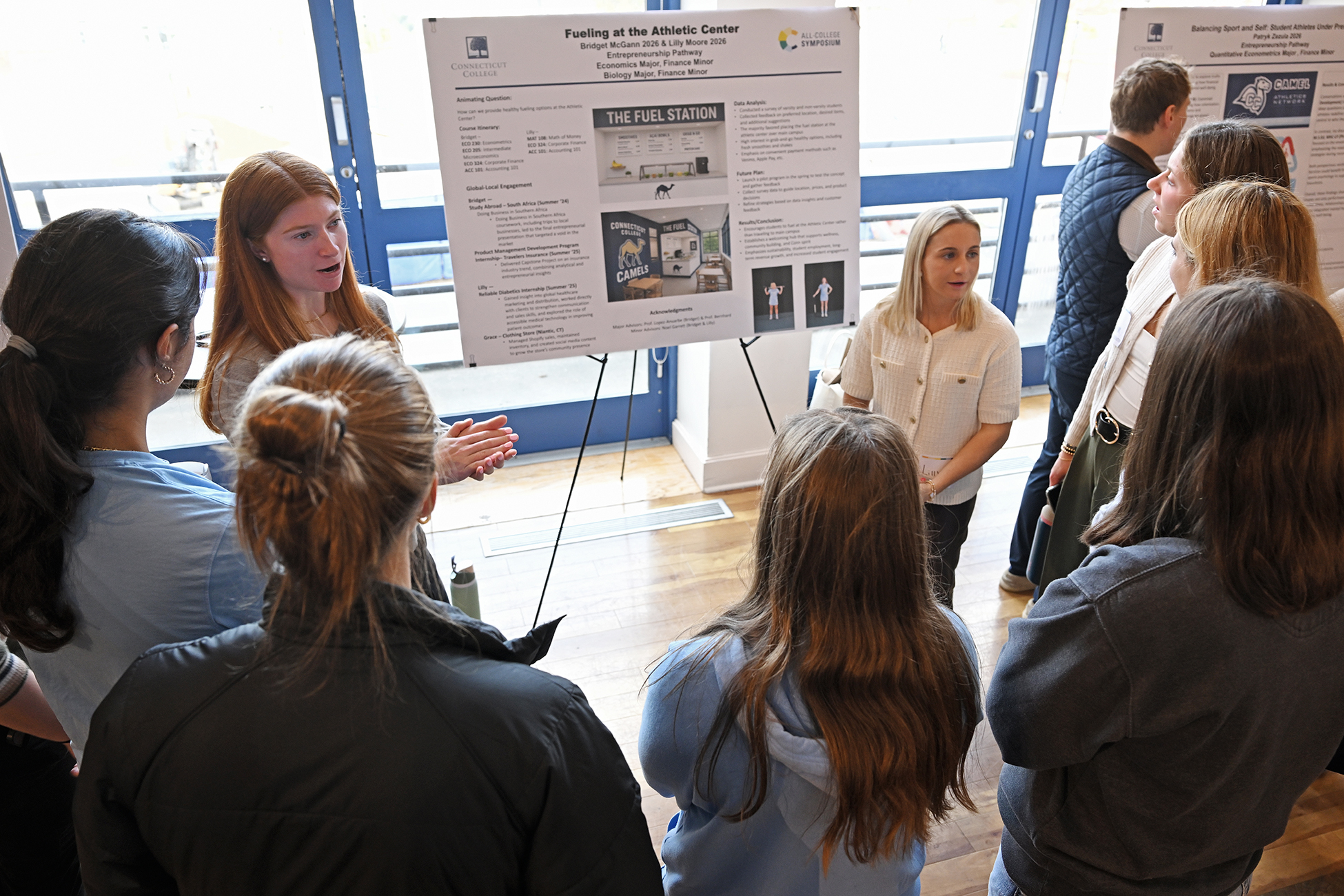
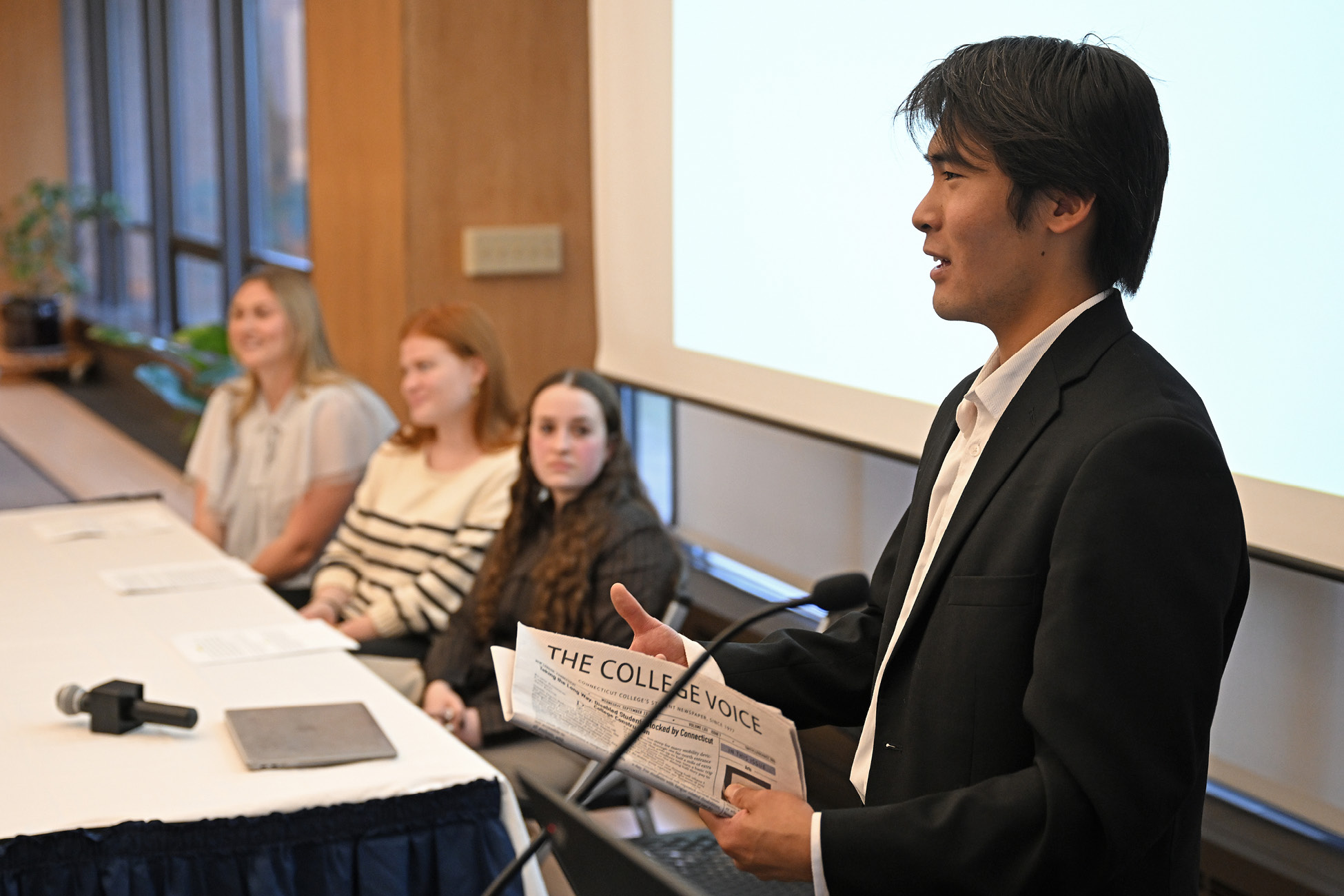
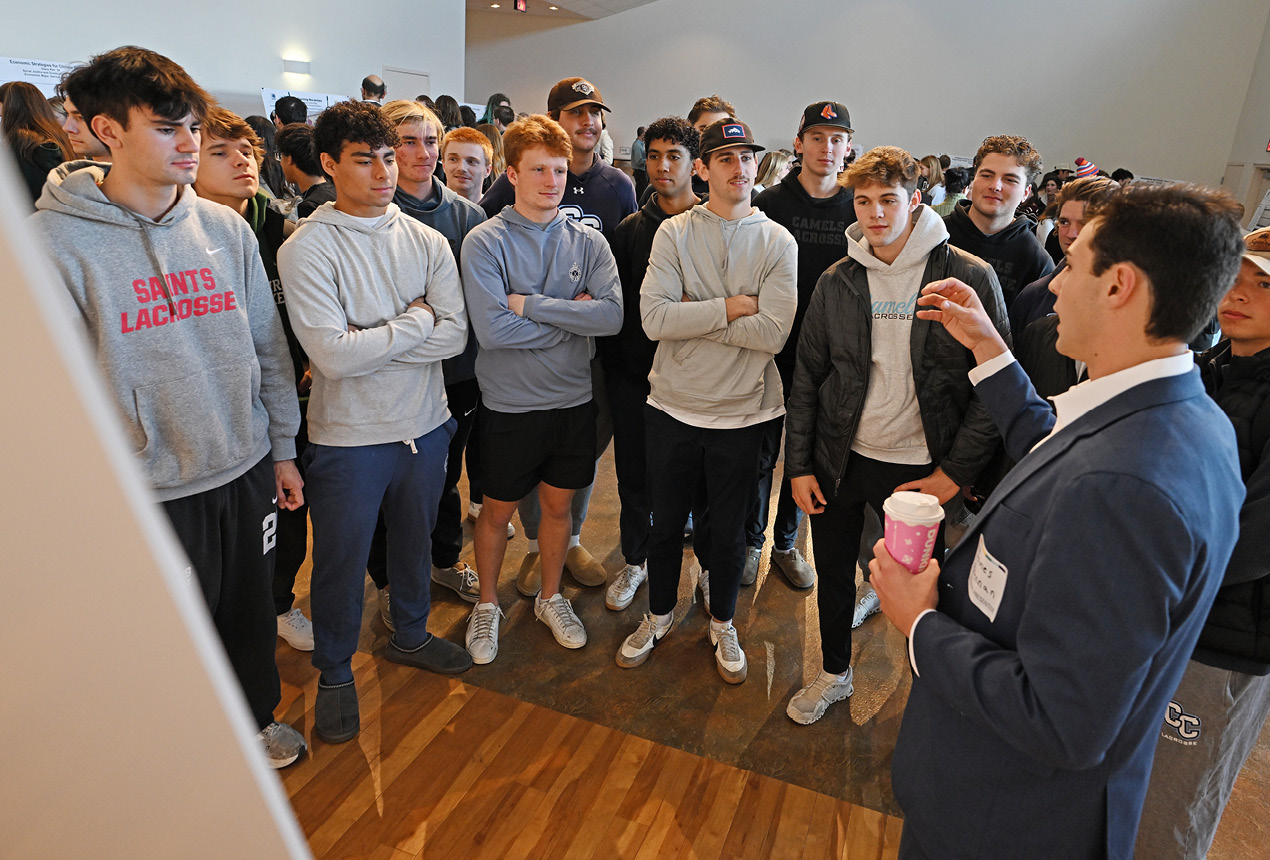
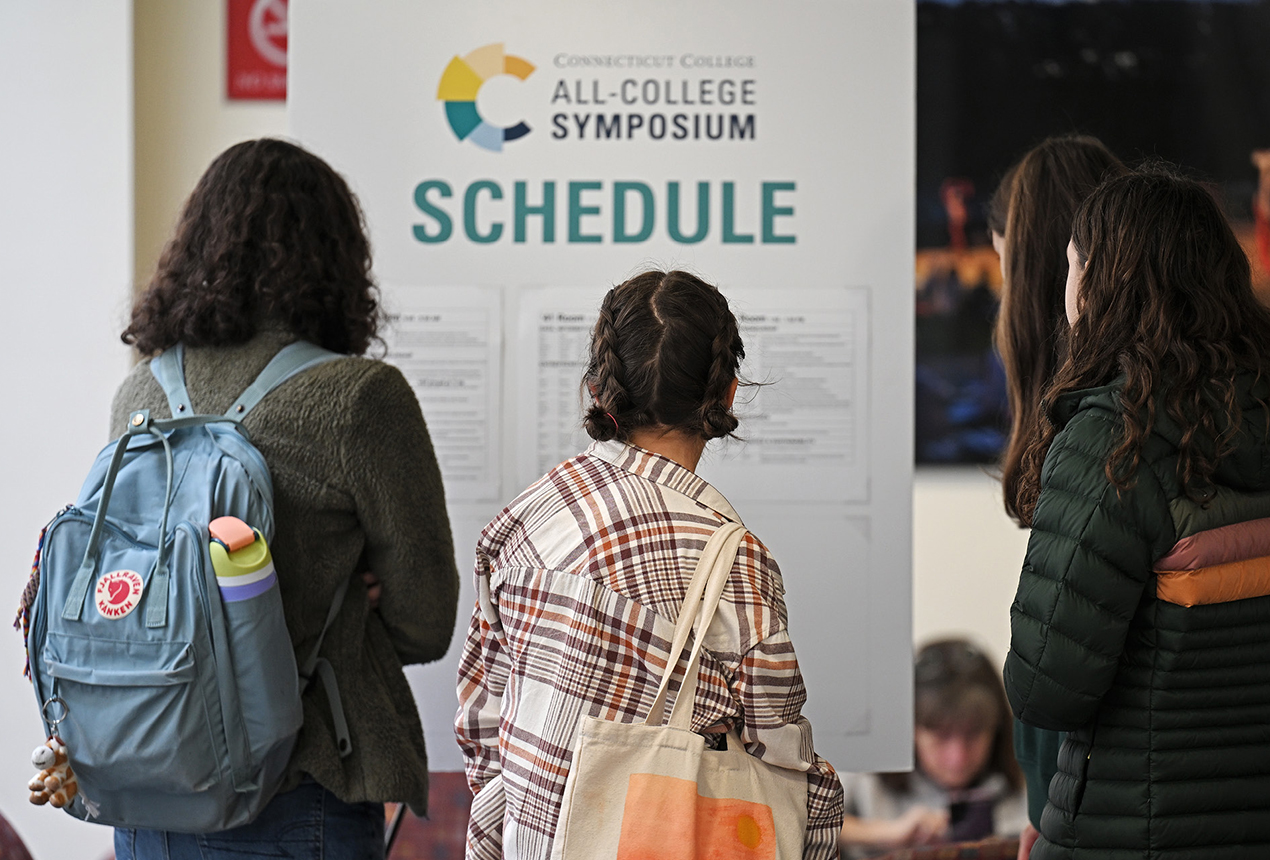
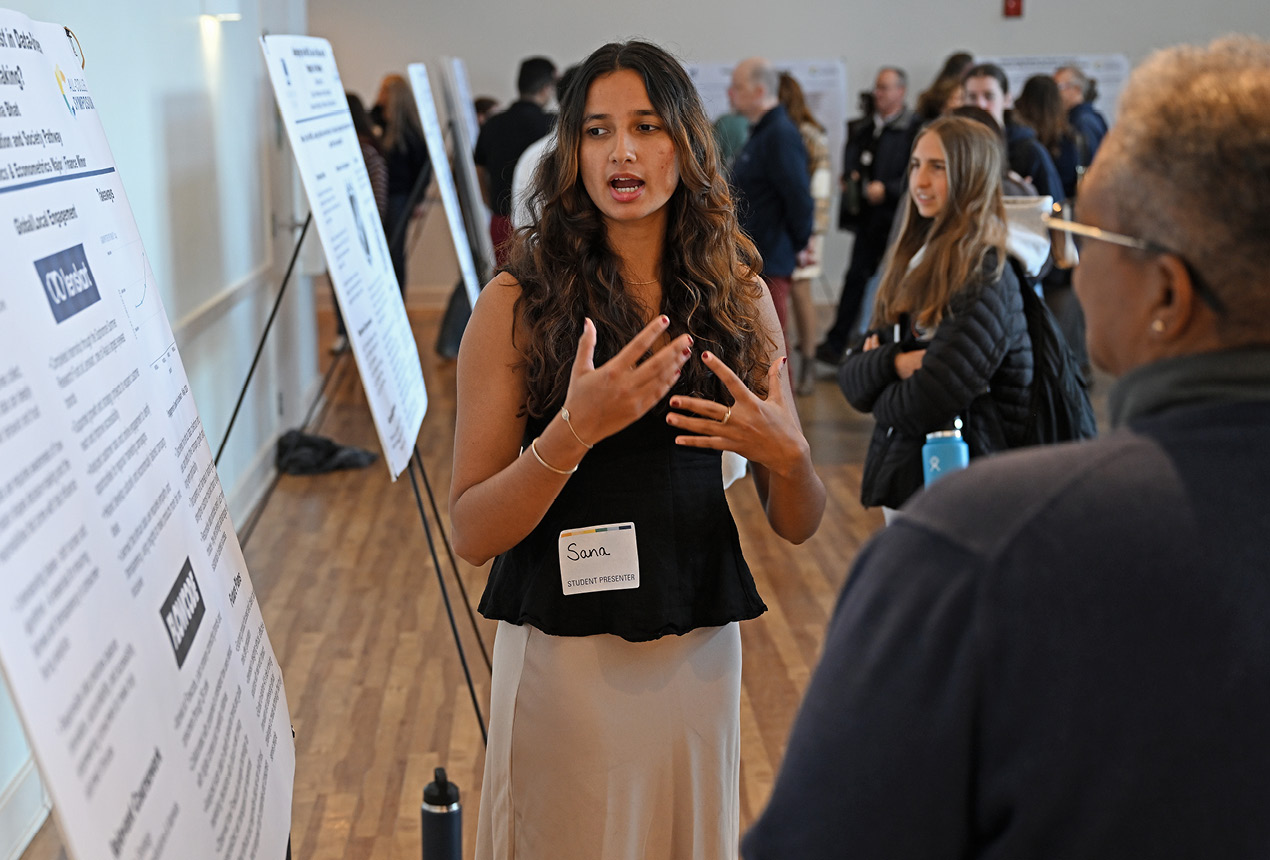
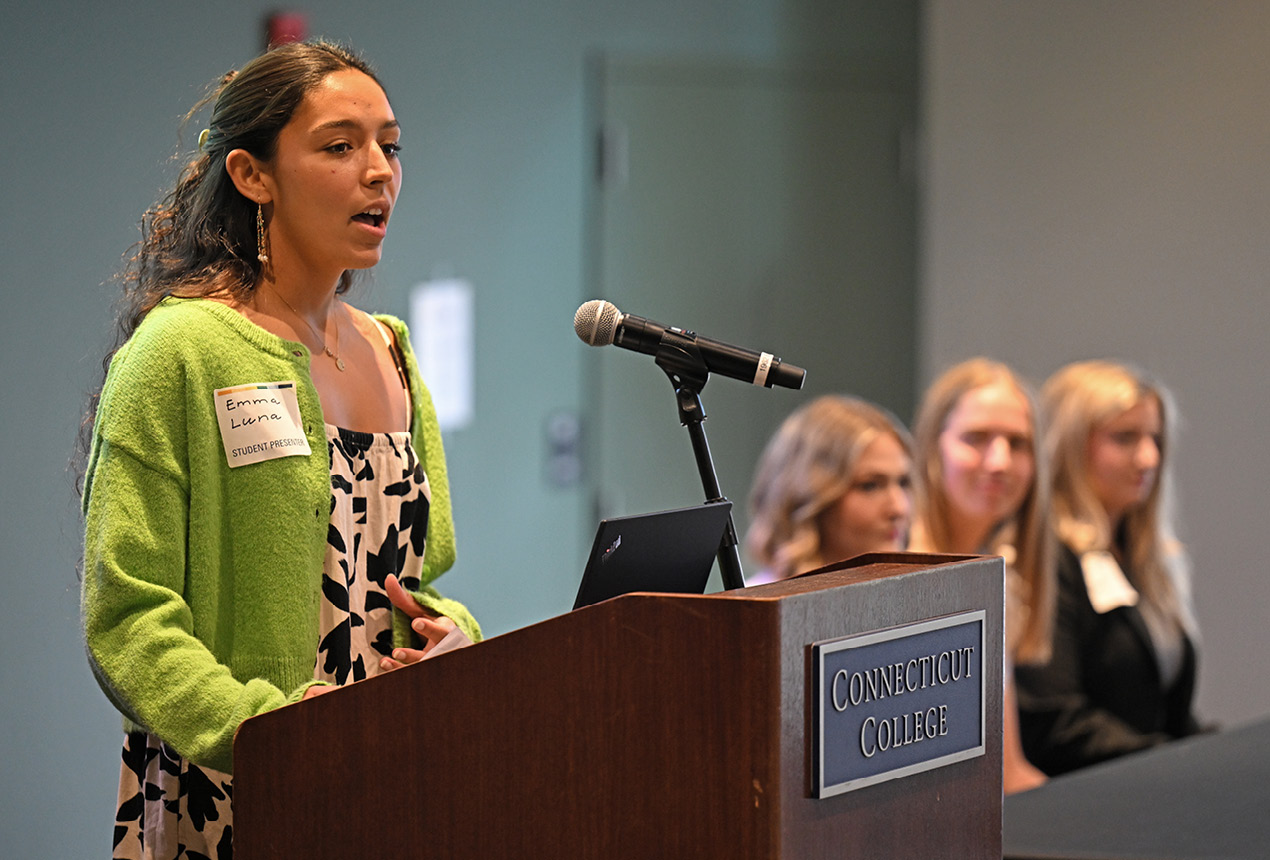
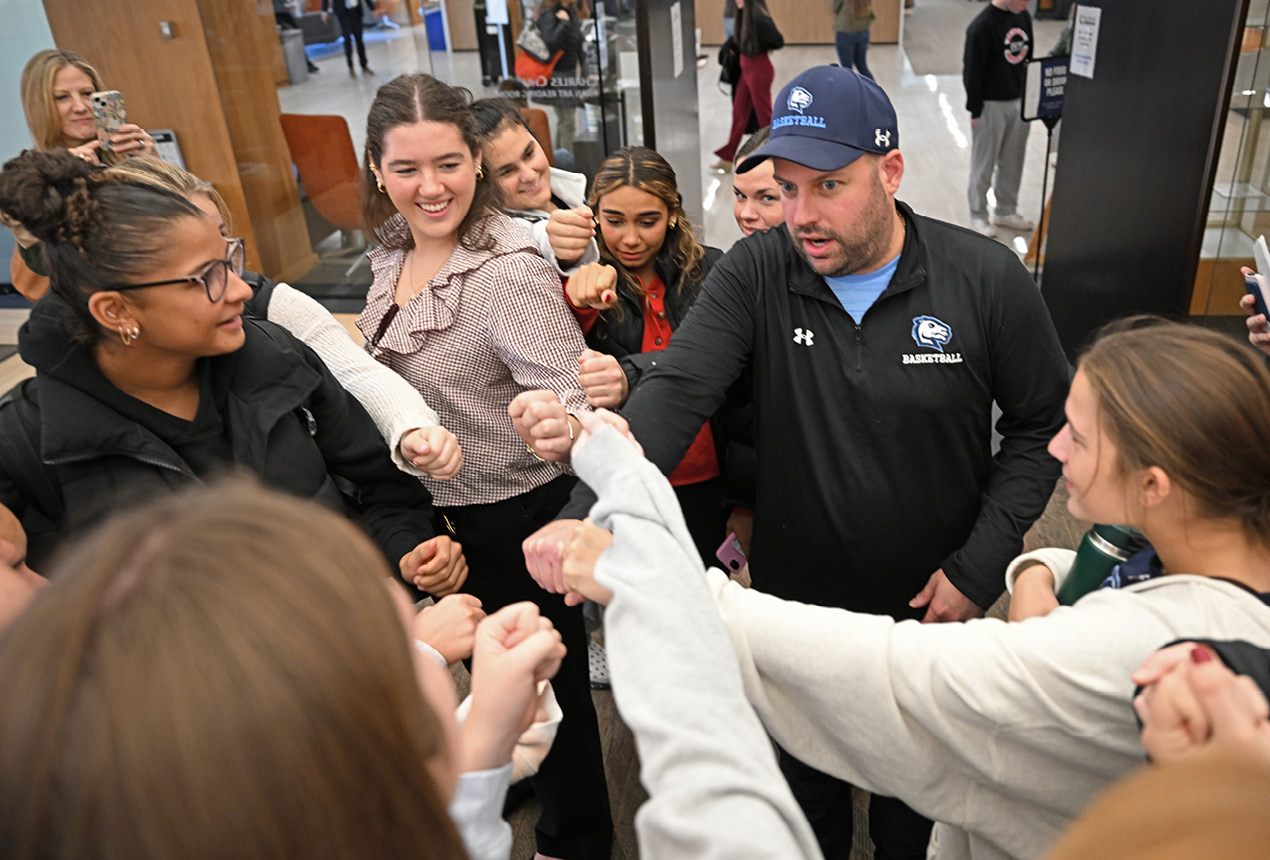
Kisakye, an architectural studies and environmental studies double major, Hispanic studies minor and scholar in the Toor Cummings Center for International Studies and the Liberal Arts from Kampala, Uganda, was one of 185 seniors who presented at Connecticut College’s seventh annual All-College Symposium on Nov. 6. The culminating conference for Connections, Conn’s signature curriculum, the Symposium highlights students’ integrative learning through four years. In talks, panels and poster sessions, the student presenters showcased the connections they have made among their courses and research, their jobs and internships, and their work in local communities and around the globe—along with the questions that animated their choices.
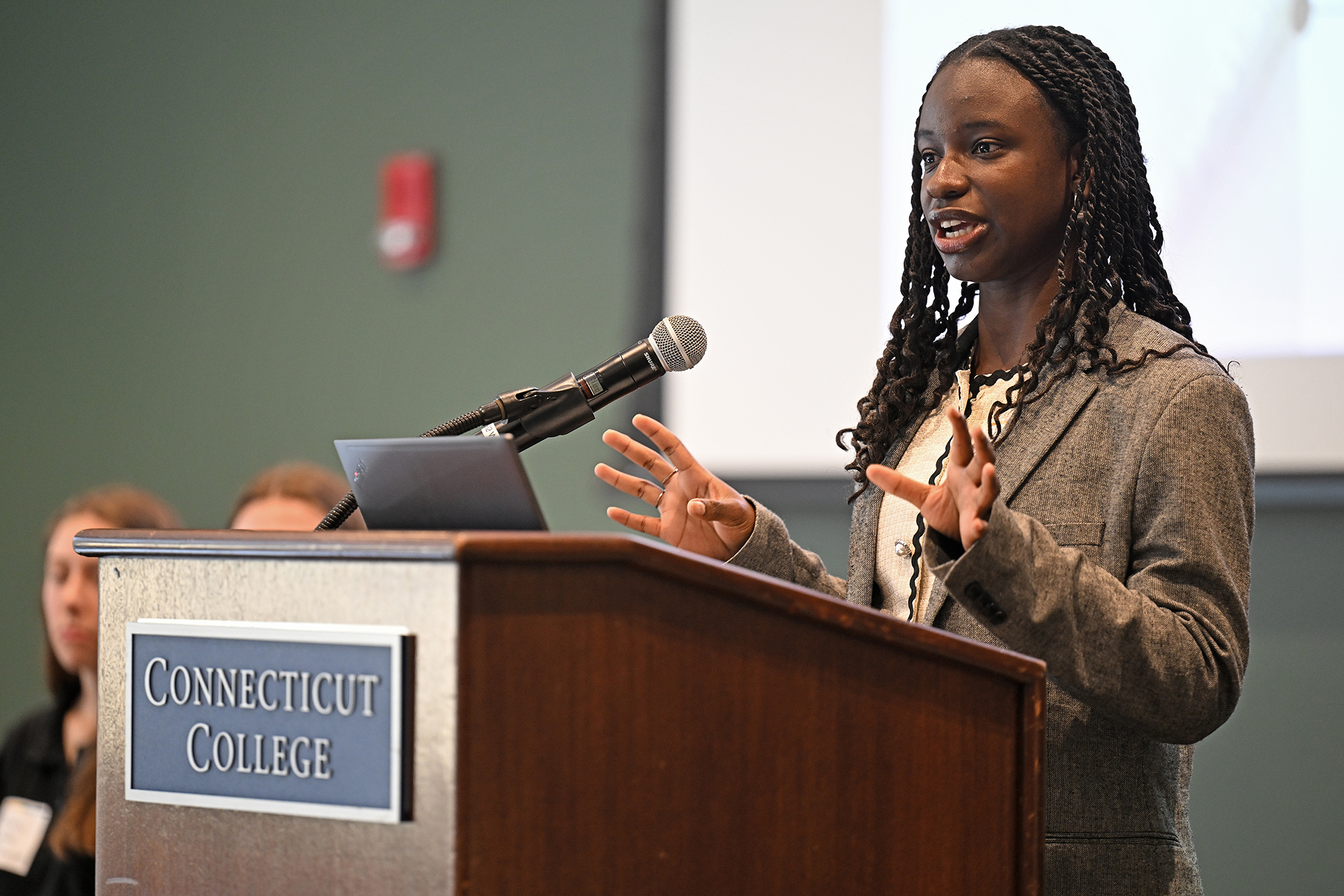
Kisakye says she was drawn to vernacular architecture because “it captures the core values of community, harmony with the environment, and resourcefulness.” Through her coursework, she developed a critical and technical approach to understanding international architecture while also exploring the connections among culture, identity and the built environment. In the last year, “thanks to Conn’s incredible opportunities,” she continued her research in three countries, studying abroad in Mexico, earning a Bessell Fellowship to work with The Sasamani Foundation in Tanzania, and completing a sustainable architecture internship with El Terreno, a cultural exchange center in Ecuador.
Now, she’s working on a research project “that proposes a more integrated approach to the vernacular, a reimagining of the traditional alongside the contemporary. My goal is to develop a framework that brings vernacular architecture into modern conversations, merging cultural identity with current design and sustainability needs,” she said.
In their presentations, Kisakye’s fellow seniors covered a broad range of topics, including inequality in financial literacy, intergenerational effects in atomic bomb survivor families, food access infrastructure in New London County, the impact of mass incarceration on democracy, how masculine perceptions of leadership shape the behavior of female politicians, Afrofuturist and queer-futurist literature in the classroom, proxy warfare and the cost of nuclear deterrence strategies, the relationship between public art and politics in Milan, and how the International Coffee Agreement impacted global trade.