
Connecticut College
  • About Connecticut College
  • Academics
  • Admission & Financial Aid
  • Alumni & Life After Conn
  • Athletics
  • Campus & Community
  • Career Preparation
  • Human Resources
  • Student Experience
  • Calendar
  • News
  • Directory
  • Library & IT
  • CC Magazine
  • Site Map
CamelWeb
  • Home 
  • Home 
  • News 
  • News Archive 
  • 2025 
  • Reef Restoration research

Faculty researchers find eco-friendly reef restoration solution

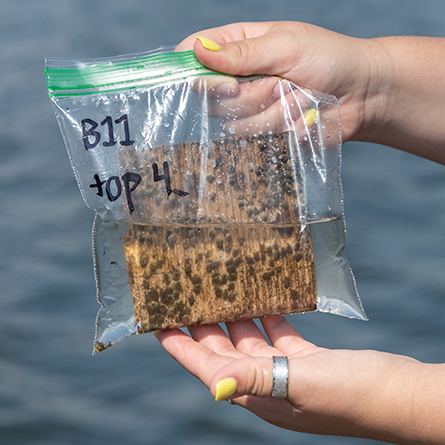
A 3D printed, biodegradable artificial reef plate collected from the Thames River shows marine invertebrate growth.

Connecticut College scientists have created a sustainable solution to restore oyster and coral reefs, using 3D-printed panels made from biodegradable, plant-based materials.

The research team, led by biology professors Maria Rosa and Taegan McMahon, aims to replace traditional PVC panels, which can damage marine ecosystems.

Results of the study appear in Journal of Experimental Marine Biology and Ecology.

The research indicates the new panels attract marine life as effectively or better than PVC panels. Made from polylactic acid (PLA), the new panels serve a dual purpose: aiding ecological monitoring and supporting large-scale reef restoration projects.

Reefs play a crucial role in protecting coastlines, supporting marine biodiversity and contributing to local economies through fishing and tourism. However, many reefs have been damaged by climate change, pollution and human activity, leading to an urgent need for effective restoration methods. 

"By using biodegradable materials and customizable 3D printing, we can create artificial reefs that better mimic natural conditions and accelerate ecosystem recovery," Rosa said.

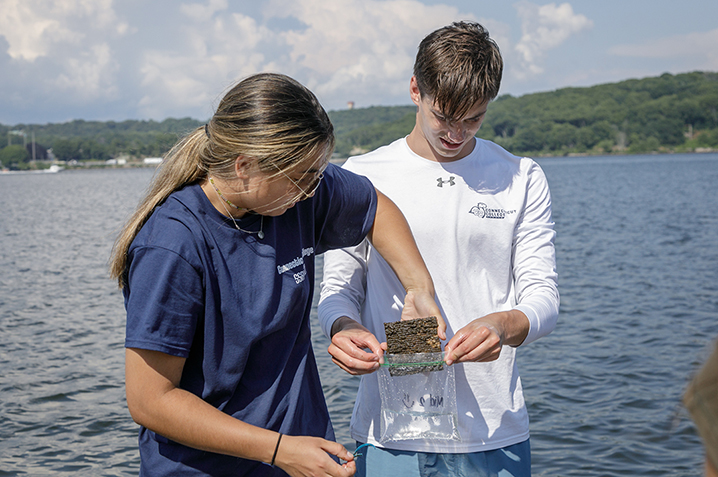
Student researchers collect a sample of a 3D printed artificial reef panel from the Thames River.
Student researchers collect 3D printed artificial reef plates after testing them in Thames River for six weeks.
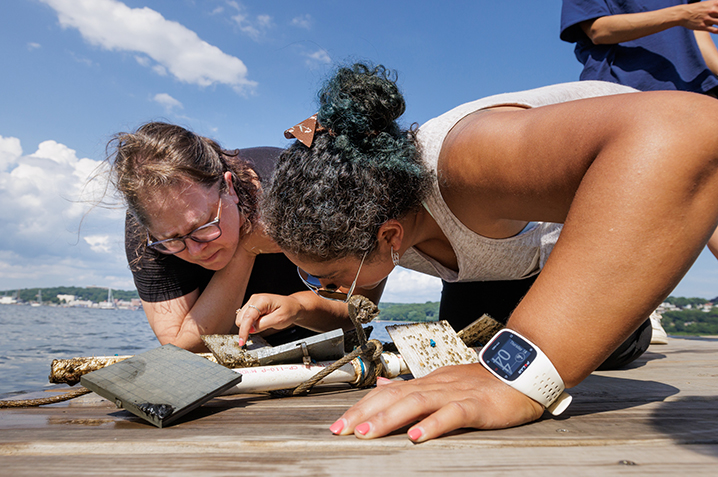
Professor Maria Rosa (right) and Professor Taegan McMahon take a close look at the marine invertebrates settled on a 3D printed, biodegradable plate that had been submerged in the Thames River.

The researchers tested various PLA formulations, finding that the panels help attract invertebrates, a critical factor for rebuilding reef ecosystems. The panels can be customized for specific conditions, allowing for targeted restoration efforts in diverse marine habitats.

The team also sees potential for these panels to be used globally, ranging from oyster reef recovery in coastal communities to larger-scale coral restoration projects.

“As marine ecosystems face increasing stress, sustainable solutions like these are essential,” McMahon noted. “Our goal is to provide tools that not only restore habitats but also offer lasting benefits to local economies and biodiversity.”

Connecticut College has been actively involved in environmental research for years, particularly with its work on the Thames River. This reef restoration initiative is part of a larger commitment by the College to develop sustainable practices that address pressing ecological challenges.


Get to the 'why.' Learn more


January 9, 2025

Related News & Media

Recent News

November in Pictures

November in Pictures

Campus News

Conn’s vibrant intellectual community shines at seventh annual All-College Symposium

Conn’s vibrant intellectual community shines at seventh annual All-College Symposium

Academic News

Connecticut College
270 Mohegan Avenue
New London, CT 06320
admission@conncoll.edu
1 (860) 447-1911
Web Privacy Policy Web Accessibility Notice
  • Facebook
  • Twitter
  • Instagram
  • YouTube
  • LinkedIn
  • TikTok
  • CC Mobile CC Mobile

NOTICE OF NONDISCRIMINATORY POLICY

Connecticut College is an equal opportunity employer. The College complies with all federal, state, and local laws, regulations, and ordinances prohibiting discrimination in private post-secondary education institutions. The College does not discriminate against any employee, applicant for employment, student, or applicant for admission on the basis of the following protected characteristics: age, citizenship status, color, creed, disability (physical or mental), domestic violence victim status, ethnicity, gender expression, gender identity, genetic information (including family medical history), lawful source of income, marital status, national origin (including ancestry), pregnancy or related conditions, race, religion, sex, sexual orientation, veteran or military status (including disabled veteran; recently separated veteran; active-duty, wartime, or campaign badge veteran; and Armed Forces Service Medal veteran), any other status protected by federal, state, or local law.