
Seniors showcase passion, purpose and integrative learning at eighth annual All-College Symposium
Nearly 200 seniors presented the results of their transformative academic experiences during the daylong celebration of learning and achievement.
Growing up fishing and sailing off the coast of Long Island, Finley Regan ’27 developed an early interest in marine life. In third grade, he read a book about commercial whaling that introduced him to the concept of conservation. Then, in high school, he learned a friend had witnessed an orca named Tilikum attack a trainer during a show at SeaWorld.
“Since then, I’ve been extremely curious about all things orca, but particularly their captivity,” he explained.
At Conn, Regan knew he wanted to study environmental science. But it was during a dramaturgy course with Professor of Theater Ginny Anderson that he realized he could combine all of his interests—including theater, art and environmental justice—into an in-depth study of the history, ethics and alternatives to orca captivity.
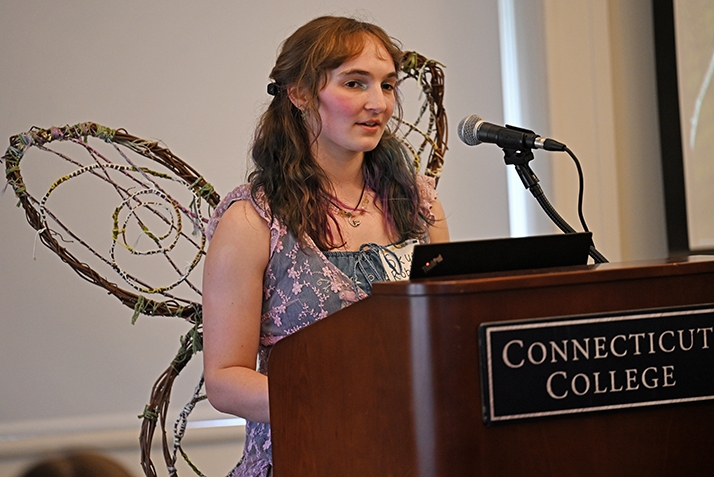
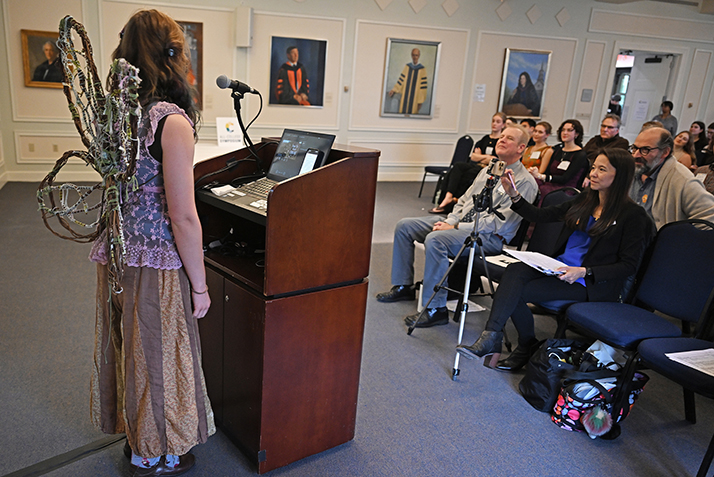
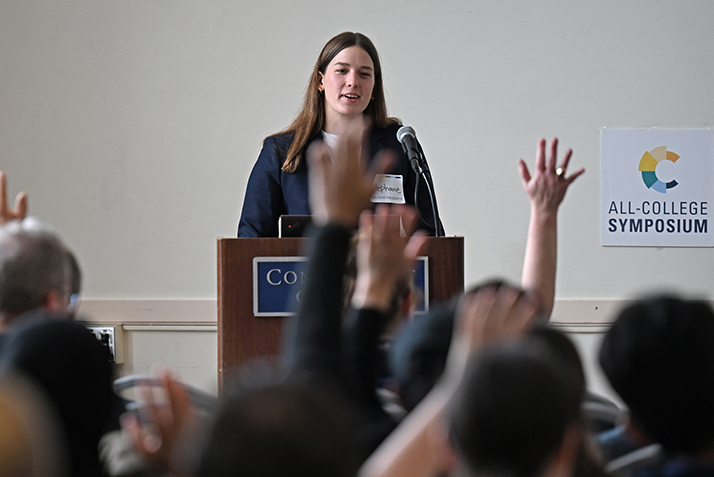
“I got to study a play about Tilikum. He’s portrayed by a human actor,” Regan told a packed audience of students, faculty and staff in the Charles Chu Asian Arts Reading Room in Shain Library. “I had never seen anything like it, and it made me think about alternatives to orca shows that can still teach you about this animal and this animal’s power.”
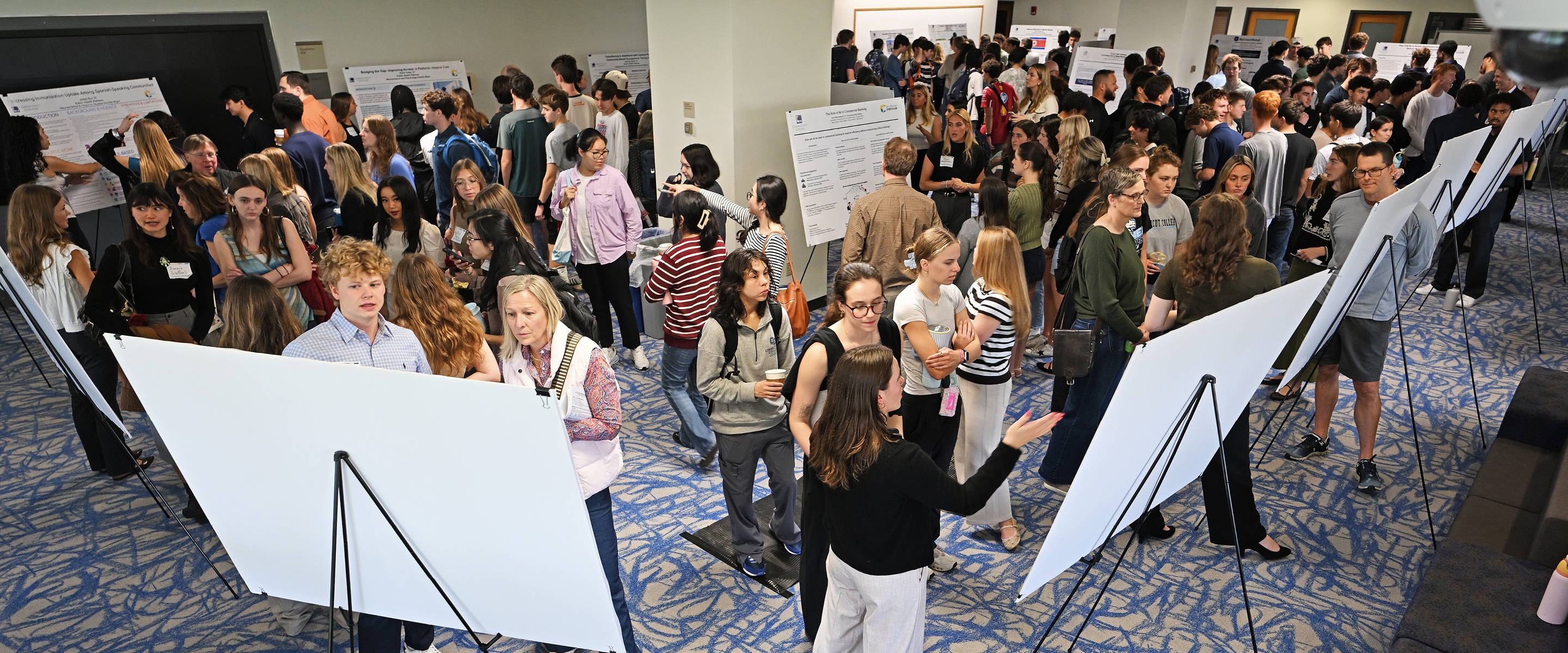
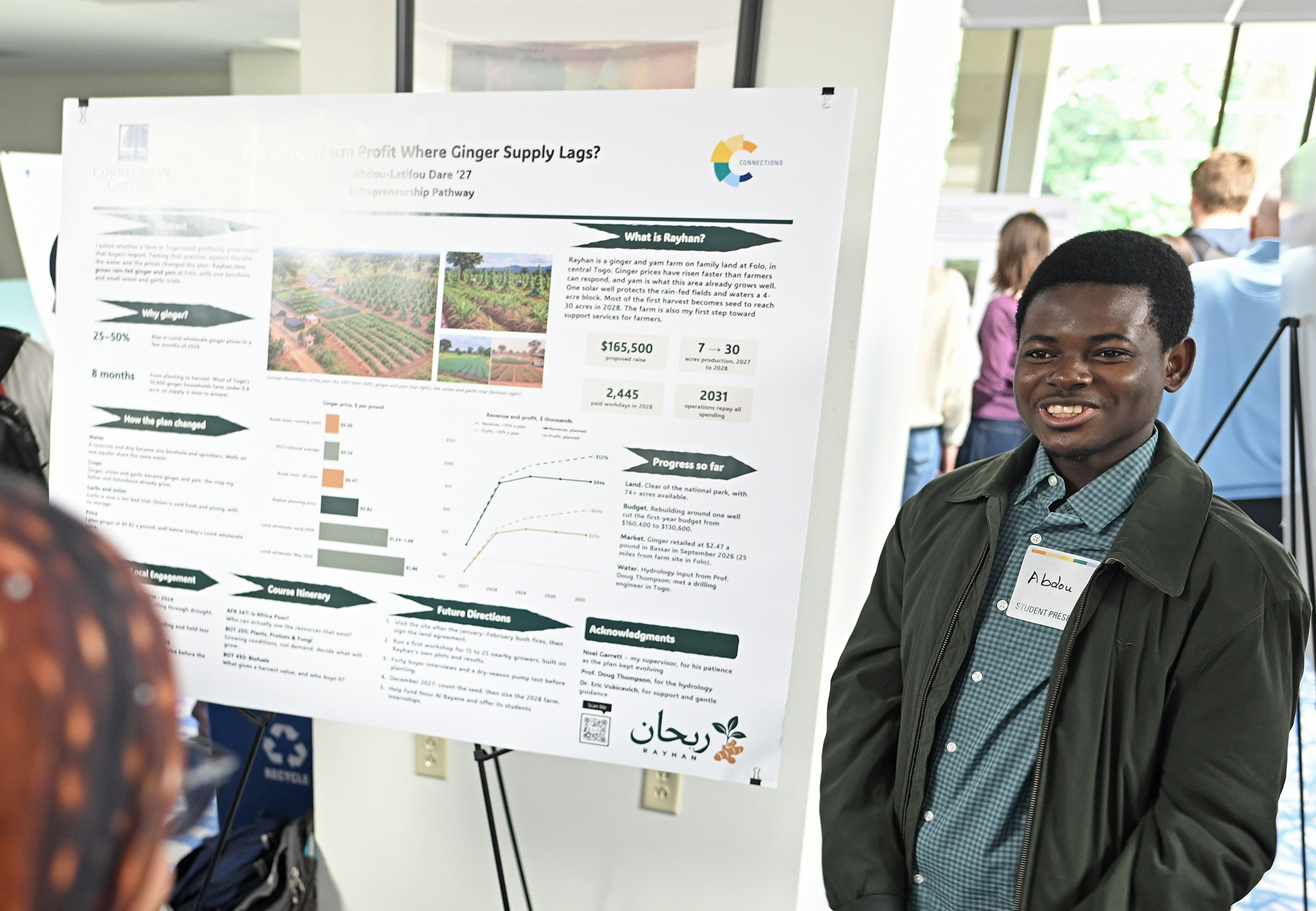
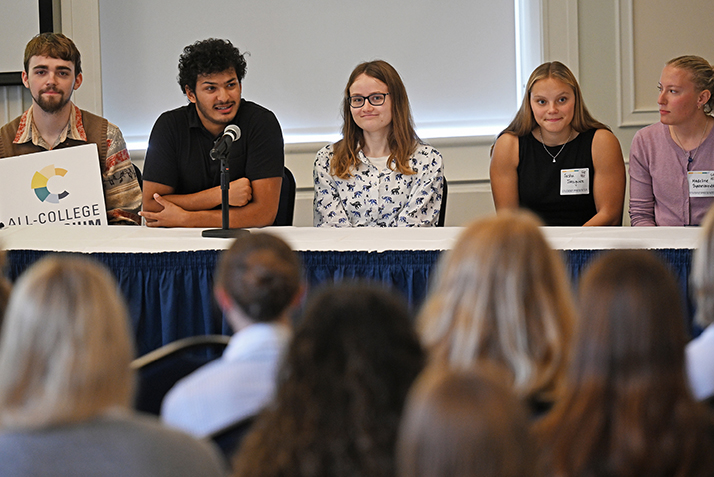
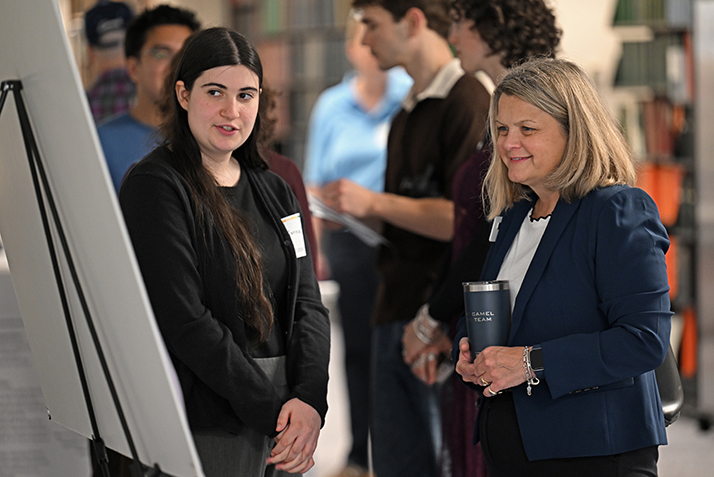
An environmental studies major, theater and art double minor, and scholar in the Social Justice and Sustainability Pathway from Bay Shore, New York, Regan was one of 198 seniors who presented at Connecticut College’s eighth annual All-College Symposium on Nov. 5. The culminating conference for Connections, Conn’s signature curriculum, the Symposium highlights students’ integrative learning through four years. In talks, panels and poster sessions, the student presenters showcased the connections they have made among their courses and research, their jobs and internships, and their work in local communities and around the globe—along with the questions that animated their choices.
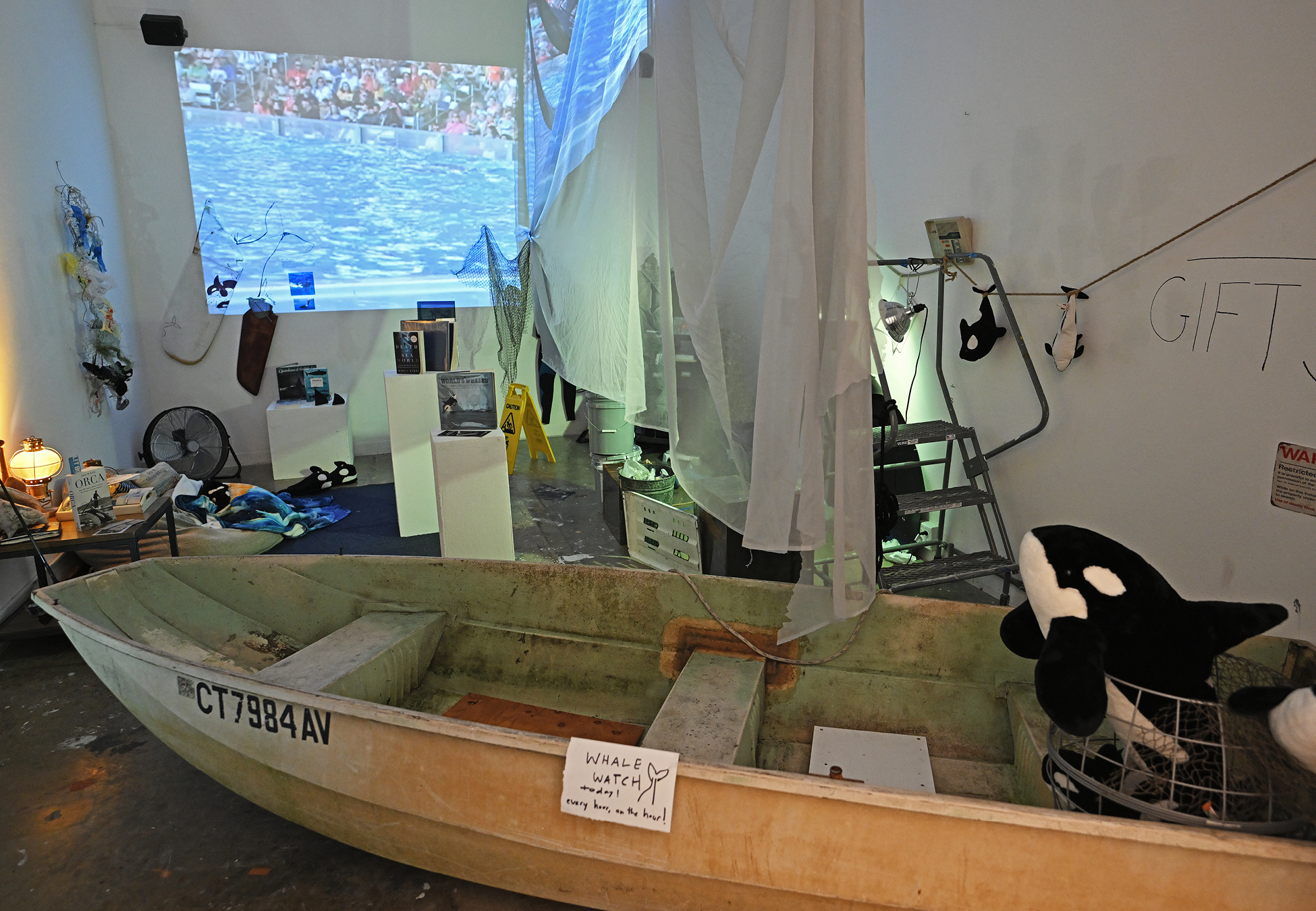
During his presentation, Regan gave a remarkably detailed history of orca capture and captivity, shared his extensive research into the evolution of scientific and cultural perceptions related to the practice, and delved into the alternative ways to inspire new generations to learn about and protect the magnificent marine mammals. He has even created his own interactive art installation, “Blackfish in the White Box,” which is currently on display in the White Box Gallery at Conn’s Cummings Arts Center.
The work is the culmination of his collegiate studies and experiences, including research he conducted during whale watches and at local museums in Victoria, British Columbia, Canada; a seminar on marine mammals he completed at Mystic Aquarium; a research project he did on dolphin fin vernal structure at Shoals Marine Lab in New Hampshire; his work as a sailing instructor; and a study on animal performance he did with Anderson. Next week, Regan, who is applying to Ph.D. programs in environmental science and hopes to become a college professor, will present his work at both the American Society for Theatre Research’s Annual Conference in Minneapolis, Minnesota, and the 8th International Marine Conservation Congress in Edinburgh, Scotland.
“Ultimately, while zoos and aquariums play an important role in conservation efforts, there are some species for which it’s just not reasonable based on the animals’ size and social structure, and that includes orcas,” he explained. “The remaining SeaWorld orcas will die within our lifetimes. We have to figure out ways to teach people about this animal that will no longer be kept at such close range.”
In their presentations, Regan’s fellow seniors covered a broad range of topics, including the evolution of human reliance on AI, gender equality in Spain’s democratic transition, American wind energy regulations, the impact of the fall of the Soviet Union on Mongolian architecture, addressing systematic homelessness, rethinking risk in small-business lending, the cost of youth sports access, addressing maternal mortality in the U.S., film distribution in the streaming era, instability in the foster care system and preventing early onset colorectal cancer.
Ava Virga ’27, an economics major, finance minor and scholar in the Entrepreneurship, Social Innovation, Value and Change Pathway from Watertown, New York, shared how her interest in sustainable alternatives to fast fashion led her to create her own business, Fig Lane, through which she creates one-of-a-kind pieces in small batches from sustainable and recycled materials. Fellow senior Andrew Jordan ’27, a government major, economics and statistics and data science double minor, and scholar in the Holleran Center for Community Action and Public Policy from Pasadena, California, presented “Why Voters Said No: Oklahoma’s Minimum Wage Debate,” in which he examined the impact of different campaign messaging strategies.
“The coolest part of the Symposium is getting to hear about what students are passionate about and how they’ve spent their time really digging into those questions,” Associate Professor of Psychology and Data, Information and Society Pathway Co-Coordinator Jeff Moher said during a celebration at the end of the day.
“It’s such an outstanding example of integration and reflection in action—students drawing connections across coursework and experiences over the past few years as a way to tell us their stories. The creative, integrative work that we saw this year—that we see every year—at the Symposium is really inspiring.”