Professor Eric Adler '95 pens new book
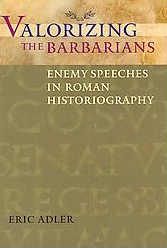
They are powerful words - grandiose and highly critical speeches delivered by ancient Rome's most prolific enemy leaders. Or, professor Eric Adler argues, they are fascinating bits of imagination.
Adler, a professor of classics who specializes in Greek and Roman historiography, has studied the accounts of these speeches by some of Rome's most famous historians and claims that the speeches were crafted by the historians themselves and inserted into their histories.
"It was a sort of literary trope for these authors to include these speeches … to imagine what Hannibal or Mithridates would have said to their troops before battle," Adler said.
In his new book, "Valorizing the Barbarians: Enemy Speeches in Roman Historiography," Adler, a 1995 graduate of Connecticut College, explores these fabricated orations and posits that their authors had a purpose beyond just filling in the blanks with colorful prose. By speaking through the mouths of Rome's fallen enemies, Adler says, Roman historians were able to criticize their home country without fear of alienation or prosecution.
"The book tracks the degree to which these historians were able to criticize their own society," Adler said. "The speeches serve as a window into the nervousness on the part of the authors about the future of Rome and the injustices of their society."
This subject is somewhat of a passion for Adler, who teaches a 200-level classics course, "Roman Imperialism and Its Critics." "This class deals with many substantive issues surrounding the book, among other topics," Adler explained.
Adler's conclusions will likely surprise scholars, who have recently argued that there was little interest in self-criticism in ancient Roman society. Contrary to that popular contention, Adler says the book "argues there was a deep sense of anxiety about the negative effects conquest and colonialism could have on Rome."
Adler makes his case with examples from six different Roman historians, including Tacitus, Cassius Dio and Livy. Yet however daunting the material may seem, Adler says readers don't need to have an understanding of Roman history to learn from these invented speeches and their treatment in history.
"I think the book is more broadly appealing because it clues into modern world interests," including growing concerns about imperialism in today's post-9/11 world, he said.
- By Sam Norcross '14
March 14, 2012