Connecticut College
  • About Connecticut College
  • Academics
  • Admission & Financial Aid
  • Alumni & Life After Conn
  • Athletics
  • Campus & Community
  • Career Preparation
  • Human Resources
  • Student Experience
  • Calendar
  • News
  • Directory
  • Library & IT
  • CC Magazine
  • Site Map
CamelWeb

Business Services

Procurement

Accounting Services

Budget

Payroll

Procurement

  • Home 
  • Home 
  • Slides 
  • Business Services mockup

Procurement

Our 23 different residence houses are living and learning communities filled with personality.

Read More
Accounting Services

We offer diverse dining options and cozy atmospheres in our all-you-care-to-eat dining halls.

Read More
Budget

No matter what your interests, we have a club for you. Join one, run one, or start your own.

Learn More

Payroll

Our 23 different residence houses are living and learning communities filled with personality.

Read More

Accounts Payable

We offer diverse dining options and cozy atmospheres in our all-you-care-to-eat dining halls.

Read More

Student Accounts

No matter what your interests, we have a club for you. Join one, run one, or start your own.

Read More

Precision in Every Figure. Strategy in Every Move.

Welcome to Connecticut College’s Business Services website.

We don’t just crunch numbers; we provide the financial integrity and strategic insights that power the college’s needs. Our department serves as the backbone of fiscal responsibility, ensuring transparency, compliance, and long-term stability.

What We Do

Our team manages the complex financial landscape of the college, ensuring every dollar is accounted for and every department has the resources it needs to thrive.

  • Student Accounts & Billing: Managing tuition payments, payment plans, and refunds.
  • Payroll: Ensuring our faculty and staff are compensated accurately and on time.
  • Grants & Restricted Funds: Overseeing the financial compliance of research grants and institutional scholarships.
  • Accounts Payable: Processing vendor payments and maintaining institutional credit.
  • Financial Reporting: Preparing annual audits and budget forecasts to ensure long-term stability.
  • Budgeting: Helping departments navigate the intricacies of Zero-Base Budgeting (ZBB) to ensure efficient resource allocation.
  • Procurement: Negotiating contracts, presenting Requests for Proposals (RFPs), and managing vendor relations to secure the best value for institutional purchases.

Our Core Principles

Pillar Our Commitment
Accuracy We eliminate guesswork through rigorous reconciliation and data integrity.
Transparency Clear, accessible financial data for stakeholders at every level.
Collaboration We aren't a silo; we are a partner in every department's success.

Divisions


Summer_8_Misc

Procurement

Our 23 different residence houses are living and learning communities filled with personality.

Read More
Summer_8_Misc

Accounting Services

We offer diverse dining options and cozy atmospheres in our all-you-care-to-eat dining halls.

Read More
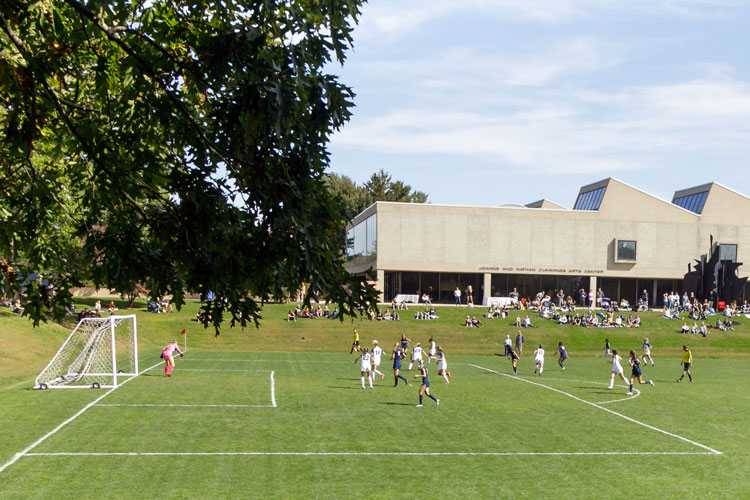
A field with students playing

Budget

No matter what your interests, we have a club for you. Join one, run one, or start your own.

Learn More
Summer_8_Misc

Payroll

Our 23 different residence houses are living and learning communities filled with personality.

Read More
Summer_8_Misc

Accounts Payable

We offer diverse dining options and cozy atmospheres in our all-you-care-to-eat dining halls.

Read More
A field with students playing

Student Accounts

No matter what your interests, we have a club for you. Join one, run one, or start your own.

Read More

FAQs

What is the difference between Accounting and Finance?

Accounting (The Past): It is the process of recording, reporting, and analyzing past financial transactions. Its goal is accuracy and compliance. Accountants ensure that every dollar spent or earned is documented according to specific rules.

Finance (The Future): It is the process of using the data provided by accounting to plan for the future. Its goal is value creation and wealth maximization through budgeting.

What does the “first dollar rule” mean?

The Rule: If you have multiple pots of money to pay for a project—some "restricted" (can only be used for a specific purpose) and some "unrestricted" (can be used for anything)—you must use the restricted dollars first.

Why it matters: Donors give money with "strings attached." It is best practice to honor the donors’ wishes by using that funding first. Using the restricted "first dollar" ensures compliance and keeps the general funds available for other needs.

What does “zero based budgeting” mean?

Building a zero-based budget is a method where the department builds their budget for the year by starting at zero and forecasting their financial needs. This ensures that every single dollar has a specific "job" to do—whether that’s paying for equipment, salaries, or other department expenses. Budget managers often look at what the department spent last year to determine the costs for next year’s programs and events.

When do I use a Budget Revision versus a Journal Entry form?

If you are temporarily or permanently moving funds from one operating account line or departmental budget to another, you must use a Budget Revision form. Only requests involving the operating fund number 100000 will be used on this form. Please use the full FOAPAL rather than index codes.

If you are correcting an accounting error or need to move funds from a non-operating budget to another non-operating budget, or one or both fund numbers are not 100000, you must use a Journal Entry form.

How can I update my direct deposit information?

Direct deposit forms are located on CamelWeb as well as on Dayforce. You will need to print off the form and fill out the information. Once filled out you will need to mail the form to the Payroll Department at Nichols House or you can drop off the form at our office.


Accounting Office

E: accounting@conncoll.edu

Mailing Address

Connecticut College
270 Mohegan Avenue
New London, CT 06320

Campus Location

Nichols House, South Campus

Office Hours

M-F: 8:30 a.m. - 5:00 p.m.

Summer Hours and during breaks

M-F: 8:30 a.m. - 4:00 p.m.

Connecticut College
270 Mohegan Avenue
New London, CT 06320
admission@conncoll.edu
1 (860) 447-1911
Web Privacy Policy Web Accessibility Notice
  • Facebook
  • Twitter
  • Instagram
  • YouTube
  • LinkedIn
  • TikTok
  • CC Mobile CC Mobile

NOTICE OF NONDISCRIMINATORY POLICY

Connecticut College is an equal opportunity employer. The College complies with all federal, state, and local laws, regulations, and ordinances prohibiting discrimination in private post-secondary education institutions. The College does not discriminate against any employee, applicant for employment, student, or applicant for admission on the basis of the following protected characteristics: age, citizenship status, color, creed, disability (physical or mental), domestic violence victim status, ethnicity, gender expression, gender identity, genetic information (including family medical history), lawful source of income, marital status, national origin (including ancestry), pregnancy or related conditions, race, religion, sex, sexual orientation, veteran or military status (including disabled veteran; recently separated veteran; active-duty, wartime, or campaign badge veteran; and Armed Forces Service Medal veteran), any other status protected by federal, state, or local law.