
Connecticut College
  • About Connecticut College
  • Academics
  • Admission & Financial Aid
  • Alumni & Life After Conn
  • Athletics
  • Campus & Community
  • Career Preparation
  • Human Resources
  • Student Experience
  • Calendar
  • News
  • Directory
  • Libraries & Technology
  • CC Magazine
  • Site Map
CamelWeb

Food

Mathematics-Department

Food

Connections

View All Pathways

Pathway Requirements

Majors and Minors

  • Home 
  • Home 
  • Slides 
  • Food Pathway mockup

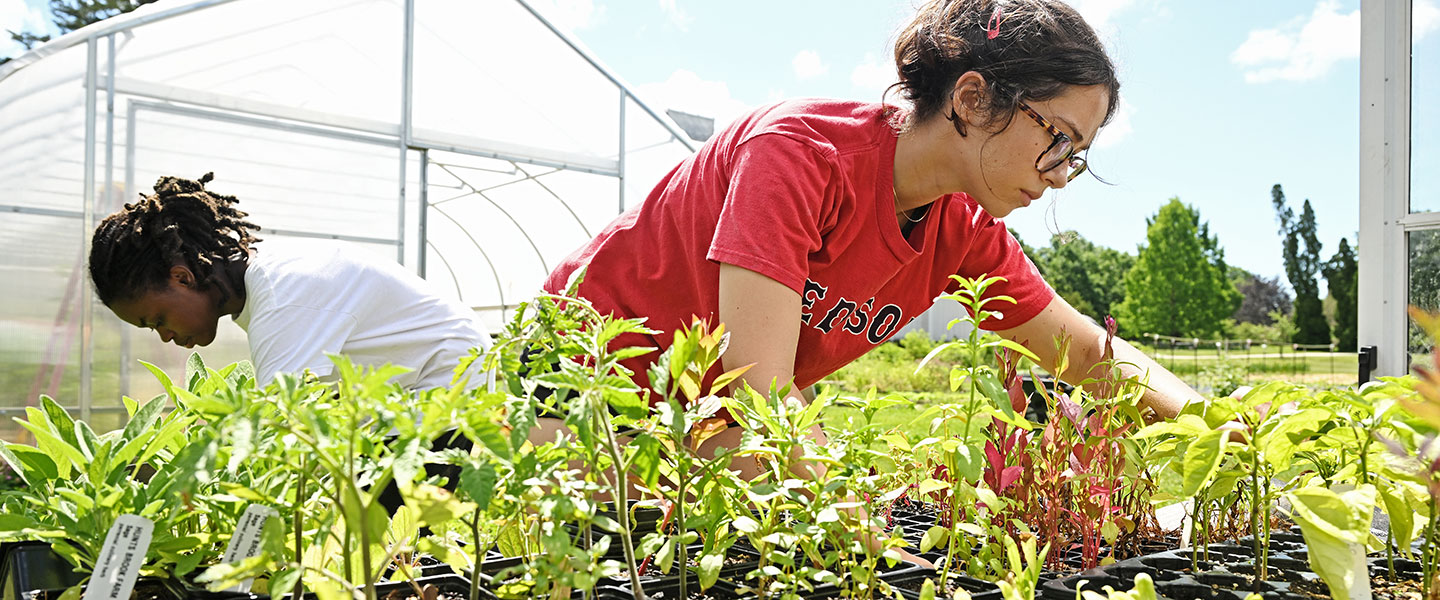
Learn about and participate in the agricultural process from seed to harvest; the journey of food from the farm to the plate; and the cultural importance of food and drink.

Despite the centrality of food in our lives, never before have there been fewer farmers, higher rates of diet-related illnesses, and greater inequalities when it comes to food access. At the same time, there is growing interest in sustainable food production and culture in response to the current system.

The Food Pathway provides a hands-on experience in which students learn about and participate in the agricultural process from seed to harvest; the journey of food from the farm to the plate; and from policy creation to implementation. The culture of the table and the art of cooking will be explored along with the biology of eating and the chemistry of cooking.

Students in the Food Pathway will examine how existing and historical food systems function in relation to the surrounding environmental and cultural landscapes. Through experiential, community-based learning, students will define and assess the responsible use of resources such as land, water, soil, and inputs to ensure sustainable food production and provisioning. They will investigate the drivers of inequality in food systems and chart paths towards a more just and sustainable food system at the local, regional, and national levels, recognizing the interconnections between local food production, policy, access, and health. Further, they will explore cuisine and food culture at the intersection of disciplines such as chemistry, literature, psychology, and language. Graduates of the Food Pathway will have the tools and insights necessary to become change-makers in our food system, whether it be in production, policy, entrepreneurship, education, or community engagement.

Headshot of Anike Abegunde, Class of

Anike Abegunde

Anike, an ACS chemistry major from Slough, United Kingdom, joined the Food Pathway to take an interdisciplinary look at topics like food insecurity, the cultural importance of food, and food system sustainability.

As a sophomore, Anike won a Summer Science Research Institute grant to work with Associate Professor of Chemistry Tanya Schneider studying the organic synthesis of alpha-helix mimetic inhibitors. Last summer, Anike interned at North Carolina State University Center for Marine Sciences and Technology in Professor Alexander Chouljenko’s seafood science laboratory.

“My interest in my animating question, ‘What are some of the roles chemistry plays in food research and development?’ is the result of a combination of my academic background in chemistry, inspiration from professors in the field from North Carolina State University and my own curiosity about ever-changing food trends,” Anike said.

She added that she hopes the Symposium audience learns “Food without chemistry is like a meal without seasoning—bland and missing something.”

After graduation, Anike, who is also president of Conn’s Christian Fellowship, plans to pursue a master’s degree and Ph.D. in food science.


Pathway Requirements


Thematic Inquiry

The thematic inquiry will be a single team-taught four-credit course. The instructor of record will teach an initial module to introduce key concepts and issues in food systems and food studies. The instructor of record will be in charge of organizing modules of classes that will be taught by faculty from throughout the campus and by guest lecturers (industry experts, academics, etc.). The instructor of record will also work with students to contextualize the modules and help students develop their animating questions.

Modules will include:

  • Frameworks: Food for thought
  • Cultivation: Growing food
  • From Farm to Fork: Distributing and preparing food
  • At the Table and Beyond: Food consumption and waste

While students construct their own animating questions, some possible examples include:

  • What are the environmental, economic, and cultural barriers preventing more local food production in New London?
  • Can increased involvement in community food initiatives alleviate diet-related illness?
  • Are there sustainable production models or lessons to be learned from past land use in New England?
  • What would an economically-sustainable model to improve fresh produce access in low-income neighborhoods look like?
  • In what ways can food be used to create greater acceptance of cultural diversity?

Global/Local Engagement

Internships working on farms in other countries, for food-based NGOs, or study abroad programs with agricultural-based institutions or food-based programs would be relevant, among others. These opportunities could take place during a semester (in the case of study away in a related field) or during the summer (in the case of an internship or position with an NGO or farm) and would require a series of reports and final reflection paper to accompany the work. As the topic of food is inherently broad, there could be many potential types of study away opportunities that would fit well with the program and largely depend on the student’s animating question. There may be climatic and/or cultural relevance to a student’s question, in which case certain study away opportunities might be particularly enlightening (e.g. studying greenhouse production in northern Europe, shifting cultivation in northeastern India, or open-air market culture in Spain). Simply taking courses in their topic area of choice at universities in these places would expose them to a unique set of circumstances that would enliven their experience. Summer internships would be ideal for this pathway. Internships could be tailored to match the animating questions of different students.

One local internship example that is already available is participation in the FRESH-CONNection, which is a partnership between FRESH New London and Connecticut College, initiated in Fall semester of 2019. Basically, the program utilizes the expanded Sprout Garden space as well as community gardening space in downtown New London to grow food for a sliding-scale CSA program, making fresh healthy produce more readily accessible for New London residents. Additional opportunities for summer internships could be completed on local farms or with community organizations in the area such as Groton Public Schools’ farm to school program, the Giving Garden at Coogan Farm, the Food Pantry run by the OIC in New London, and others.

Another form of Global/Local Engagement relevant to this pathway could be linked to campus dining at Connecticut College and simultaneously work towards addressing some of Connecticut College’s sustainability goals. Students participating in this form of engagement could lead projects such as: an educational campaign centered on plant-based diets; student guest chef nights; aiding dining staff in the logistics of procuring more local food; implementation of a sustainable compost management system for pre-cooking food scraps; and growing and tracking food for campus dining in the Sprout Garden high tunnels.

Senior Reflection

The Senior Reflection will be a two-credit seminar that will meet once a week. This will be a student-centered seminar in which students share, discuss and reflect on the ePortfolios that guided their animating question during the Thematic Inquiry. Each student will be responsible for one or two units of the seminar (depending on the number of students) in which they will share how their animating question evolved based on the information and experiences gained from the other components on the Pathway. Students will be asked to facilitate the discussion of a reading during their pathway that was particularly enlightening for their animating question in one of the classes. This structure will allow students to reflect on their trajectory and receive input from the class in preparation for the all college Symposium.


Pathway Courses

All students in the Pathway will complete at least three Pathway courses, based on their specific interests and animating questions.

Example Courses


All-College Symposium


This major student conference highlighted students’ integrative learning in Connections, the College’s reinvention of the liberal arts. 

Through talks, panels and poster sessions, students who participated in the College’s Centers for interdisciplinary scholarship or the Integrative Pathways showcased how their coursework and experiences informed their studies and learning over four years.

All-College Symposium

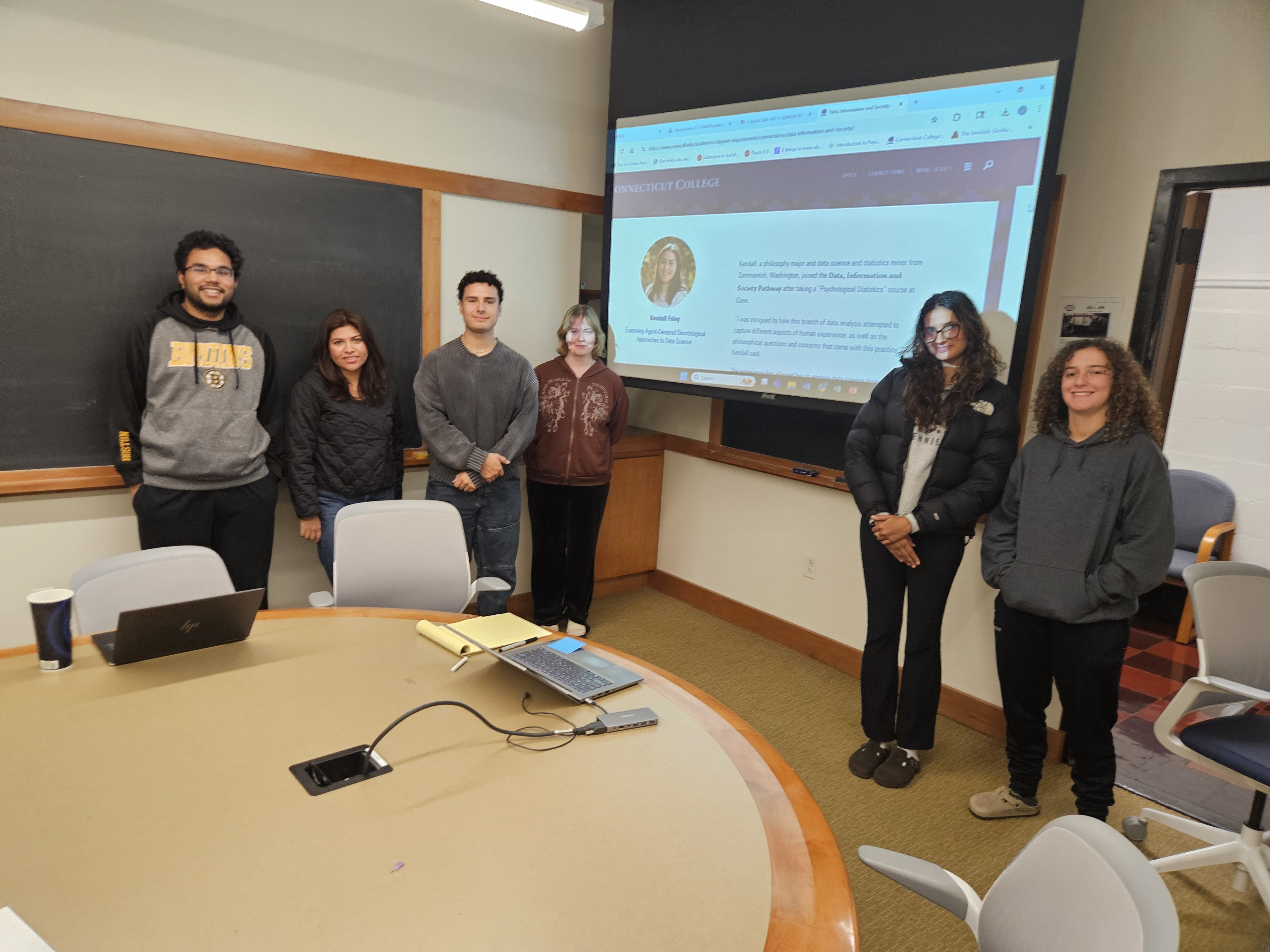
Data Pathway Seniors 2026 Group Photo


Pathway Coordinator


Jeffrey Cole, Professor of Anthropology,

Jeffrey Cole

Food Pathway Coordinator, Professor of Anthropology

Jeffrey Cole’s research and teaching interests include migration, race and ethnicity, labor markets, and food and agriculture in Europe as well as the US. Committed to fostering an engaging pedagogy, he has published as well on the learning–and teaching–experience of a course-related research project on beginning farmers in New London County.

Core Faculty & Staff

Connections

P: 860-439-2899 E: eofri@conncoll.edu

Mailing Address

Connecticut College
Fanning 206
270 Mohegan Ave.
New London, CT 06320

Contact

Libby Friedman ’80
Assistant Dean of the College for Connections

Office

Fanning Hall 206


Connecticut College
270 Mohegan Avenue
New London, CT 06320
admission@conncoll.edu
1 (860) 447-1911
Web Privacy Policy Web Accessibility Notice
  • Facebook
  • Twitter
  • Instagram
  • YouTube
  • LinkedIn
  • TikTok
  • CC Mobile CC Mobile

NOTICE OF NONDISCRIMINATORY POLICY AS TO STUDENTS

Connecticut College admits students of any race, color, national and ethnic origin to all the rights, privileges, programs, and activities generally accorded or made available to all students at the college. It does not discriminate on the basis of race, color, national and ethnic origin in administration of its educational policies, admission policies, scholarship and loan programs, and athletic and other college administered programs.