Two students win $10,000 Davis Projects for Peace grants
Elaine Sandoval Carrasco ’28, an international relations and history double major, a scholar in the Toor Cummings Center for International Studies and the Liberal Arts (CISLA), and the Student Government Association’s chair of Sustainability; and Tahsi Rabbani ’29, a statistics and data science major and psychology minor, have each won a $10,000 Davis Projects for Peace grant to promote peace through education and community building this summer.
Elaine Sandoval Carrasco '28
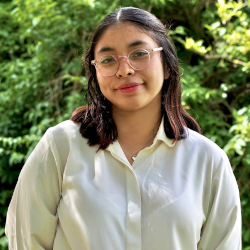
Sandoval Carrasco’s winning project, “Classroom of the Totorales: Peace and Heritage for Huanchaco,” outlines her plan to addresses child vulnerability to poverty and xenophobia by implementing an open-air environmental curriculum taught in the totorales (reed wetlands) of her hometown, the seaside Peruvian resort city of Huanchaco.
“Children in this area face high rates of family conflict and exclusion from safe recreational and learning spaces,” Sandoval Carrasco explained. “Because caregivers must migrate for work, children spend long hours unsupervised in unmonitored coastal zones such as beaches, street vending spots and markets, making them vulnerable to child trafficking.”
Throughout the eight-week program, approximately 33 marginalized local children aged 8 to 14—particularly girls, migrants and those displaced from rural areas—will participate in workshops to learn traditional environmental skills, science and conflict mediation. They will also create a documentary on the oral history of different members of their community.
The sessions will be taught by local artisanal fishermen, women leaders, migrant families and indigenous elders. They will also partner with Otra Cosa Network and Huanchaco Artisanal Fishermen’s Association, long-time protectors of the wetlands and supporters of youth education, who will help bring ancestral teachings on the making of reed pond boats, the history of the land and the ecology of the reed ponds.
Sandoval Carrasco, who has devoted her academic career to social justice, inclusion and grassroots programming, said, “Together, we will build an intergenerational and intercultural community that will expand the participants’ protective support networks, increase their livelihood options, and foster empathy and mutual respect, reducing their vulnerability to poverty and xenophobia.”
Tahsi Rabbani '29
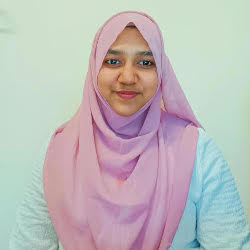
Meanwhile, Rabbani is looking out for students’ mental health. She will use her funding to realize her project, “Shanti Corner: School-Based Mental Health Support Systems” in the Companiganj region of Bangladesh, where she is from. Mental health struggles still carry a stigma in the country, she said, and Shanti Corner will be the first dedicated mental health and well-being support space in a rural Bangladeshi school.
“I encountered mental health awareness for the first time when I moved to the city during middle school and had access to a school psychologist and a mental health club that introduced me to support resources both inside and outside the school,” she recalled. “I learned that struggling emotionally is not shameful and that talking about our stressors is possible, and helpful. This experience opened a door to self-expression and care; my friends back home did not have the same access.”
Her project aims to address students’ mental health by breaking the associated stigma; raising awareness about contributing factors such as academic stress, risks to personal safety, depression, anxiety and traumatic experiences; and introducing effective, professional coping techniques, and builds on Rabbani’s previous related work as well as her academic research at Connecticut College.
After professionals train six to eight teachers and a team of 10 to 15 students from Char Fakira High School, project members will establish a dedicated Shanti Corner at the school. The area will be a safe space equipped with resources like comfortable seating, educational materials, arts and expression materials, sports and play equipment, and privacy for one-on-one conversations. The space will offer peer-led programming focused on mental health education, personal safety and effective coping strategies.
“A student who can manage distress, seek help without shame and support their peers is a citizen who can contribute to a more stable and peaceful community,” Rabbani pointed out. “Ultimately, equipping a generation with emotional literacy, coping skills and a trusted place does more than improve individual lives; it helps build a healthier, more harmonious and productive society.”
Davis Projects for Peace, founded in 2007 by Middlebury College in Vermont, “encourages young adults to develop innovative, community-centered and scalable responses to the world’s most pressing issues,” according to Middlebury’s website. One hundred or more students from partner schools receive a $10,000 grant each year.
Connecticut College offers a wide range of fellowship opportunities for students and recent graduates. For more information, visit The Walter Commons or email fellowships@conncoll.edu.