Connecticut College
  • About Connecticut College
  • Academics
  • Admission & Financial Aid
  • Alumni & Life After Conn
  • Athletics
  • Campus & Community
  • Career Preparation
  • Human Resources
  • Student Experience
  • Calendar
  • News
  • Directory
  • Library & IT
  • CC Magazine
  • Site Map
CamelWeb

SALT Conference

Visit

Learn

About Us

Get Involved

  • Home 
  • Home 
  • The Arboretum 
  • Programs  
  • SALT Conference

Saturday, November 7
9:30 a.m. to 3:30 p.m.
Registration/Continental Breakfast starts at 8:30 a.m.
Cummings Art Center, Connecticut College

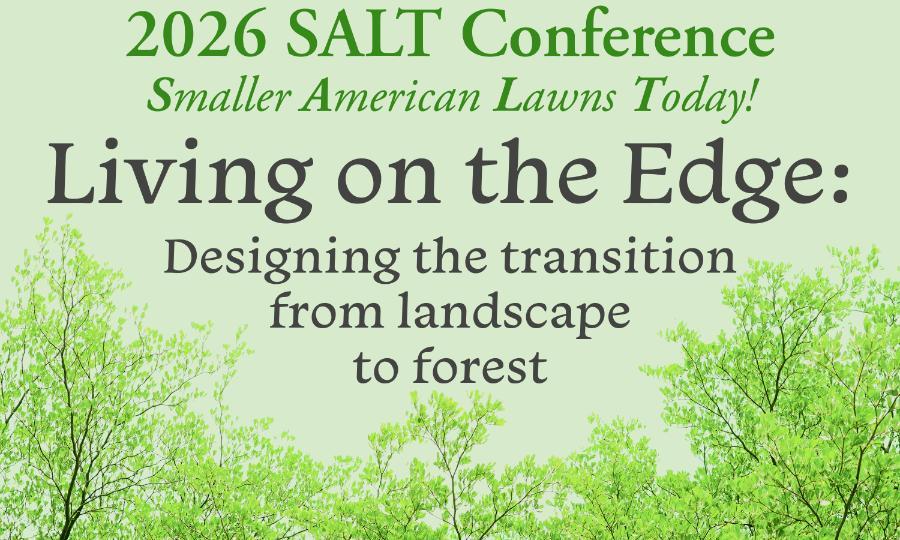
The transition zone between a cultivated landscape and a natural forested area provides unique opportunities (and challenges!) in a home landscape. The strategic use of native understory trees and shrubs can provide screening and other important landscape functions as well as expanding your seasonal interest and support for native pollinators/wildlife.

Full-day conference includes morning coffee/continental breakfast, three presentations, lunch, panel discussion and an optional tour after the conference.
Seating is limited. Registration required.
Registration fee is $75.00 or a discounted rate of $60.00 is offered for current members of the Connecticut College Arboretum and Wild Ones.

Connecticut College students, non-profit representatives and/or emerging industry professionals may apply for a limited number of sponsored or discounted registrations by submitting a letter of interest to arbor@conncoll.edu expressing how their attendance to this conference will benefit their professional goals or ecological projects.

Continuing Educations Units (CEUs)—
The following Continuing Educations Units (CEUs) are being offered for attending the 2026 SALT Conference:
Connecticut Department of Energy & Environmental Protection (CTDEEP)
Cat./Cr.: 3A (3 Credits), 3B (1 Credit)/ Max Credits: 3 

CLICK HERE TO REGISTER


CONFERENCE SESSIONS

Edgy Ecology for the Formal Forest Fringe—
Lea Johnson, Ph.D., Director of Conservation, The Native Plant Trust

This session will explore ecological concepts helpful to plant selection and design in transition areas between managed and natural landscapes. We will consider edge effects, patch size, light dynamics, the ecological value of shrubs, and bird dispersal, as well as touching on some relevant work from research in landscape architecture and design ideas from woodland gardens.


Designing the Edge—
Kate Cholakis, Professor of Landscape Planning & Design, The Conway School of Landscape Design

Edges typically describe boundaries where a manicured landscape meets an unmanaged or less intensively managed one. This presentation examines the opportunities and challenges associated with the “urban ecotone” edge condition (where human land management meets more self-organizing natural ecosystems). We’ll explore a process for rethinking this condition, design typologies, and how we might increase our comfort, personally and culturally, with a more dynamic alternative.


Shrubs for the Forest Edge—
Bryan Connolly, Ph.D., Associate Professor of Biology, Eastern Connecticut State University

This presentation will offer a palette of native shrub and multi-stemmed woody plant species that can be used in southern New England woodland gardens. For each species, we will explore their notable horticultural attributes (foliage, flowers, etc.), preferred growing conditions, ecological associations and available cultivars.  
ABOUT OUR SPEAKERS

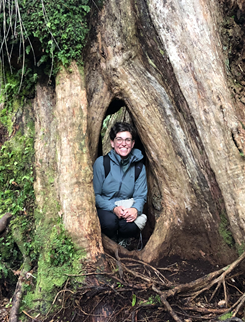
Lea Johnson

Native Plant Trust

Lea Johnson, Ph.D., is a plant ecologist whose work is driven by the question: All of the wild diversity of life on earth is here, with us, right now. How can we take it with us into the future? Dr. Johnson integrates science with practice to conserve plant diversity, manage land effectively, and support ecological landscape design. She is fascinated by processes that unfold over space and time, with a special interest in plant community dynamics and ecological restoration. Her skillset includes field observation of plants and landscapes, ecological restoration, long-term research, urban ecology, social-ecological systems thinking, and community science, drawing from experience across varied U.S. ecosystems and social contexts. She works in collaboration, bringing people together to accomplish more than they could on their own. As Director of Conservation at Native Plant Trust, Dr. Johnson leads a regional network guiding plant conservation priorities and mobilizing volunteer botanists to monitor rare species, while advancing research that addresses questions essential to land management and conservation decision-making. She oversees the leading botanical resource Go Botany, a rare plant seed bank with over 10 million seeds, and seven native plant sanctuaries.

Kate Cholakis

The Conway School

Kate Cholakis teaches site analysis, site design, and planning within the Conway School of Landscape Design's graduate program in ecological design. Her professional experience includes landscape planning, green infrastructure design, and environmental permitting. Research interests include the intersection of aesthetics, attachment to place, and environmental behavior/psychology. Kate also has experience in cultural landscape analysis and interpretation, and served as the Cultural Landscape Foundation’s Boasberg Fellow. She is a licensed landscape architect in the state of Maine and, in addition to teaching at the Conway School of Landscape Design, has taught courses in landscape architecture and landscape studies at Smith College and UMass Amherst. 
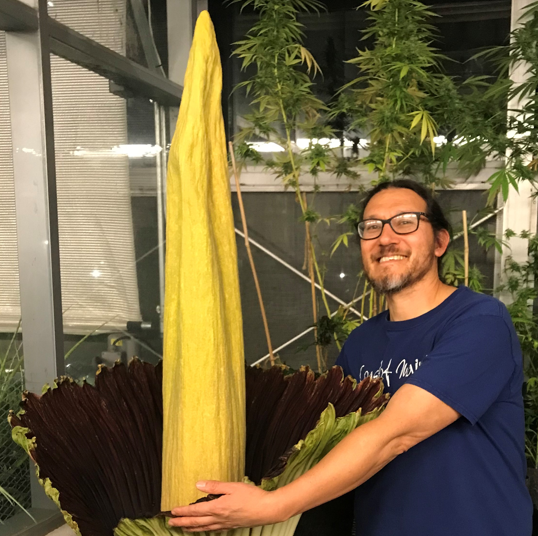
Bryan Connolly

Eastern Connecticut State University

Bryan Connolly, Ph.D., is a botanist and horticulturalist with degrees in botany and anthropology from the University of Vermont and a master’s degree in ecology and evolutionary biology and Ph.D. in plant science from the University of Connecticut. Before his role at Eastern Connecticut State University, Professor Connolly was a faculty member at Framingham State University in Massachusetts and previously worked for the Massachusetts Division of Fisheries and Wildlife as the MA state botanist. His research interests include rare plants of New England, the nightshade family, the rose family, invasive plants, plant propagation, and Hemp/Cannabis cultivation.

About SALT

Read more

Smaller American Lawns Today, SALT, is a movement introduced in June of 1997 by Dr. William A. Niering, professor of botany at Connecticut College. The SALT mission is to decrease the size of lawns in America by restoring home grounds to more harmonious, productive, ecologically sound and naturalistic landscapes. SALT offers an alternative vision of the monocultured lawn. As Dr. Niering wrote, “There’s nothing wrong with dandelions, there’s something wrong with people.”

Natural beauty can abound in one's own yard. In our annual SALT Conference, participants learn how to cut back on the size of their lawns and also to have beautiful, sustainable, and friendly home grounds as well. Once established, you will never want to go back to a boring, monocultural lawn!

SALT History

Read more

by William A. Niering (1924 - 1999)

How SALT (Smaller American Lawns Today) began

It all began in the early 1970's on a one-acre lot while using one of the noisiest polluting power mowers available and undoubtedly disturbing my neighbor's summer party across the street. "How can I develop a more environmentally friendly home ground with only a small lawn and minimum care?" I pondered. Here is what I did, and I'd like to share with you my experience in decreasing the size of my lawn.

My first step was to create tree/shrub plantings along the property lines.

This was not a gesture of unfriendliness to my neighbors, as we are all friends. Rather it was to create greater privacy and decrease lawn area. In my case, it also included a screen along the road in front of the house. What does one plant, and where do you get the plant material, which can be costly? Fortunately, it can often be salvaged, in part, from vacant lots which are going to be developed or from friends who have extra trees and shrubs. For example, I salvaged red cedars, hemlock, flowering dogwood, and high bush blueberries. I used a mixture of both evergreen and deciduous native and introduced trees and shrubs. Try to avoid single species plantings. My one exception was an arbor vitae tree border which makes an excellent narrow screen where width is limited. Your undulating border plants will begin to define and enclose your property and reduce lawn.

Next, you will need to start on your foundation plantings. They can be expanded in width and include ground covers, perennial flower beds, and your favorite shrub plantings. I have extensive areas of evergreen ground covers (English ivy, periwinkle, and pachysandra) covering areas that were formerly lawn.

SALT Flower Picture
Now let us consider the possibility of a vegetable garden and a natural meadow in part of the back lawn. Choose the sunniest place for the vegetable garden. Tomatoes, beans, peas, squash, and even corn can be included. As few as four hills of corn can cross pollinate and be productive. If raccoons become a problem, chicken fencing is usually effective from my experience. The meadow can take as much of your remaining lawn as you want. There are some people who prefer no lawn, which is ideal! To create the meadow, just stop regular mowing. I was amazed the first year when I had lots of yellow daisy-like hawk weeds flowering, and in the fall lovely reddish-tan clumps of little blue stem appeared. These grasses are showy throughout the fall and especially striking in the winter snow. It was a new and exciting experience and one which has continued for more than two decades. I have watched new plants appear and added those I especially like. If a tree or unwanted shrub seedling appears, like black cherry, oak or ash, etc., I immediately pull or dig it out roots and all. As the grasses and other plants become more dense, fewer woody plants appear. I created a more or less self-perpetuating meadow that only needs to be mowed once or twice a year. Today, after more than 25 years, the meadow is more beautiful than ever. I have added clumps of the native bergamot, a beautiful lavender mint, purple blazing star, black-eyed Susans, ox-eye daisies, and Queen Anne's lace. By mid-July, the meadow is ablaze with color and filled with insects, especially bees, busy with their job of pollination. In the fall and winter, we still enjoy the late maturing clumps of little blue stem grass.

Ecologically, why is the movement toward naturalistic landscaping important? There are several reasons. With minimum lawn one may abandon the power mower for a reel mower and conserve fossil fuel and prevent air pollution. Commercial fertilizers and lawn pesticides can also be abandoned, and you will have more time to do other things. In addition, you are undertaking a kind of ecological landscape restoration--favoring old fields or meadow habitat, one of the most endangered in the Northeast. You are also increasing bio-diversity--creating habitat for many kinds of other life forms which are becoming increasingly endangered by human activities. By decreasing the size of your lawn with the addition of tree, shrub and meadow habitat, you share your home grounds with a myriad of wildlife, which can also be an added pleasure. Throughout the years, as the diversity of our property has increased, we have found increasing numbers of birds including hummingbirds, rose-breasted grosbeak, towhee and wood thrush, as well as butterflies and beautiful insects.

In an industrial world where natural landscapes are constantly disappearing, you have an opportunity to reverse the trend toward homogeneity or monoculture by creating on your home grounds elements of the natural world that can blend into those natural areas that still exist as self-perpetuating solar, not fossil fuel, subsidized systems. Your naturalistic landscaping will also contribute toward countering climatic warming in the 21st century. Put your lawn mower in moth balls, get a cold drink, and really enjoy your home grounds.

1998 drawing of Niering's home for Smaller American Lawns Today

Previous SALT Conferences

Read more

2025 - The Resilient Landscape: Gardening for Extreme Weather

2024 - To Mow or Not to Mow: Creating Your Home Meadow

2023 - Planting Trees Today for a Greener Future!

2022 - Indigenous Plants: Connecting People and Place 

2021 - Awaken a new perspective on the watershed

2020 - no conference

2019 - Creating Edible Gardens for People and Pollinators

2018 - Grow Native: Gardening for the Environment

2017 - A Down to Earth Look at Soils

2016 - Deconstructing the American Landscape

2015 - Kill Your Lawn

2014 - Enhancing Wildlife Habitat: Landscaping for Seasonal Food and Cover with Native Plants with Peter Picone Wildlife Biologist at Connecticut Department of Energy and Environmental Protection

2013 - The Joy of Creating a Beautiful and Bountiful Garden Homeowners often think in terms of planting an ornamental garden and a vegetable garden as two separate endeavors. It is possible, however, to have a garden that is both beautiful and bountiful.

2012 - Gardening in a Changing Environment Experts shared what they are doing now to maintain the sustainability of their land and what they have done when disaster has struck. 

2011 - The ABCs of Creating Your Own "Garden of Eden" provided an opportunity for homeowners to learn tips from topnotch speakers in the field of naturalistic landscaping.

2010 - Designing Your Home Grounds for Beauty and Sustainability A seminar on naturalistic landscaping.

2009 - Going Native in New England with featured speaker Douglas W. Tallamy was most informative on the subject of using native plants to promote backyard biodiversity.

2008 - Naturally Beautiful

2007 - Bounty and Beauty in Your Yard

2006 - Inspired by Nature

2005 - User-Friendly Home Landscapes

2004 - Beauty in Biodiversity

2003 - In Harmony with Nature

2002 - Let's Go Natural: A SALT Backyard Landscaping Seminar for Homeowners


SALT meets Wild Ones This article by Kathy T. Dame appeared in the "Wild Ones" Journal, September/October 2008.

Arboretum Office

P: 860-439-5020 E: arbor@conncoll.edu

Mailing Address

Connecticut College Arboretum
270 Mohegan Avenue
New London, CT 06320


Main office

33 Gallows Lane, Suite 114
New London, CT 06320

Social Media

Facebook Instagram Twitter Flickr

Connecticut College
270 Mohegan Avenue
New London, CT 06320
admission@conncoll.edu
1 (860) 447-1911
Web Privacy Policy Web Accessibility Notice
  • Facebook
  • Twitter
  • Instagram
  • YouTube
  • LinkedIn
  • TikTok
  • CC Mobile CC Mobile

NOTICE OF NONDISCRIMINATORY POLICY

Connecticut College is an equal opportunity employer. The College complies with all federal, state, and local laws, regulations, and ordinances prohibiting discrimination in private post-secondary education institutions. The College does not discriminate against any employee, applicant for employment, student, or applicant for admission on the basis of the following protected characteristics: age, citizenship status, color, creed, disability (physical or mental), domestic violence victim status, ethnicity, gender expression, gender identity, genetic information (including family medical history), lawful source of income, marital status, national origin (including ancestry), pregnancy or related conditions, race, religion, sex, sexual orientation, veteran or military status (including disabled veteran; recently separated veteran; active-duty, wartime, or campaign badge veteran; and Armed Forces Service Medal veteran), any other status protected by federal, state, or local law.