
New Digs: Coming Soon
Connecticut College is building new, independent living-style student housing on campus
Connecticut College has plans to build new townhome/apartment-style residences to house approximately 240 students. The new housing will provide upper-level students with flexible independent living options and create a cohesive, accessible, neighborhood-style residential environment that fosters community and connection.
“I’m thrilled to share that Conn is taking a very big step toward transforming our residential experience,” said President Andrea E. Chapdelaine. “As our students enter their junior and senior years, they are ready for greater autonomy and the opportunity to create a housing cluster with their friend groups.
“By providing that opportunity on campus, our students will be able to continue to grow in independence and self-reliance, while still immersing themselves fully in the Conn community. This will not only enhance their time at Conn and deepen their relationships with their peers, but also better prepare them for life after graduation.”
Evolution of Campus Living

The plan for the project, unanimously approved by the Board of Trustees in May, was developed after a 2024 campus facilities assessment identified student housing to be the highest area of need. In 2025, Conn partnered with CREDO, a higher-education consulting firm that specializes in campus plans to enhance the student experience, to conduct on-campus focus groups, interviews and working sessions with faculty, staff and students and an analysis of qualitative and quantitative institutional data. CREDO recommended the College “intentionally reframe the residential experience as a developmental journey that supports students’ social, intellectual and personal growth from the first year through graduation.”
The idea, Dean of Students Victor Arcelus explained, is that as students move through their four-year academic career, their residential learning experience evolves with them. First-years and sophomores will still have the traditional dorm experience, but upper-level students will have the option to transition to independent living, where they can cook their own meals, are collectively responsible for cleaning and general upkeep, and have the space to host their own gatherings and events.
“Students want to curate their own social lives, and we want to give them the indoor and outdoor space and flexibility to do that,” Arcelus said.
The planned 240-bed development will significantly increase the amount of independent living housing on campus and completely replace existing outdated options. Additionally, once completed, it will provide enough space to allow the College to systematically take other residence houses offline in order to renovate and modernize the remainder of student housing.
The potential impact of the new housing on recruitment, retention and student satisfaction made it clear to the Board of Trustees that this is the right investment for Conn’s future, said Board of Trustees Chair Seth W. Alvord ’93.
“Today’s students are looking for a different style of living. They want opportunities to live a life that’s closer to what they will experience after they graduate. We are listening to our students, and we are listening to our prospective students,” he said.
“By making this decision to go forward with this project, we’re strengthening Conn’s competitive position. This is an investment that will benefit all students for generations to come.”
Big Plans for the Future
The project is now in the early planning stages. Associate Vice President for Facilities Management and Campus Planning Justin Wolfradt said the College is exploring several potential locations for the new housing and expects to select an architect this winter. “We hope to start construction in early 2028, with a target completion date of Fall 2029,” he said.
Key priorities include ensuring full accessibility compliance and inclusive design, meeting sustainability and energy efficiency goals, and integrating indoor and outdoor community spaces that support student engagement and informal interaction. The project is expected to cost $51.5 million and will be paid for using debt financing, which allows the College to align a long-term investment with an increased and continual revenue stream provided by the new facility.
As the process unfolds, members of the Conn community will have ample opportunities to participate.
“We are now forming a committee, a collaboration of faculty, staff and students, to begin the design work on the new residence hall,” Chapdelaine said. “I’m excited to invite Conn students to participate in designing a residence hall that will meet the needs of today’s and tomorrow’s students.”
Students—even those who will graduate before the project is completed—are equally excited.
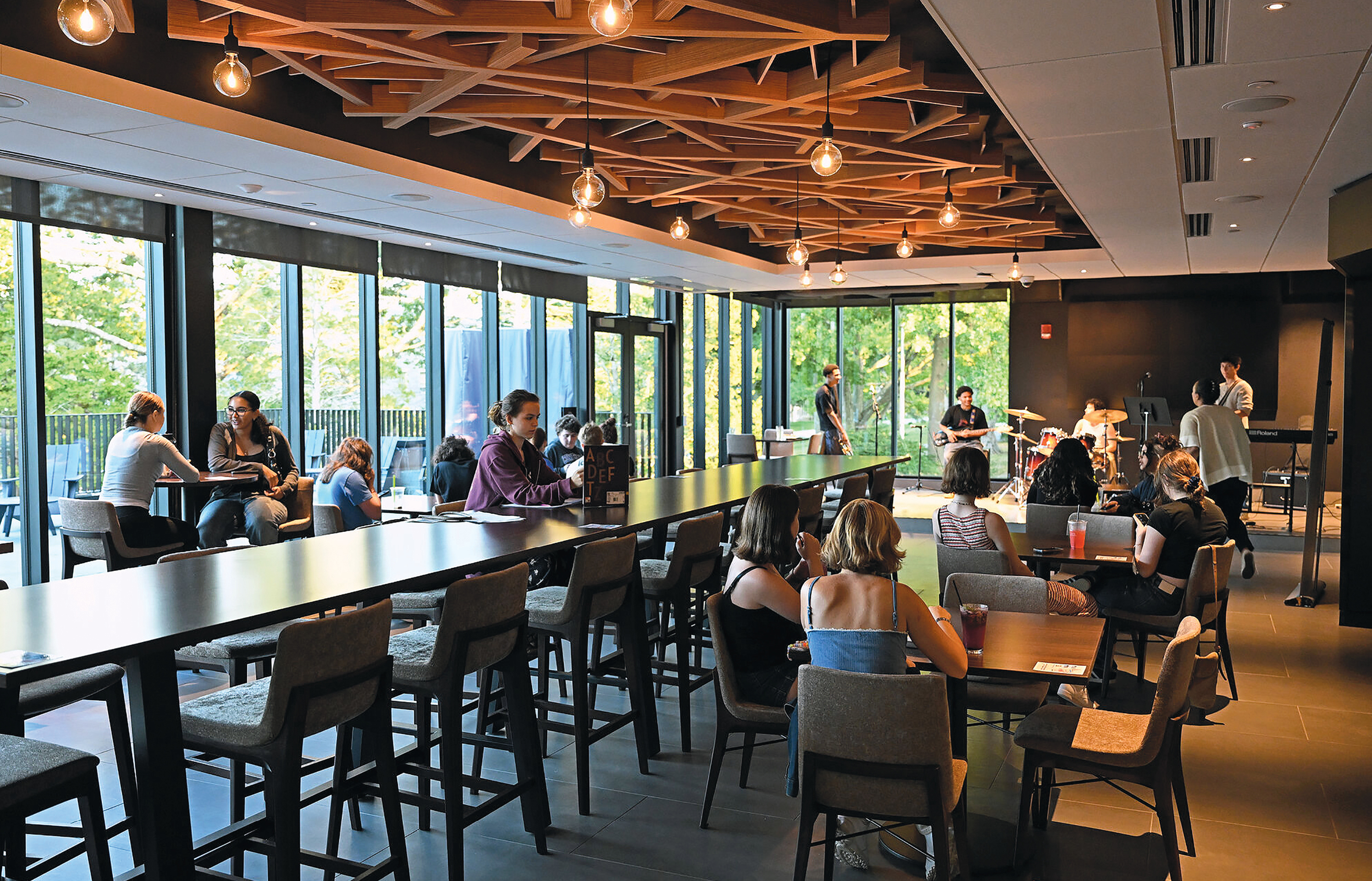
Tenzin Choedek ’27, a neuroscience and East Asian studies double major and Mellon Mays Undergraduate Fellow from Austin, Texas, serves as the Student Government Association’s Chair of Residential Affairs. He sees the planned new housing development as an extension of the improvements he and his fellow seniors have benefited from during their time at Conn, including upgrades to athletic facilities, the addition of the Cro Promenade and Cro-Plex Connector, and the renovation of the Crozier-Williams student center.
“People love the new Oasis. Senior nights are amazing!” he said. “Improvements like this are a universally good thing, and we’ve had a lot of conversation around the importance of third spaces. At a smaller school, we move in smaller circles, and we need more space options to be able to host those kinds of gatherings.”
Kaitlyn Lubega ’29, a sociology and Africana studies double major and scholar in the Media, Rhetoric and Communication Pathway from West Orange, New Jersey, serves as an RA in Larrabee House. She says that kitchens, private bathrooms and outdoor spaces will be greatly appreciated by future Camels.
“I’m just really glad the College is thinking about this and making plans,” she said. “It’s really exciting.”